The regions of Oregon are so wildly different from each other that you could spend a lifetime here and still feel like you’re discovering new corners. I’ve lived in this state for years, and I’m still blown away by how a two-hour drive can take you from a moss-covered rainforest to a high desert canyon that looks like it belongs in Utah. Oregon isn’t one place. It’s at least seven, and each one has its own weather, its own culture, and its own way of making you fall completely in love.
Here’s what you need to know about each region before you plan your trip.
Portland Metro & Willamette Valley
This is Oregon’s population center and cultural hub, stretching from Portland south through Salem (the state capital) and down to Eugene. The Willamette Valley is flanked by the Coast Range to the west and the Cascades to the east, creating a wide, green corridor that’s responsible for most of Oregon’s agriculture and nearly all of its Pinot Noir.
Portland gets most of the attention, and honestly, it deserves a lot of it. The food scene is ridiculous for a city this size. You’ve got world-class food carts, craft breweries on every other block, and restaurants that would be booked out for months if they were in New York. The farmers markets are genuinely excellent (not just for show), and the farm-to-table dining here isn’t a trend. It’s just how people cook. Salem and Eugene each have their own personality too. Eugene is the college-town, outdoorsy sibling, and Salem is quieter but surprisingly charming once you get past the government buildings.
The Willamette Valley wine country is the real sleeper hit of this region. The wineries here produce some of the best Pinot Noir on the planet, and tasting rooms are relaxed and unpretentious. Yes, it rains here. A lot. From October through June, you should expect gray skies and drizzle. But July through September is genuinely perfect weather, and the locals treat summer like a gift they’ve been waiting nine months to unwrap. Pack layers. Always pack layers.
Oregon Coast
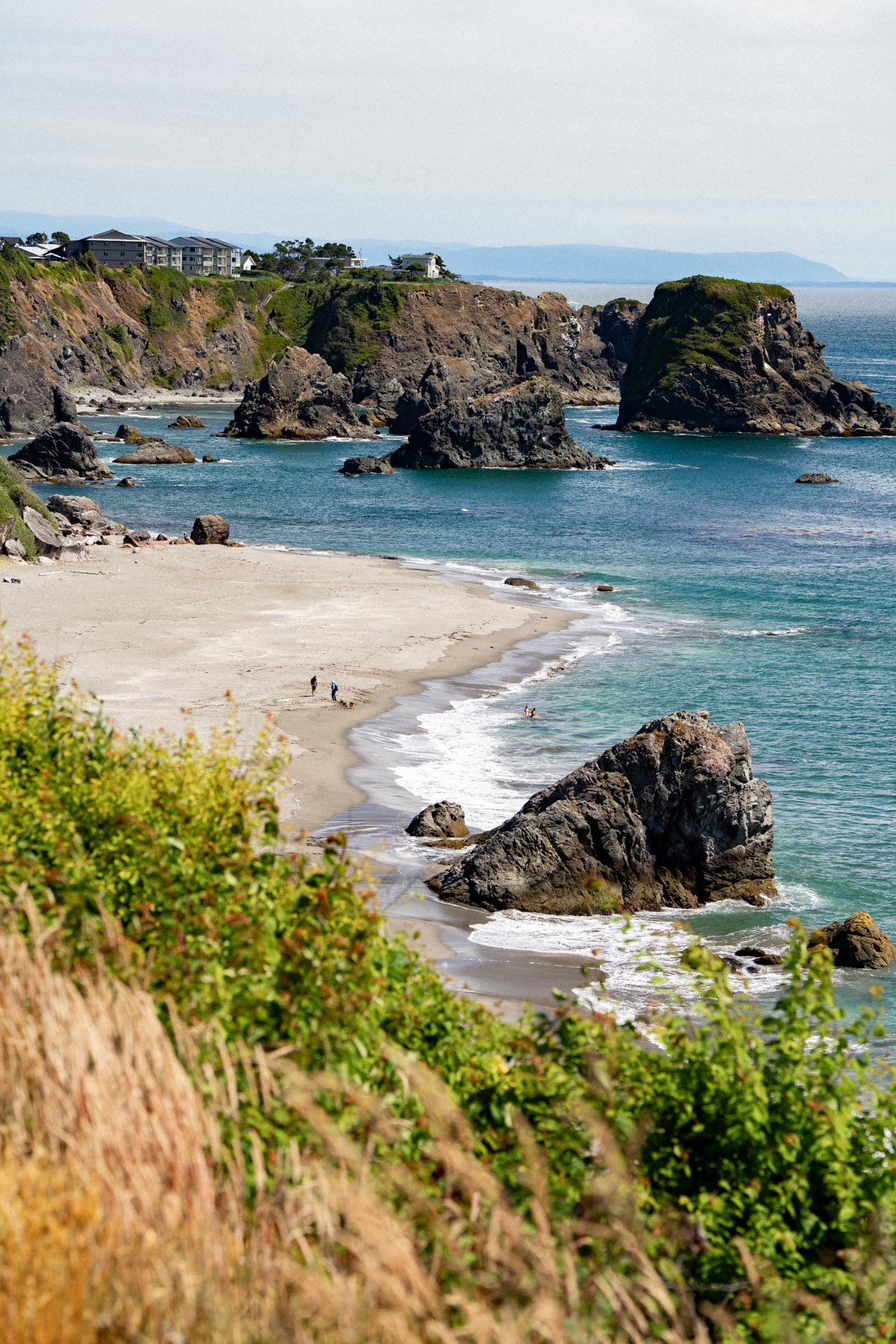
Oregon’s coastline runs 363 miles from the Columbia River down to the California border, and every single mile of it is public. (Thank a 1967 state law for that.) This isn’t a beach-blanket, sunburn kind of coast. It’s dramatic, moody, and a little wild. Think towering sea stacks, misty headlands, tide pools crawling with anemones and starfish, and the constant roar of the Pacific.
The Oregon Coast is packed with small towns that each have their own thing going on. Cannon Beach is the photogenic one with Haystack Rock. Astoria is the gritty, historic port town at the mouth of the Columbia (and yes, they filmed The Goonies there). Lincoln City is the family-friendly stopover. Bandon is the southern gem most tourists skip. And the Samuel H. Boardman Scenic Corridor near Brookings is, no exaggeration, one of the most beautiful stretches of coastline I’ve ever seen.
Whale watching is fantastic here, especially during gray whale migration (December through January, and again March through June). The breweries are surprisingly good, the crabbing is a genuinely fun activity, and the seafood is exactly as fresh as you’d hope. Best time to visit? Late summer for sun, or winter for storms. Watching a massive Pacific storm roll in from a cozy rental is one of Oregon’s most underrated experiences. Plan your route with our Oregon Coast road trip itinerary.
Columbia River Gorge & Mt. Hood
If you only have time for one day trip from Portland, this is the one. The Columbia River Gorge is a massive canyon carved by the Columbia River along the Oregon-Washington border, and it’s absolutely loaded with waterfalls. Multnomah Falls gets all the Instagram traffic (for good reason), but the waterfall hikes nearby are where the real magic is. Eagle Creek, Wahclella Falls, Elowah Falls. You could spend a week just chasing waterfalls here and not get bored.
Hood River sits at the eastern end of the Gorge and is one of the coolest small towns in Oregon. It’s the windsurfing and kiteboarding capital of the world (the wind funnels through the Gorge like nowhere else), and the surrounding orchards produce incredible fruit. The Fruit Loop is a driving route through local farms, wineries, and lavender fields that’s worth a full afternoon, especially in spring or fall. The Gorge breweries are fantastic too.
Mt. Hood rises 11,250 feet above it all, and it’s Oregon’s tallest peak. You can ski here nearly year-round at Timberline Lodge (built by the WPA in 1937, and yes, it was used as the exterior in The Shining). In summer, the wildflower meadows around Paradise Park are jaw-dropping. The wildflower hikes in this region are some of the best in the Pacific Northwest, period.
Central Oregon (Bend & the High Desert)
Bend is Oregon’s outdoor playground, and it knows it. This high-desert city sits at about 3,600 feet and gets over 300 days of sunshine a year (take that, Portland). The Deschutes River runs right through town, Smith Rock State Park is 30 minutes north, and Mt. Bachelor is 20 minutes west. You can ski in the morning, mountain bike in the afternoon, and hit one of Bend’s excellent breweries by evening.
Smith Rock is the birthplace of American sport climbing, and even if you don’t climb, the hiking here is world-class. The Broken Top Trail and Tumalo Mountain offer views that will ruin you for lesser hikes. The waterfalls near Bend are stunning, and the Tamolitch Blue Pool is one of the most surreal things you’ll see in Oregon (the water really is that blue).
The Painted Hills are about two hours east of Bend and deserve a full day. These layered, multicolored hills look like someone spilled watercolors across the landscape. They’re part of the John Day Fossil Beds National Monument, and they’re genuinely one of Oregon’s most awe-inspiring sights. Central Oregon also has great wine bars, solid coffee shops, and some of the best camping in the state. Visit between June and October for the best weather, though ski season (December through April) is equally appealing if you’re into that.
Southern Oregon
Southern Oregon is where the state gets warmer, drier, and a little more rugged. Crater Lake National Park is the headliner here, and honestly, no photo does it justice. It’s the deepest lake in the United States (1,943 feet), formed in the collapsed caldera of an ancient volcano, and the water is an impossible shade of blue. The rim drive typically opens in July, and that’s when you want to visit.
Ashland is the cultural anchor of southern Oregon, home to the Oregon Shakespeare Festival, which has been running since 1935. Even if Shakespeare isn’t your thing, the town itself is lovely. Great restaurants, charming downtown, and a killer hiking trail system right from the center of town. Jacksonville, a few miles north, is a preserved gold-rush town with excellent dining and the annual Britt Music Festival.
The Rogue Valley is southern Oregon’s wine country, and it’s gaining serious recognition. The warmer climate here means bigger, bolder varietals than the Willamette Valley (think Tempranillo, Syrah, and Cabernet). Oregon Caves National Monument is tucked into the Siskiyou Mountains near the California border, and the marble cave tour is genuinely fascinating. This whole region has a slower, more independent feel. People down here aren’t trying to be Portland, and that’s exactly the point.
Eastern Oregon
Eastern Oregon is the part of the state that surprises everyone. It covers roughly two-thirds of Oregon’s total land area, but only a tiny fraction of the population lives here. This is big, open, wild country. Sagebrush and canyon lands. Ranches the size of small counties. Night skies so dark you’ll see the Milky Way without trying.
The Wallowa Mountains in the northeast corner are often called the “Switzerland of Oregon,” and that’s not an oversell. Wallowa Lake sits at their base, and the Eagle Cap Wilderness behind them is some of the most stunning alpine terrain on the West Coast. Steens Mountain in the southeast is a massive fault-block mountain that rises a vertical mile above the Alvord Desert, a cracked, white playa where you can camp in total solitude. The John Day Fossil Beds (three separate units spread across the region) contain some of the most important paleontological records in North America.
Eastern Oregon isn’t for everyone. Towns are small and far apart. Cell service is spotty (or nonexistent). Some roads are unpaved for long stretches. But if you want the Oregon that most people don’t see, this is it. The best time to visit is June through September, when mountain passes are clear and the days are long. Come prepared, come with a full tank of gas, and come ready to be genuinely awed by how empty and beautiful a place can be.
North Central Oregon
This is the least-visited and often-overlooked slice of Oregon, and it has a rugged charm all its own. North central Oregon sits east of the Cascades, in the rain shadow where green forests give way to golden wheat fields and open rangeland. The views of Mt. Hood from this side are arguably better than from the west. You see the full, snow-covered cone rising above dry, rolling hills, and it’s the kind of scene that stops you mid-sentence.
The Warm Springs Reservation is here, home to the Confederated Tribes of Warm Springs and the Museum at Warm Springs, which is well worth a visit. The Deschutes River carves through dramatic canyons in this region, offering some of the best fly fishing and whitewater rafting in the state. Towns like Maupin and Madras are small and functional, more about ranching and farming than tourism, and that’s part of the appeal. If you want to see the real, working Oregon that exists between the tourist destinations, spend a day driving through this country.
FAQ
What is the best region of Oregon to visit?
It depends entirely on what you’re after. For first-time visitors, I’d say start with Portland and the Columbia River Gorge. You get city culture, incredible food, and natural beauty all within an hour. If you’re more outdoorsy, head straight to Bend and Central Oregon. And if you want drama and solitude, Eastern Oregon will completely change how you think about this state. There’s no wrong answer, but the Oregon Coast is the one most visitors regret skipping.
How many regions does Oregon have?
Oregon is commonly divided into 7 regions: Portland Metro and the Willamette Valley, the Oregon Coast, the Columbia River Gorge and Mt. Hood, Central Oregon, Southern Oregon, Eastern Oregon, and North Central Oregon. Some people break it down further (Travel Oregon uses slightly different boundaries), but seven is the most widely recognized framework. Each region has its own distinct geography, climate, and personality.
Can you visit all of Oregon in one trip?
You can try, but you’d need at least two to three weeks and a lot of windshield time. Oregon is bigger than people realize (it’s larger than the entire United Kingdom). A realistic approach is to pick two or three regions per trip. Portland plus the Coast plus the Gorge makes a great week. Bend plus Southern Oregon plus Eastern Oregon is another strong combo. Trying to cram it all in means you’ll spend more time driving than actually experiencing the places, and that’s a waste of a beautiful state. Check our most beautiful places in Oregon guide to help prioritize.