
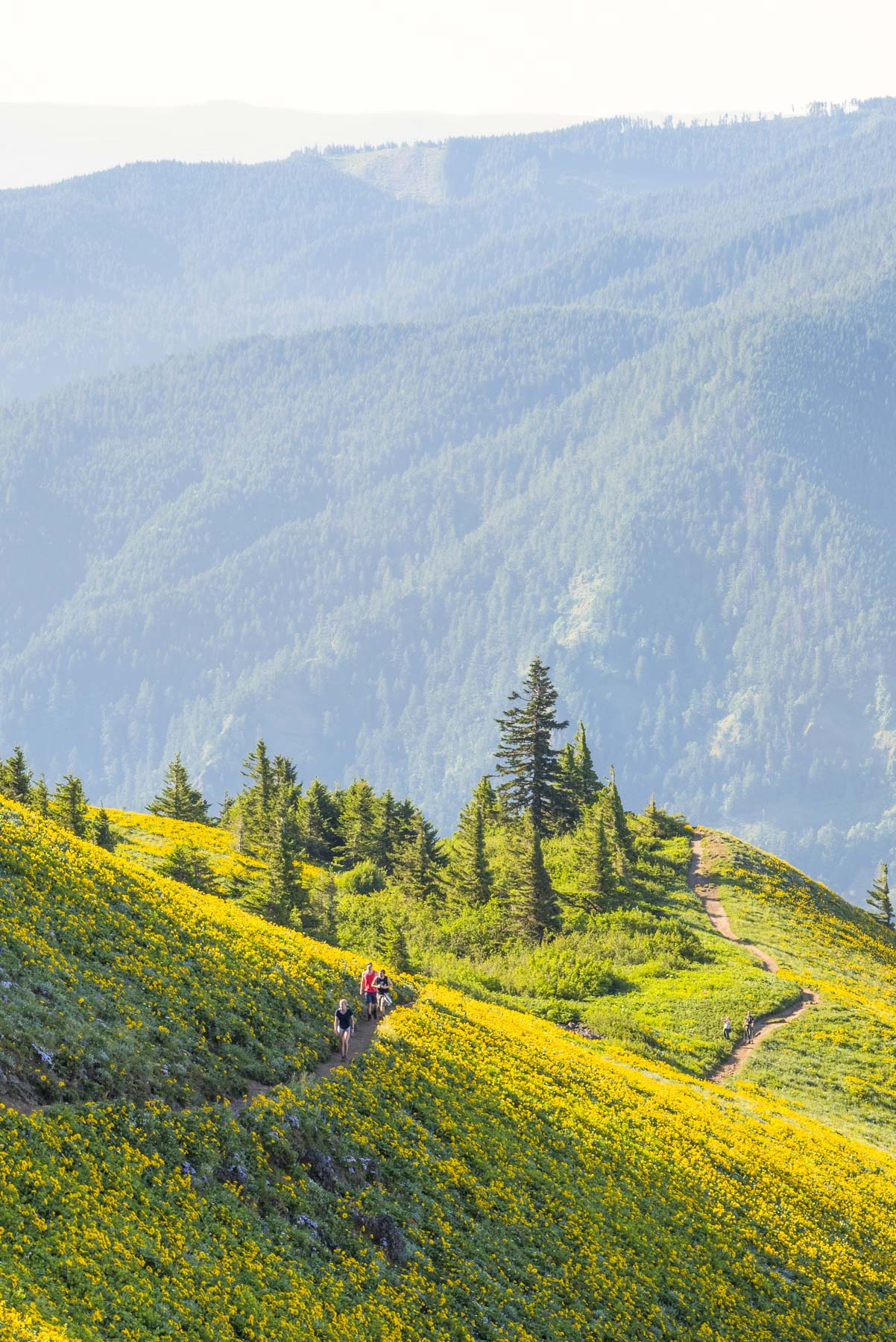
Horsethief Butte
- Miles: 1.7 miles
- Elevation gain: 250 feet
- Dogs: Allowed on leash
- Permits: Discover Pass
Horsethief Butte, a large rock outcropping situated within Columbia Hills State Historical Park, provides further outdoor adventuring opportunities through the rugged landscapes of Washington.
This is a popular destination for rock climbers and hikers of all skill levels who enjoy trails that feel a little more off the beaten track. The Butte is roughly 15 million year old with plenty of nooks and crannies for the curious traveler to explore.
Admire sweeping views of the Columbia River from the broad plateau at the summit while you watch turkey vultures and other raptors riding the thermals.
On your descent keep your eyes and ears peeled for the bubbly song of the Canyon Wren and guttural caws from the local Ravens as you admire plenty of wildflowers like penstemon, desert parsley, death camas, and fleabane (wow, trying to top death camas, I see).
Horsetheif Lake Petroglyphs Trail
- Miles: 1/2 mile
- Elevation gain: 50 feet
- Dogs: Allowed on leash
- Permits: Discover Pass
If negotiating the rocky trail at Horsetheif Butte isn’t in the cards, fret not. There’s plenty of great Columbia Gorge wildflower hikes nearby. Mosey on over to a pleasant jaunt of a trail know as Horsetheif Lake Petroglyphs Trail.
The area offers breathtaking hillsides displaying vibrant shades of yellow and purple from the prolific balsamroot and lupine tucked into every square inch of this 3,300 acre park in spring.
Aside from having an incredible floral display, the park offers an incredible opportunity to view actual petroglyphs. The petroglyphs were rescued from the banks of the Columbia river after a construction project threatened to submerge, giving hikers a chance to learn about the indigenous history of the land.
Guided tours are offered witness the famous petroglyphs up close, but many of these stones are viewable without a tour as you walk toward the river along the park’s main road. If you’re interested in a tour, you can find more information/make reservations here.
Moderate Columbia Gorge Wildflowers Trails
Hood River Mountain Loop
- Miles: 4.4 miles
- Elevation gain: 967 feet
- Dogs: Yes, allowed on leash
- Permits: Nope
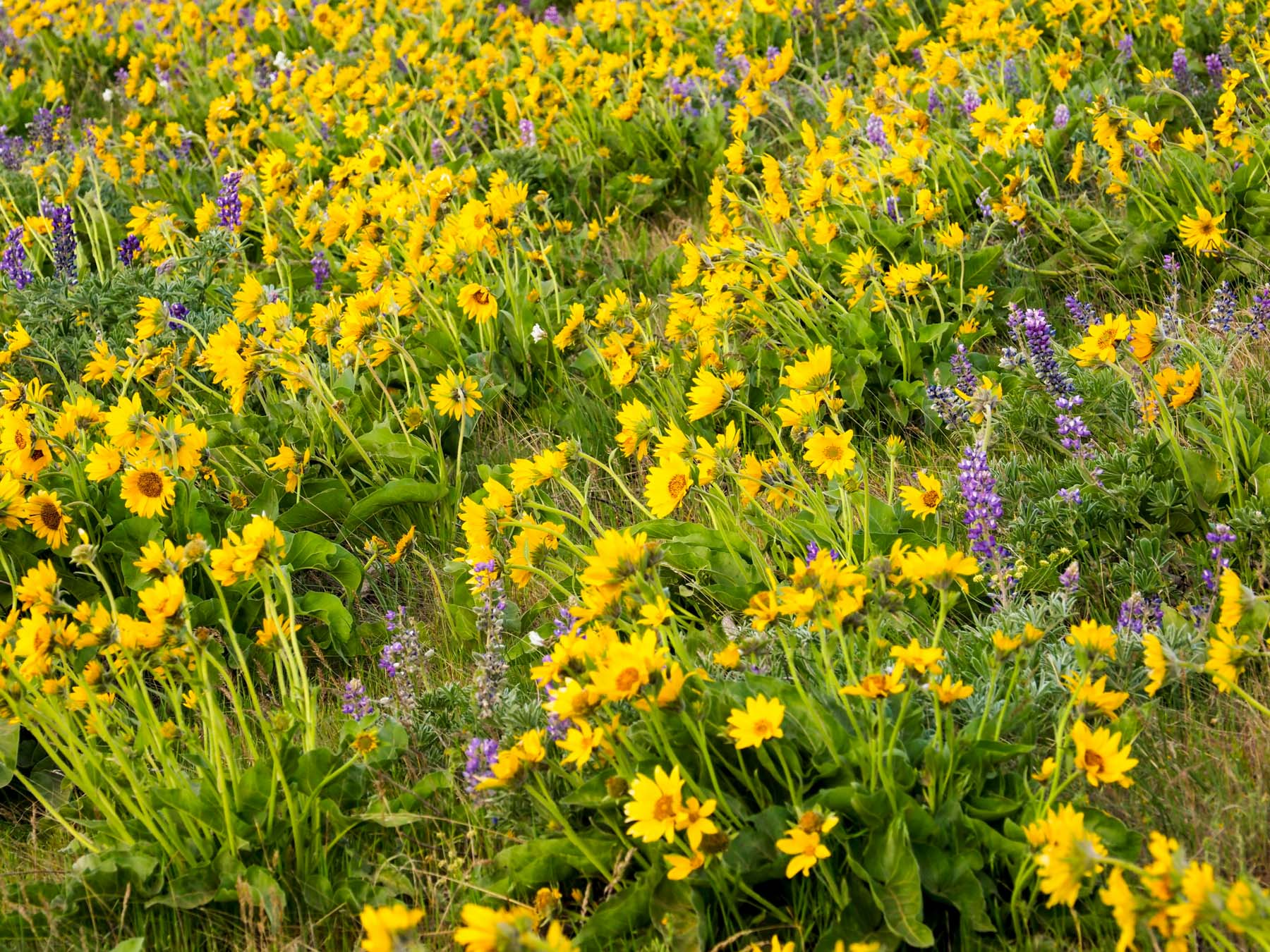
A springtime hike that’s sure to get your boots muddy, Hood River Mountain is a moderately challenging loop near Hood River, Oregon.
The trek through soggy soil is well worthwhile for the consistent presence of wildflowers that begin to show themselves in early April. A peaceful trail with a few small streams to navigate, so a good pair of boots is preferred during the wetter months.
Jewel-toned flower species like castelleja, lupine, columbine, and balsamroot steal the show through the end of May. Be prepared and aware of poison oak and ticks (and cow manure, as there are pastures nearby).
In any case, this hike is worth mentioning for those who need relief from the crowds at the popular Columbia Gorge wildflower hiking trails mentioned on this list. Solitude is hard to come by, which is why I recommend this gem.
Angel’s Rest
- Miles: 4.8 miles
- Elevation gain: 1,500 feet
- Dogs: Allowed on leash
- Permits: None
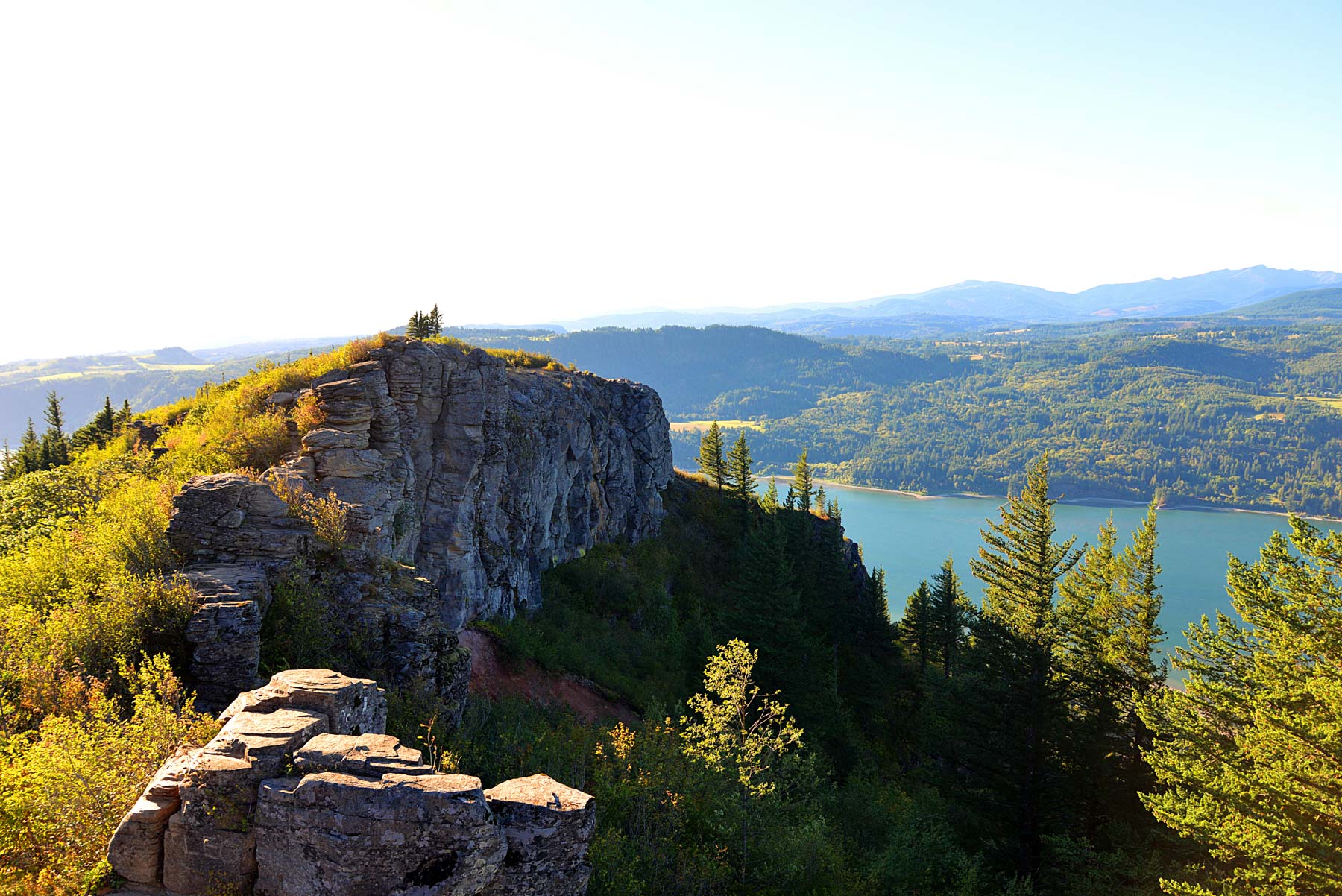
A victim of the 2017 Eagle Creek fire, the beloved Angel’s Rest is still alive and well since being reopened to the public. As you hike toward the summit through Douglas firs and a now-sparse understory of sword fern and vine maple, the charred trunks of the trees are obvious marks of the fire that raged through the area.
Trail Update (March 2026): Eagle Creek Trail is currently closed due to severe storm damage from December 2025. No reopening date has been set.
This is one of the most popular wildflower trails in the Columbia Gorge. Everyone is eager to see bright white Trillium dramatically bloom against blackened tree trunks, it’s quite a dramatic sight.
Toward the craggy peak there are waves of blooming oceanspray and delicate thimbleberry flowers which will eventually give way to the ripe red berries birds fiend for. With the absence of trees post-fire, the view from the top is less obstructed, letting hikers take in a roughly 270 degree view of the Gorge in all its glory.

Cape Horn
- Miles: 7.4 miles
- Elevation gain: 1,230 feet
- Dogs: Allowed on leash
- Permits: None
For a half-day wildflower hike in the Columbia River Gorge, Cape Horn is your best bet. While many travelers along Washington’s SR-14 have likely passed this inconspicuous trail without giving it a second glance, you’d be remiss to follow suit.
Pulling over is well worth an hour or two for the panoramic views of the river alone. Along the Cape Horn trail you’ll discover a wide variety of interesting natural wonders including a small waterfall, plenty of fungi, and an array of wildflowers and butterflies in spring.
There is a small population of Pika (small rabbit-like mammals) that live in this area of the Gorge, a rare phenomenon considering they typically live in higher alpine habitats. Keep alert for their squeaking calls as you cross the talus slopes.
Good to Know: The lower part of the trail is closed from February 1st through July 15th every year to protect nesting Peregrine falcons.
Drift Creek Falls
- Miles: 3.7 miles
- Elevation gain: 540 feet
- Dogs: Allowed on leash
- Permits: Northwest Forest Pass
Have you ever thought to yourself what it would be like to hike 2,000 miles to prove something to yourself (or an ex?). You’re one of the wild ones, aren’t you? The Pacific Crest Trail (PCT) was thrust into the limelight after this best selling book came out in 2012.
Well, if you’re not ready to hike 2,000 miles in its entirety, may I suggest a milder alternative that follows 4 miles of the trail as it meanders towards Drift Creek Falls?
While not necessarily a place folks flock to see vast stretches of seasonal wildflowers, this damp slice of classic Pacific Northwest forest is a straightforward opportunity to see many of the most common floral species the region offers.
Miner’s lettuce, trillium, and salmonberry dominate the understory with the occasional yet exciting shock of red-orange tiger lilies with their heavy heads peek through lush sword fern and salal (part of the heather family of plants).
The dramatic lava rock formations you’ll easily traverse along the trail make way for the grand finale: a show-stopping amphitheater of basalt from which Drift Creek Falls plunges a little over 60 feet.
Slow down time and enjoy a picnic before heading back, this time uphill on a slight incline, and return to your car 1,996 miles shy of completing the PCT (maybe next time, who knows?).

Dalles Mountain Ranch
- Miles: 6.9 (variable depending on starting point)
- Elevation gain: 1,060 feet
- Dogs: Allowed on leash
- Permits: Discover Pass
Dalles Mountain Ranch is one of the most popular wildflower hikes in the Columbia River Gorge. This scenic trail takes you across broad plateaus filled to the brim with grasses, flowers, and crystal clear views of Mount Hood on clear days.
Bright buttery petals of balsamroot really show off here, dominating the slopes as far as the eye can see. Among the blooms look around for evidence of the old ranch that once was active here: barns, homesteads, and old farm equipment dot the property and are ideal subjects for pastoral photography, particularly during the golden hour.
The Labyrinth/Coyote Wall
- Miles: 7.8 miles
- Elevation gain: 1,175 feet
- Dogs: Allowed on leash
- Permits: None
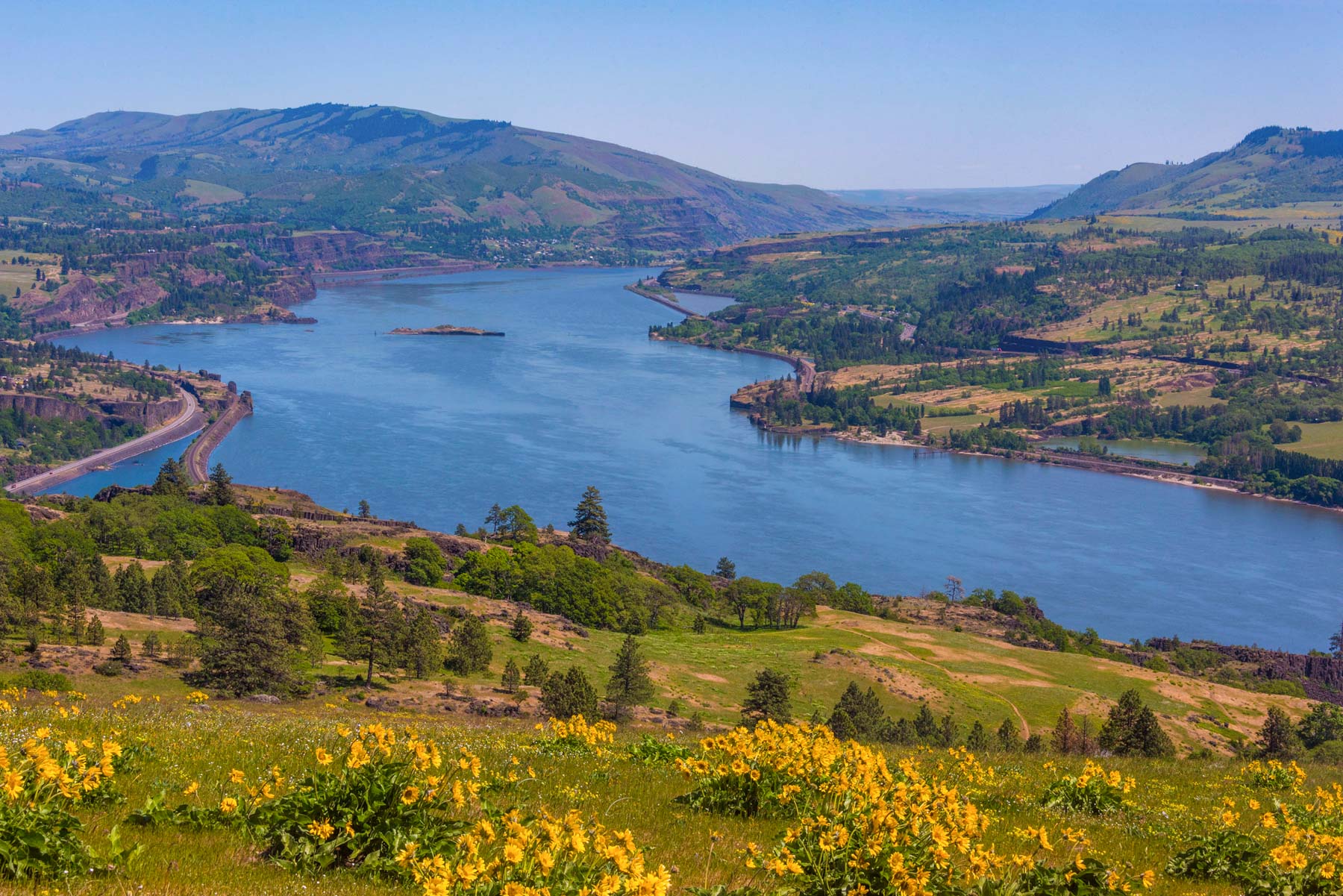
Located on the Washington side, the Labryinth is a maze of trails that wind through lava rock, seasonal waterfalls and small canyons. The area is ripe for exploration and offers great trails for those that want to exchange the lush forest for grassy plains and open skies.
Dominating the arid landscape, Coyote Wall is a beloved staple with mountain bikers. But, as with most great things, hikers have caught on to the enjoyable climb and rewarding views from the summit of this monolithic wonder.
In the spring, the Labyrinth/Coyote Wall trail is one of the best hikes in the Columbia Gorge for wildflowers. Meander up the scenic trail between gnarled oaks, Ponderosa pine, maples and plenty seasonal wildflowers (like balsamroot & and yellowbells).
This area is home to the earliest wildflowers in the Columbia Gorge. The colorful flowers start popping up in late March and last until May. Making this a great introduction to the wonderful wildflowers in the Gorge.
Local’s Tip: If you’re bringing your sweet pup, make sure they’re kept on a leash throughout the duration of the hike. Stay on the trail, as rattlesnakes and ticks are active from late April through October.
Challenging Columbia Gorge Wildflower Hikes
Dog Mountain
- Miles: 6.9 miles
- Elevation gain: 2,800 feet
- Dogs: Allowed on leash
- Permits: Required on weekends (reserve here) & NW Forest Pass or $5 fee at Trailhead.
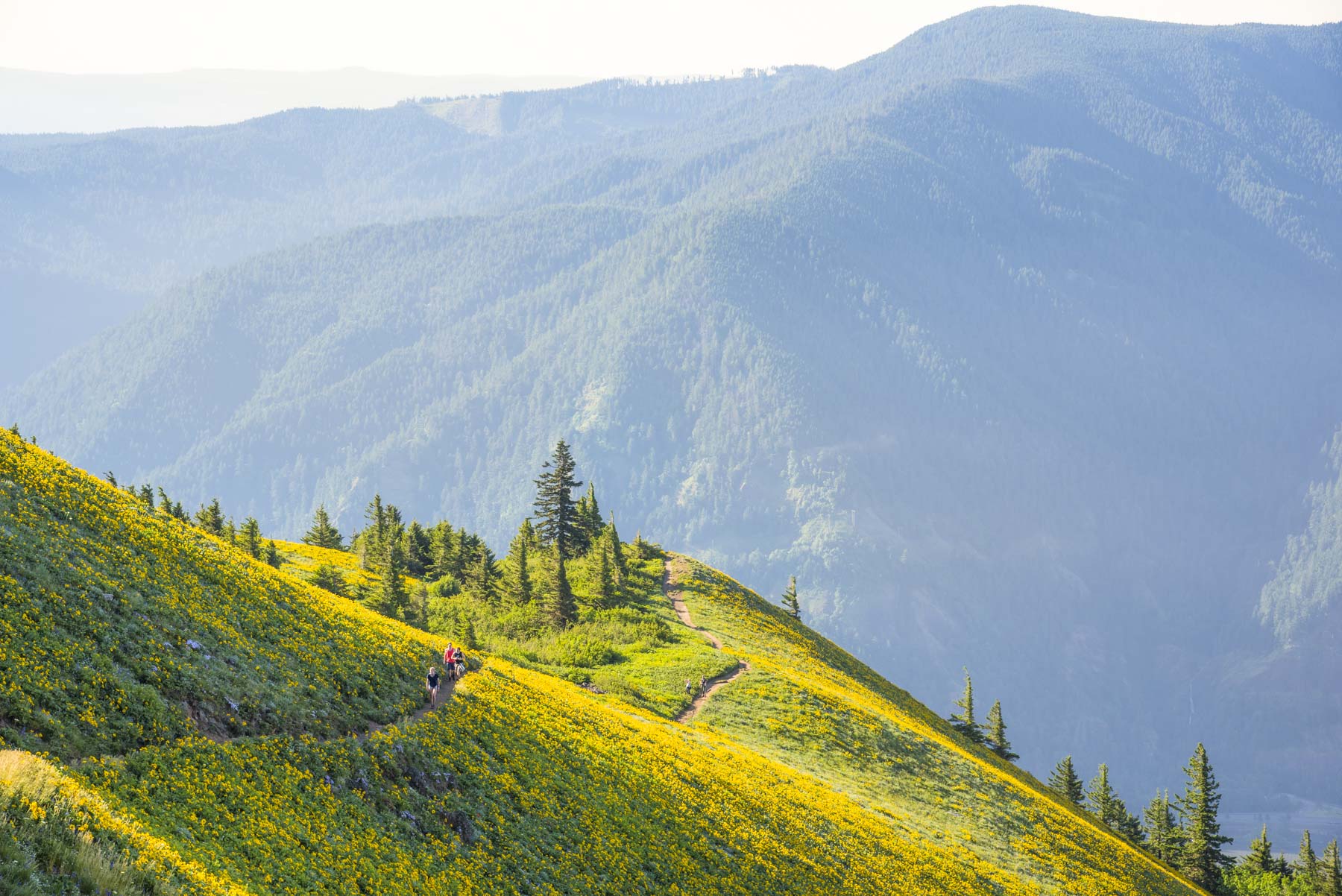
A steep hike offering two trail options: “Less difficult” or “More difficult”, Dog Mountain isn’t for those seeking a casual stroll.
The upper reaches of this trail allows for classic views of the Columbia River Gorge as well as a multitude of wildflowers growing on the sun-filled slopes during peak season.
Perhaps more abundant than the blooms are the visitors who arrive in droves each season to challenge themselves to the climb and snap social media-worthy pictures of the flowers each season.
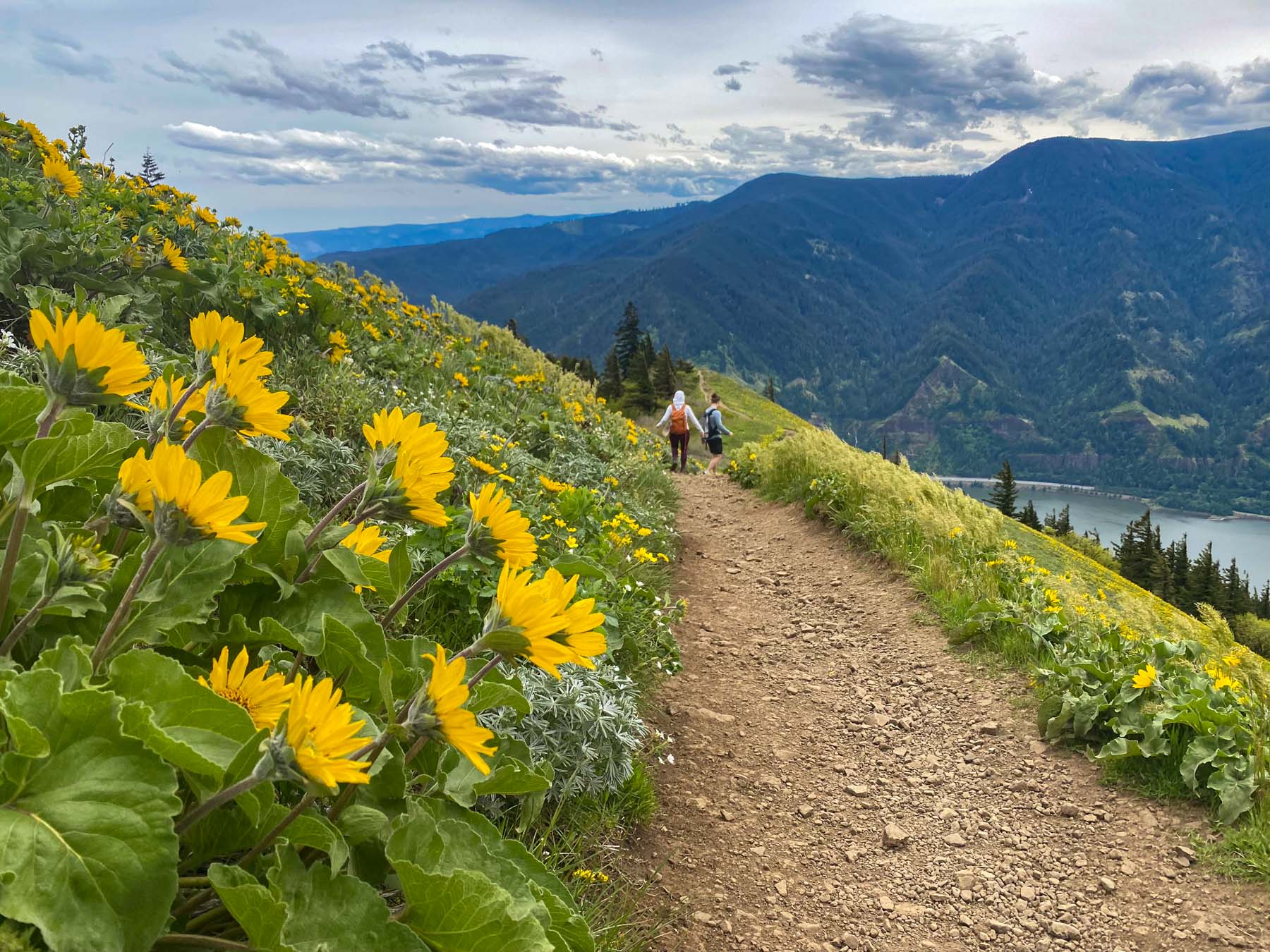
Dog Mountain is considered one of the best wildflower hikes in the Columbia Gorge, so the trail gets crowded. Even without spring blooms, the views from the summit are worth the effort. But if you plan to trek out here for the flowers, be prepared for packed trails.
The narrow single-track trail will be heavily trafficked, but you can trust me when I tell you that this wildflower experience in the Columbia Gorge is worthwhile, even with the crowds.

Table Mountain
- Mileage: 15.5 miles
- Elevation: 3,400 feet
- Parking Pass Required?: Yes (NW Forest Pass)
- Dogs Allowed? Yes, on leash
Flat-topped Table Mountain (which can appear more pyramidal depending on the angle) stands among the most commanding peaks of all the trails on the Washington side of the Columbia River.
This long, arduous hike – one of the most challenging in the Columbia Gorge – summits the 3,417-foot mountain from the Bonneville Trailhead. The trail uses portions of the Tamanous, Pacific Crest, and West Table Mountain trails.
Table Mountain serves up stirring views of the Columbia Gorge and Cascade Crest. But the huge, intimidating cliffs of the mountain’s south face are just as impressive. So is the bird’s-eye view of the Bridge of the Gods. It’s an unforgettable experience.
Hamilton Mountain
- Miles: 7.5 miles
- Elevation: 2,200 feet
- Dogs: Allowed on leash
- Permits/Passes: Washington Discover Pass or $5 fee at the trailhead
A hit with nature nuts, portions of the Hamilton Mountain trail give brief opportunities to test your parkour skills as you scramble over roots onto broad basalt outcroppings with expansive views toward the misty foothills of Washington.
Loved by avid hikers for its moderate incline and rewarding views, Hamilton Mountain is a year-round gem, but the spring is when it really shines.
In the spring there’s a delightful mix of seasonal wildflowers (Columbine, False-Lily-of-the-Valley, Fairy Slippers) that creep up in the underbrush of the forest, making this one of the best wildflower hikes in the Columbia River Gorge.
Best Hikes in the Columbia Gorge for Wildflowers (Post Summary)
The bright and cheerful pops of color from these native flora are an annual invitation to shake the winter blues and make time to play outside. To explore the seemingly endless offerings of wildflower hiking trails in the Columbia River Gorge.
In sum, here’s a roundup of the best wildflower hikes in the Columbia Gorge.
Easy Wildflower Hikes in the Columbia Gorge
- Lyle Cherry Orchard
- Rowena Crest
- Mosier Plateau
- Horsethief Butte
- Horsetheif Lake Petroglyphs Trail
- Catherine Creek (ADA Wildflower Hike in the Gorge)
Moderate Hikes in the Columbia Gorge for wildflowers
- Hood River Mountain Loop
- Angel’s Rest
- Cape Horn
- Drift Creek Falls
- Dalles Mountain Ranch
- The Labyrinth/Coyote Wall
Challenging wildflower hikes in the Gorge
- Dog Mountain
- Table Mountain
- Hamilton Mountain
Local’s Tip: Check out the helpful NW Wildflowers Map where you can monitor the current blooms at various sites around the state where wildflowers are abundant.
For the full list of activities in the area, check out my Hood River things to do guide.
Map of the Best Columbia Gorge Wildflower Hiking Trails
Cheers!
Antonina
Newest on Columbia Gorge & Hood River
- Columbia River Gorge Waterfalls in Winter Oct 2026
- Columbia River Gorge Fall Foliage Drive Sep 2026
- Hood River Fruit Loop: A Local’s Fall Guide Aug 2026
- Hood River Weekend Guide (2 Days of Food, Wine, and Gorge Views) Jun 2026
- Best Restaurants in Hood River, Oregon (Where Locals Actually Eat) May 2026
- The Best Waterfalls Near Multnomah Falls (10 Falls Most Tourists Miss) Apr 2026