
Tide pooling on the Oregon Coast is one of those activities that sounds mildly educational and turns out to be completely mesmerizing. You think you’re going to glance at a few sea stars and move on, and then 45 minutes later you’re crouched over a rock watching an anemone close around your finger and calling your husband over to see a hermit crab the size of a quarter. It happens every time.
Oregon has some of the best tide pools on the Pacific Coast, thanks to the rocky basalt shoreline and the state’s marine reserve system that protects these ecosystems. The trick is knowing where to go and when to go, because tide pools are only accessible during low tides, and the best ones require hitting a minus tide. Here’s the complete guide to finding Oregon’s best tide pools. For more on the coast, check my Oregon Coast things to do guide.
When to Go Tide Pooling
This is the single most important thing to understand about tide pooling. You can only access tide pools during low tides, and the best tide pooling happens during minus tides (when the tide drops below the zero mark on tide charts). During a minus tide, rocks and areas that are normally underwater get exposed, revealing the most diverse and interesting marine life.
Summer (June through August) is the best season for tide pooling because the lowest tides of the year tend to occur in the morning and early afternoon, which is much more practical than the winter minus tides that often happen in the dark. Check tide charts at tidesandcurrents.noaa.gov before you plan your trip. Look for tides of -0.5 feet or lower for the best access.
Arrive about an hour before the lowest tide. This gives you time to explore as the water recedes and then head back as it starts coming in. Never turn your back on the ocean, and always be aware that incoming tides can cut you off if you’re not paying attention.
Best Tide Pool Spots on the Oregon Coast
Haystack Rock (Cannon Beach)
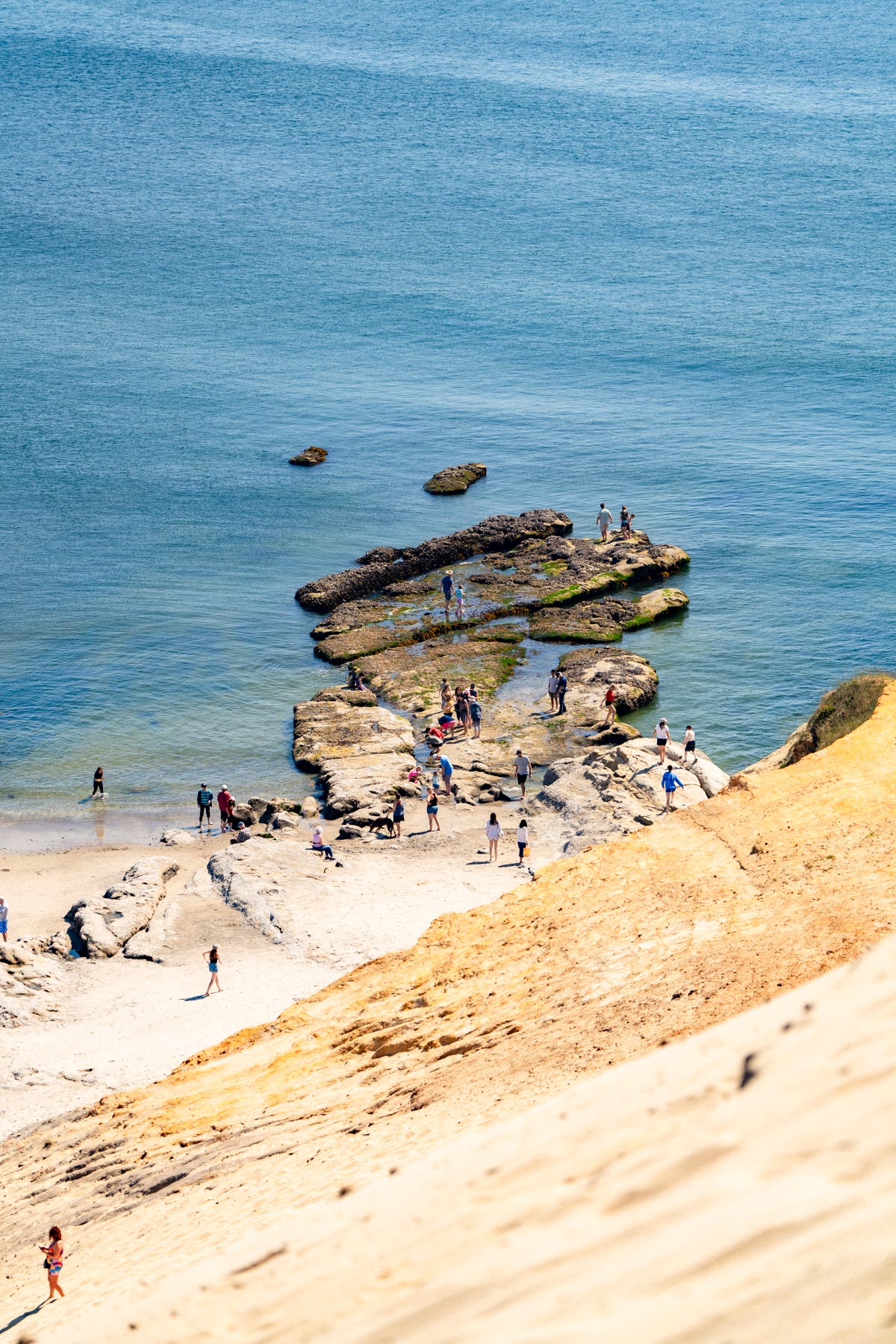
The tide pools at the base of Haystack Rock are the most famous and most accessible on the Oregon Coast. During low tide, the rock formations surrounding the 235-foot sea stack come alive with sea stars (both purple and orange ochre stars), green anemones, hermit crabs, mussels, barnacles, and sometimes even nudibranchs if you look closely. The area is a marine garden, which means collecting is prohibited and volunteers from the Haystack Rock Awareness Program are often on-site to help you spot things and answer questions.
The best part is how easy this is to access. You walk straight from the beach to the rock formations. No hiking required. For more on Cannon Beach, check my Cannon Beach guide.
Yaquina Head Outstanding Natural Area (Newport)
Yaquina Head is the best tide pooling spot on the central coast. The Cobble Beach area at the base of the headland has expansive rocky platforms that create dozens of tide pools during low tides. The marine life here is incredibly diverse: sea urchins, chitons, sculpins, sea lettuce, and some of the largest anemones on the coast. The Natural Area also has a lighthouse (Oregon’s tallest), a visitor center with marine exhibits, and harbor seals on the offshore rocks.
There’s a small day-use fee ($7 per vehicle). The paved path to the tide pools makes this one of the most accessible spots for families. For more on Newport, check my Newport things to do guide.
Indian Beach (Ecola State Park)
Indian Beach at Ecola State Park near Cannon Beach has excellent tide pools along the rocky outcrop at the south end of the beach. It’s less crowded than Haystack Rock because you have to drive into the state park and hike a short trail to reach the beach. The pools here tend to have more variety because fewer people visit, and the rock formations create deep pools that hold larger creatures. Sea stars, crabs, and anemones are common.
Ecola State Park charges a $5 day-use fee. Check the park website for trail closures before you go, as landslides occasionally close access roads.
Strawberry Hill (South of Yachats)
Strawberry Hill Wayside is a small pull-off on Highway 101 about 5 miles south of Yachats, and it has some of the most spectacular tide pools on the coast. The basalt rock formations here are dramatic, and the pools are deep and well-protected, which means the marine life is abundant. Sea urchins, giant green anemones, colorful sea stars, and chitons are all common. Harbor seals often haul out on the rocks nearby, so bring binoculars.
The approach to the tide pools involves scrambling over rocks, so wear sturdy shoes with grip. This isn’t the easiest access, but it’s one of the most rewarding.
Cape Perpetua (Yachats)
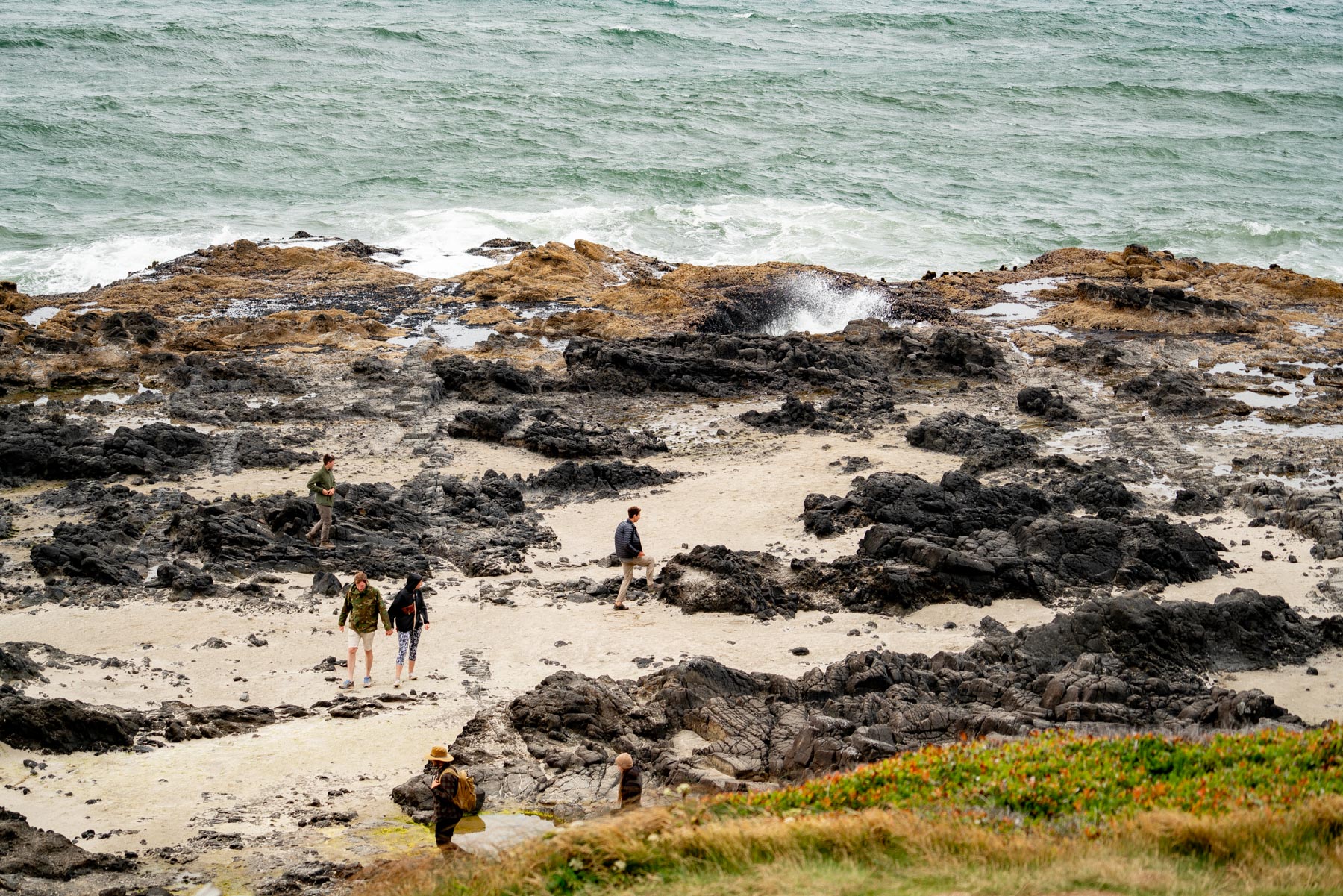
Cape Perpetua has multiple tide pool areas along its rocky shoreline, plus two of the most dramatic coastal features in Oregon. The Spouting Horn shoots water 30 feet in the air during incoming tides, and Thor’s Well is a natural sinkhole in the basalt where water surges in and drains out with the waves. The tide pools here are scattered along the rocky coast south of the Thor’s Well viewpoint and are excellent during minus tides.
Be extremely careful around Thor’s Well and the Spouting Horn. The rocks are slippery and rogue waves can hit hard. Stay behind the marked boundaries.
Seal Rock State Recreation Site
Seal Rock, about 10 miles south of Newport, has a wide rocky reef that’s exposed during low tides. The pools here are large and connected, making it easy to wander from one to the next. Sea stars, anemones, and shore crabs are common, and the offshore rocks attract seals and sea lions (hence the name). The beach is free and has a small parking lot that fills up on summer weekends.
What You’ll Find in Oregon Tide Pools
Sea stars are the headliners. The purple ochre sea star is the most common, but you’ll also see orange and brown varieties. They’re surprisingly colorful and varied once you start looking closely.
Anemones look like flowers but are actually animals. Touch one gently and it’ll close around your finger (it’s harmless and feels like sticky velvet). Giant green anemones are the most impressive and can be the size of a dinner plate.
Hermit crabs are everywhere if you look in the shallows. They’re entertaining to watch as they move between shells.
Sea urchins cluster in crevices and small pools. Purple sea urchins are the most common. Don’t pick them up (their spines are sharp and can break off).
Mussels and barnacles cover most of the exposed rock and are the foundation of the tide pool ecosystem. They might not be the flashiest residents, but they’re essential.
Tide Pooling Tips and Etiquette
Wear waterproof shoes with grip. The rocks are slippery with algae, and you’ll be walking in water. Sandals and sneakers won’t cut it. Rubber-soled water shoes or hiking sandals with good traction are ideal.
Look but don’t take. Oregon’s marine gardens are protected. Don’t remove any creatures, shells, or rocks. You can gently touch anemones and sea stars, but always put anything back exactly where you found it.
Watch where you step. Tide pool creatures live on and under rocks. Step on bare rock when possible and avoid stepping on mussel beds, which can crush the animals underneath.
Never turn your back on the ocean. Rogue waves are real on the Oregon Coast. Always be aware of the water and give yourself an escape route. Incoming tides can cut off access to rocks quickly.
Bring sunscreen. Even on foggy days, UV exposure is real on the coast. You’ll be out for longer than you think.
Quick Tips
- Oregon has some of the best tide pools on the Pacific Coast, thanks to the rocky basalt shoreline and the state's marine reserve system that protects these ecosystems.
- For more on the coast, check my Oregon Coast things to do guide.
- Check tide charts at tidesandcurrents.noaa.gov before you plan your trip.
- Arrive about an hour before the lowest tide.
- For more on Cannon Beach, check my Cannon Beach guide.
Frequently Asked Questions
When is the best time for tide pooling in Oregon?
Summer (June through August) has the lowest daytime tides, making it the best season. Check tide charts for minus tides (below 0.0 feet) and arrive about an hour before the lowest point. The best tide pooling windows vary by day, so always check the charts for your specific date.
Where are the best tide pools on the Oregon Coast?
Haystack Rock in Cannon Beach is the most accessible and popular. Yaquina Head in Newport has the most diverse marine life. Strawberry Hill near Yachats is the most rewarding for experienced tide poolers. For beginners and families, Haystack Rock and Yaquina Head are the best starting points.
Can you touch things in tide pools?
You can gently touch anemones and sea stars (and you should, because the texture is fascinating), but always be gentle and put everything back where you found it. Don’t remove anything from the tide pools. Oregon’s marine gardens are protected, and removing creatures or shells is illegal.
Tide pooling is one of those activities that surprises everyone who tries it. You go expecting to spend 20 minutes and end up spending two hours. The Oregon Coast has world-class tide pools, and summer is the perfect time to explore them. What’s your favorite tide pool spot? Let me know in the comments.
Newest on Oregon Coast
- Oregon Coast in Winter Sep 2026
- The Oregon Coast in September: The Secret Best Month Jul 2026
- Oregon Coast Lighthouses Guide (History, Views, and How to Visit) Jul 2026
- Oregon Coast Storm Watching Guide (The Best Winter Experience) Jun 2026
- Oregon Coast in Summer (Complete Guide to the Best Season) Jun 2026
- Best Oregon Coast Restaurants (From Astoria to Bandon) May 2026