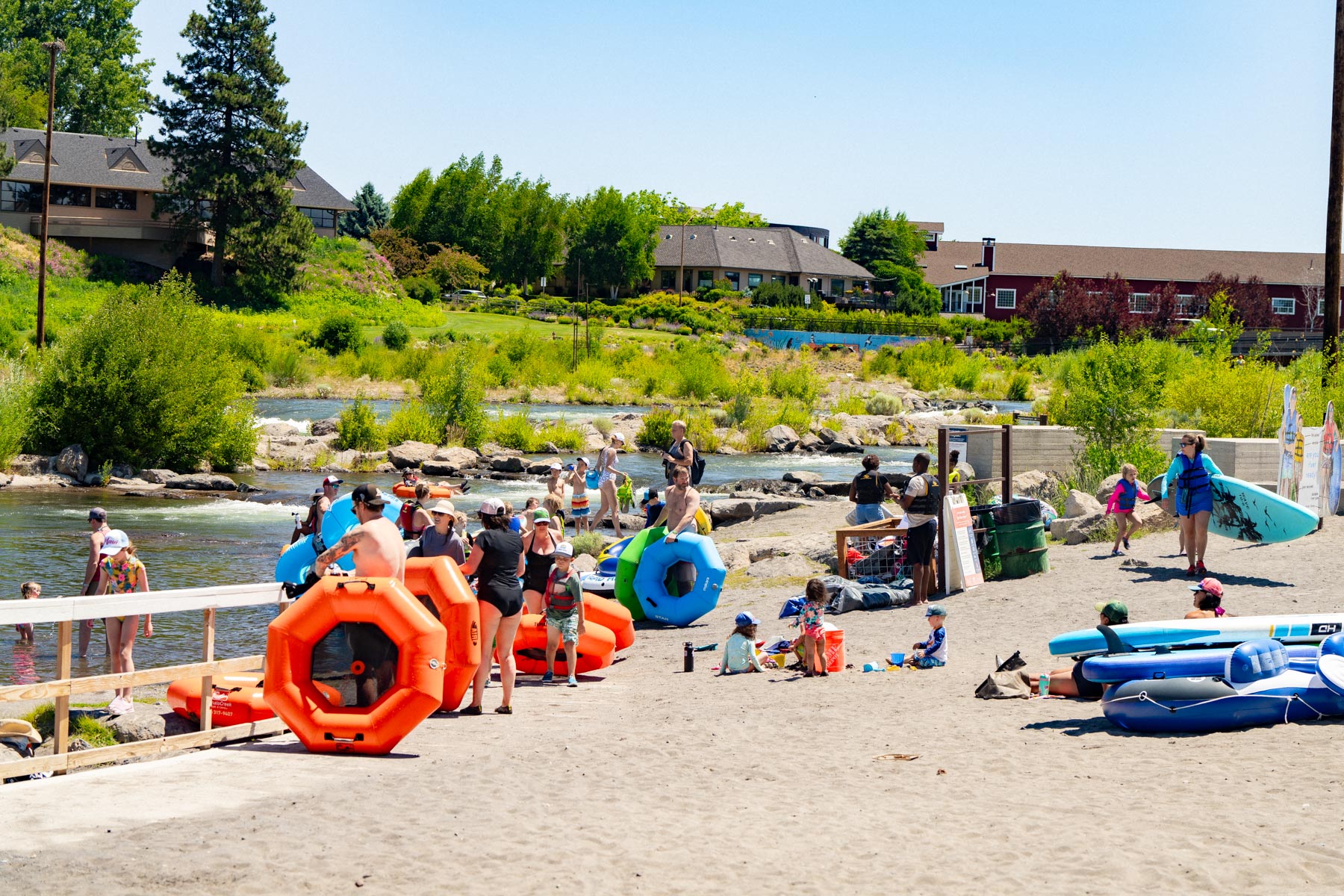
I’ve lived in Bridge City my whole life (love this city to bits) and wanted to round up the most iconic bridges in Portland for first time visitors. Longtime readers of this site know that I’m not one for small talk, so let’s get to the good stuff!
List of Portland Bridges
(Click here for the table of contents)
Bridges in Portland
St. Johns Bridge
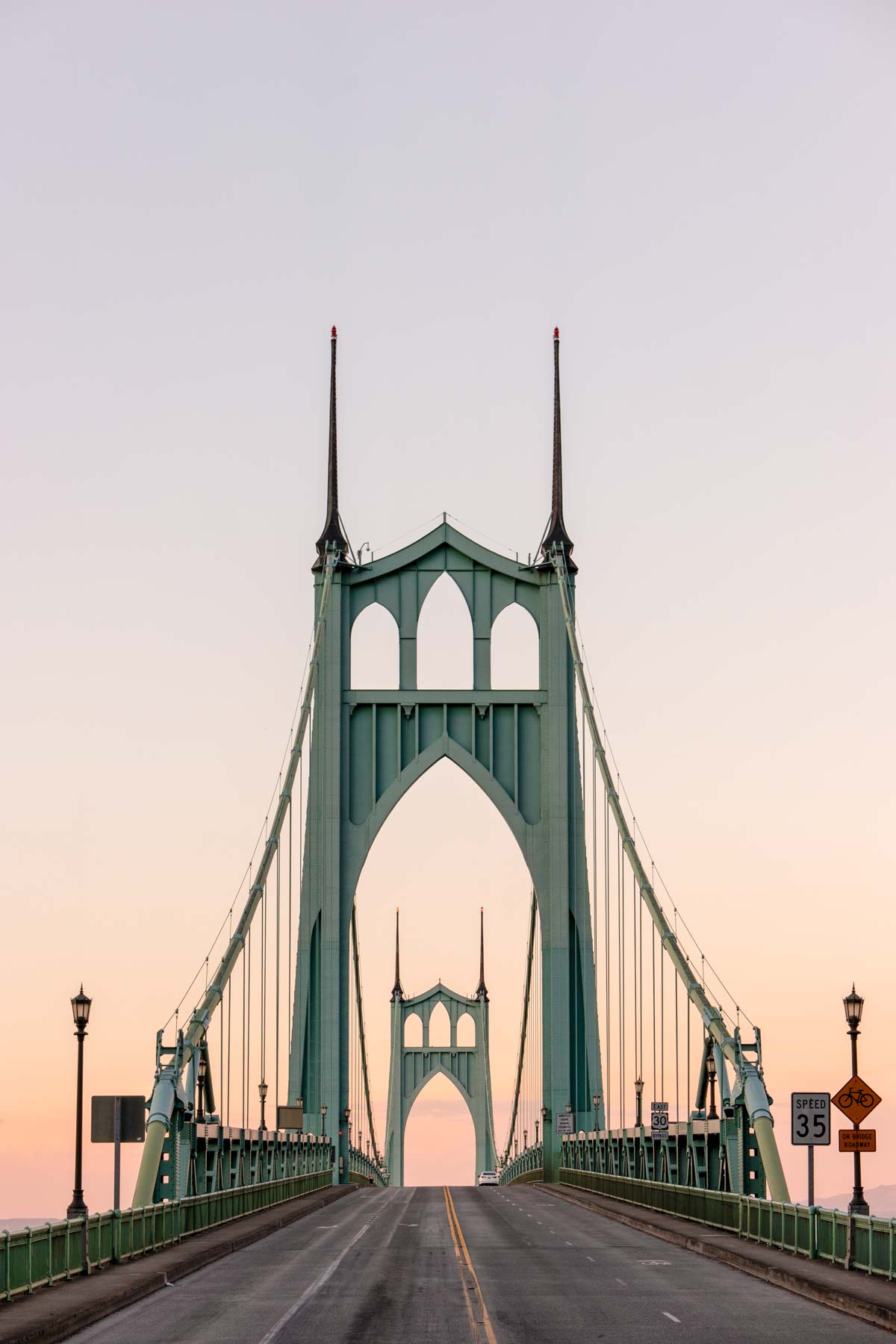
Standing at an impressive height of 408 feet, St. Johns Bridge is the tallest bridge in Portland. The gothic-inspired stunner is often deemed one of the most beautiful Portland bridges and it’s hard to disagree.
Hell, I don’t know a single local who hasn’t done a photo shoot near (or on) the bridge at least once. Alright, let’s talk logistics. The St. Johns Bridge is a steel suspension bridge that spans the Willamette in north Portland (several miles from the downtown core).
The bridge spans an impressive 2,067 feet, offering 205 feet of navigational clearance. Getting funding to build the bridge was no easy feat.
For starters, north Portland didn’t have much political sway or capital to convince the city to build the bridge. The area was served by a ferry that carried 1,000 vehicles per day, but it was clear a bridge would better serve the area.
Deals were brokered and the decision was made: more bridges in Portland! The best part? Construction began one month before the Stock Market Crash of 1929, which ended up providing locals with employment during the Great Depression.
Fun Fact: The St. Johns Bridge is located in close proximity to the Swan Island Airport. As such, government officials wanted the bridge painted yellow with black stripes. But county officials said “no way” and waited until St. Patrick’s Day 1931 to announce the new bridge in Portland would be painted green.
- Year Built: 1929, opened 1931
- Pedestrian/Cycles? Yes
Tilikum Crossing Bridge
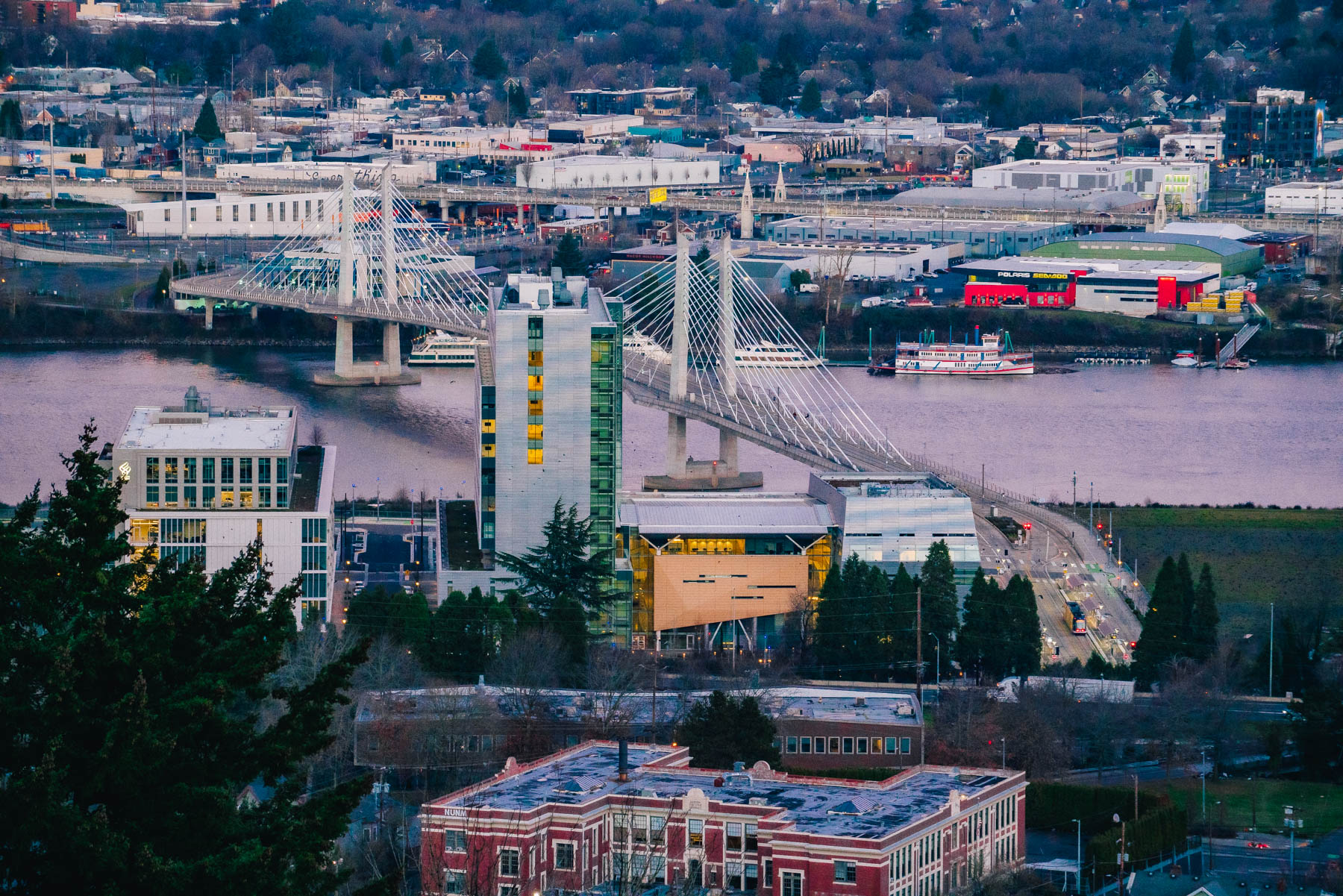
Now, I’m not saying I’ve a favorite bridge in Portland, but if I did? It’d definitely be Tikilum Crossing (sometimes known as the Bridge of the People). I mean, just look at this thing, it’s a masterpiece.
Opened in 2015, this is one of the newest bridges in Portland (but not the newest, that title belongs to Blumenauer Bridge which spans I-84).
Tilikum is the Chinook word for “people,” aptly named, this is one of the few Portland bridges that doesn’t allow car traffic. This bridge was the city’s creative solution for accommodating the influx of cyclists and pedestrians during the city’s rapid growth.
I’ve biked this bridge a handful of times and it’s always a joy. The LED lights are a nice touch too, illuminating the stunning bridge for all to see. In my opinion, this is one of the most beautiful bridges in Portland, it’s definitely worth a detour.
- Year Built: 2011, opened 2015
- Pedestrian/bike crossing? Yes
Fremont Bridge
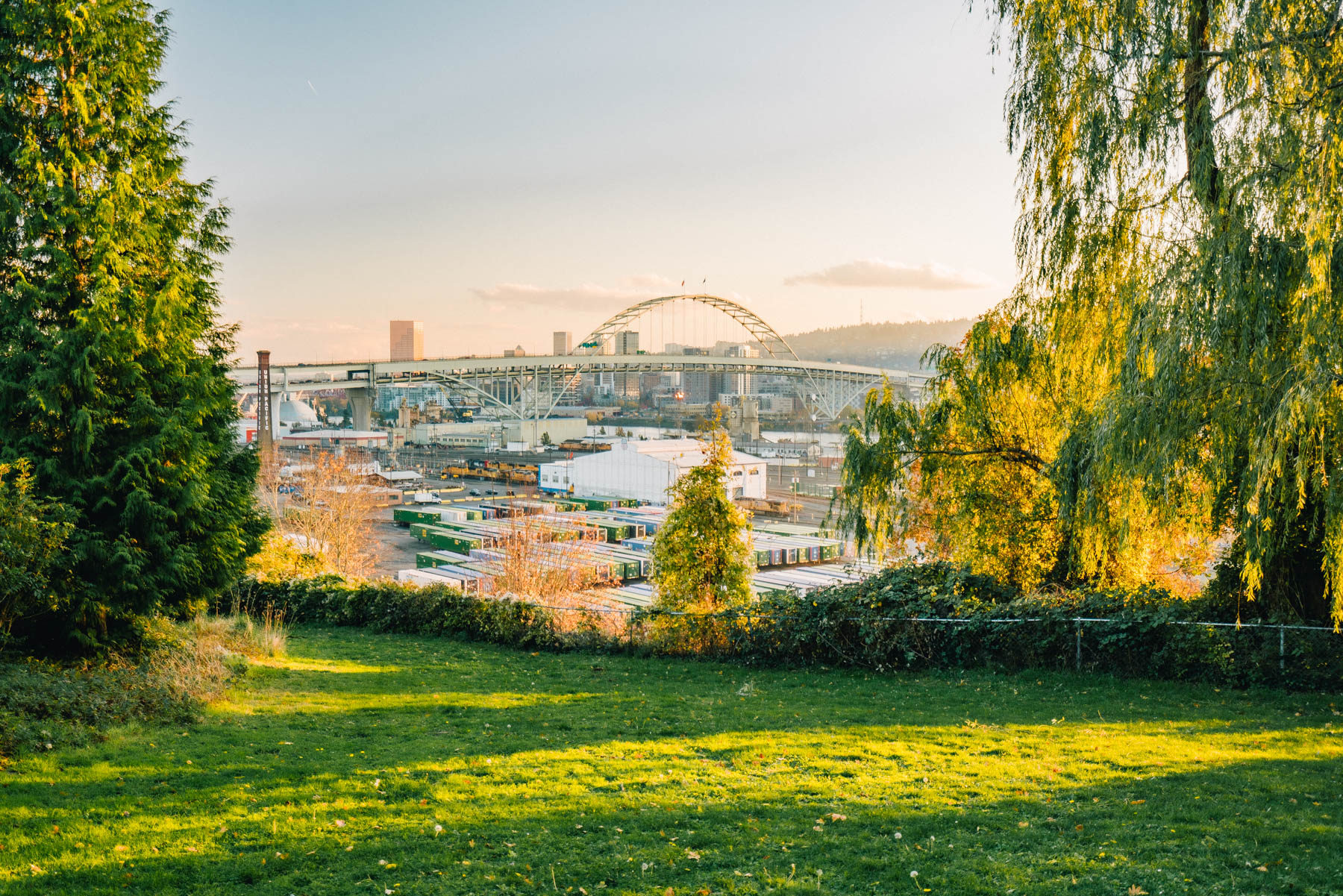
Opened in 1973, the Fremont Bridge celebrated 50 years in 2023. This is one of the most iconic bridges in Portland, forever looming over the city’s magnificent skyline.
In terms of pedestrian and bike traffic this Portland bridge is a no-go. It’s a victim of its time, really. When the bridge opened in 1973 it was unusual for interstates and bridges to accommodate anything more than motorized vehicles.
However, there’s a super cool biking event (called the Providence Bridge Pedal) which opens the bridge up the second week of August for bikers and walkers exclusively. The views from the top deck are something else!
- Year Built: 1968, opened 1973
- Pedestrian/Cycles? No
- Fun Fact: The Fremont Bridge is the 32nd longest arch bridge in the world.
Good to Know: Providence Bridge Pedal
The Providence Bridge Pedal is a beloved annual event held mid-August. This non-competitive event spans 23 miles and crosses nine Portland bridges.
Locals love this event because of the unique opportunity to bike across several bridges in Portland that are usually closed to pedestrians and bikers (like the the Marquam and Fremont bridges). The event is known to sell out, try your luck anyways.
Broadway Bridge
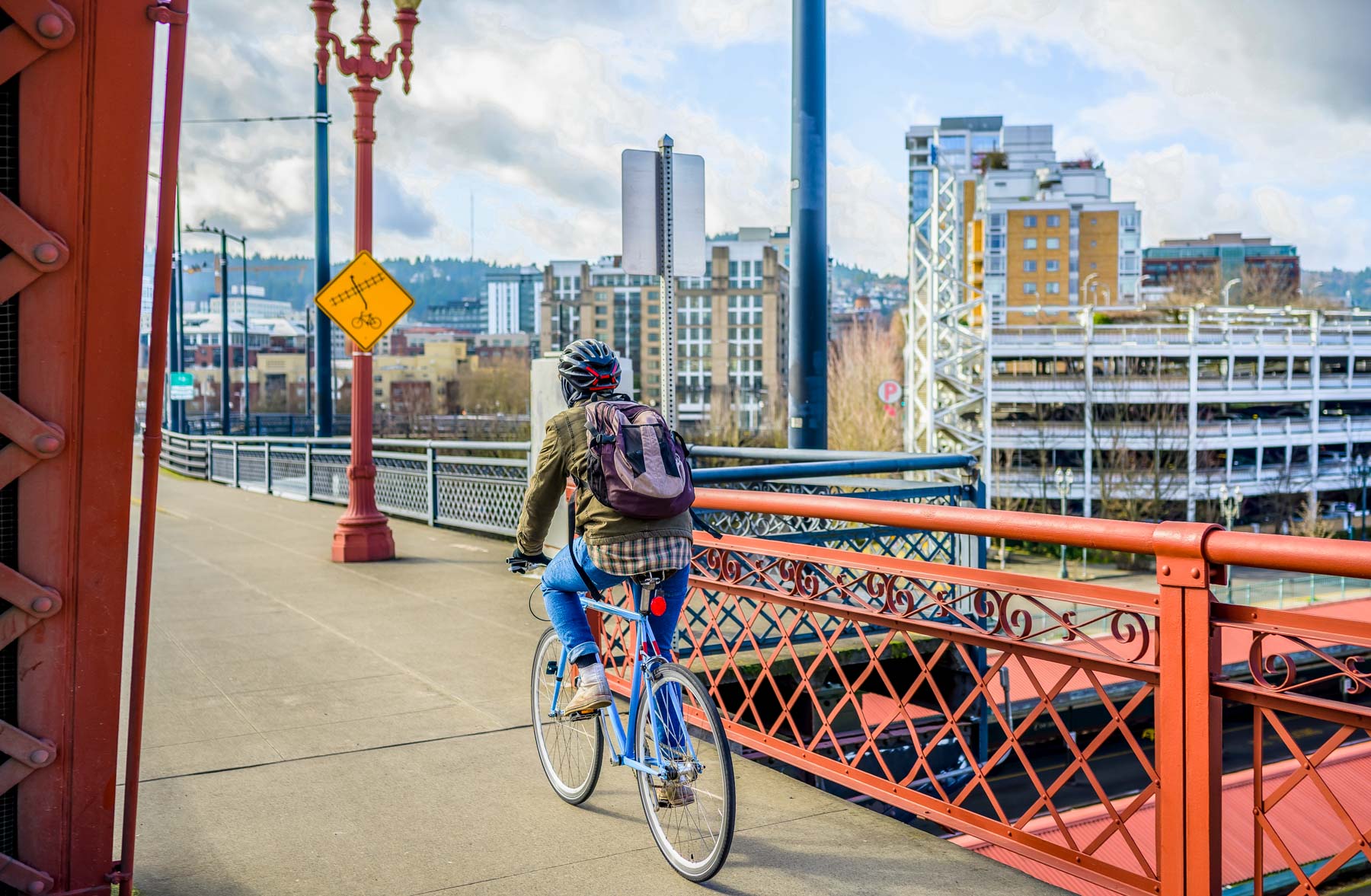
Dating back to 1913, the Broadway Bridge has become one of the most iconic bridges in Portland. Rusty red in color, this is one of the longest bascule bridges in Portland (fancy way of saying drawbridge).
A bascule bridge is a moveable bridge that relies on counterweights to continuously balance a span that can lift up to provide clearance for boats.
This is one of the most bike-friendly Portland bridges because of the protected bike lanes. The bridge also carries the Streetcar and motor vehicles across. All told, this Portland bridge is a noisy affair, but a beauty to behold firsthand.
- Year Built: 1913
- Bike/Pedestrian path? Yes
Burnside Bridge
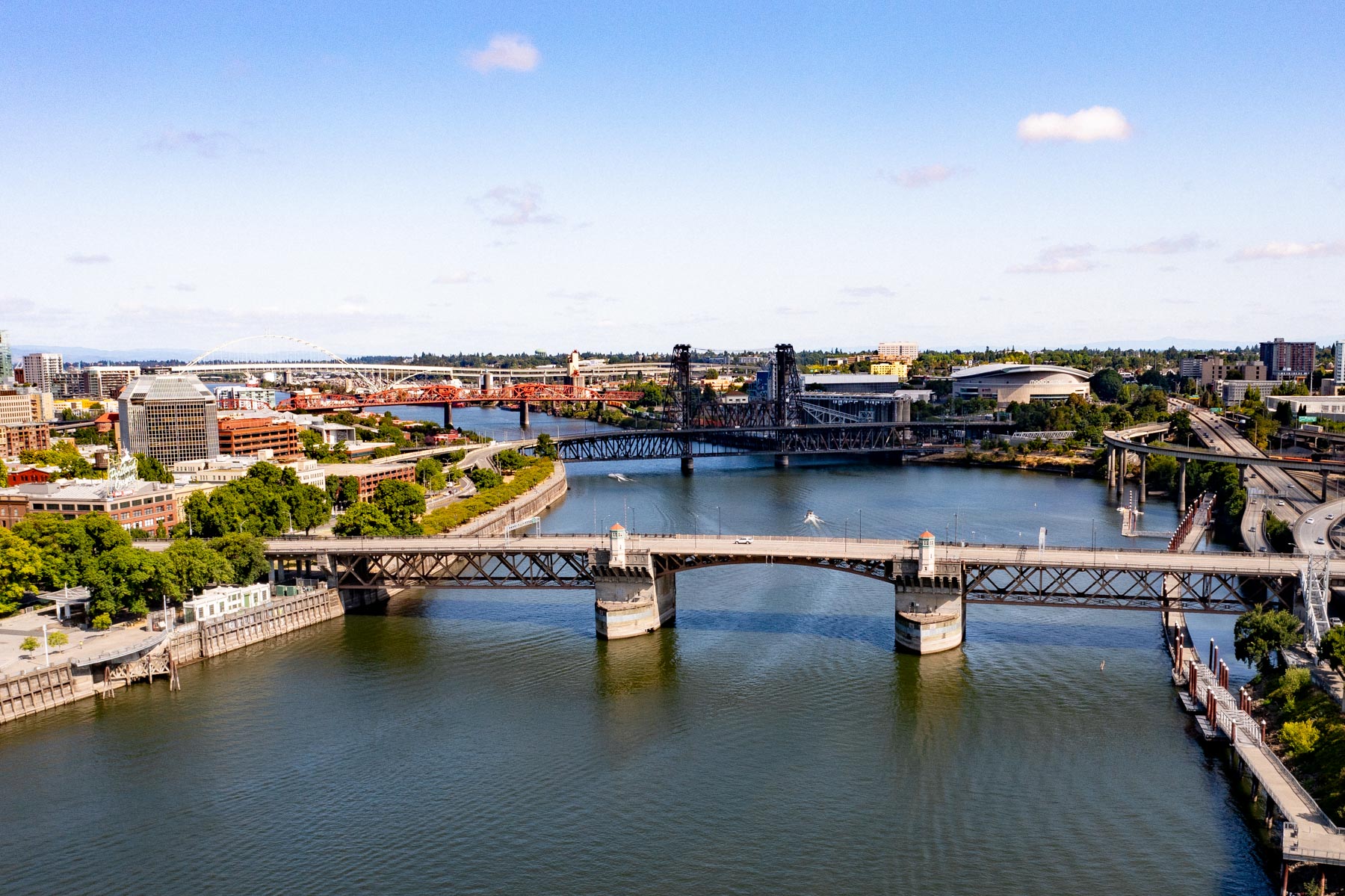
Located near one of the busiest streets in Portland, the Burnside Bridge is best know for the Renaissance towers that look like air traffic control towers to the untrained eye.
Built in 1926, this is one of the most popular bridges in Portland because of its proximity to the famous White Stag sign. Averaging 45,000 cars per day, the bridge originally had six lanes of traffic but was redesign in 1995 to accommodate bike paths.
More than 2,000 pedestrians and 4,000 cyclists cross the Burnside Bridge daily.
- Year Built: 1926
- Pedestrian/cycle path? Yes
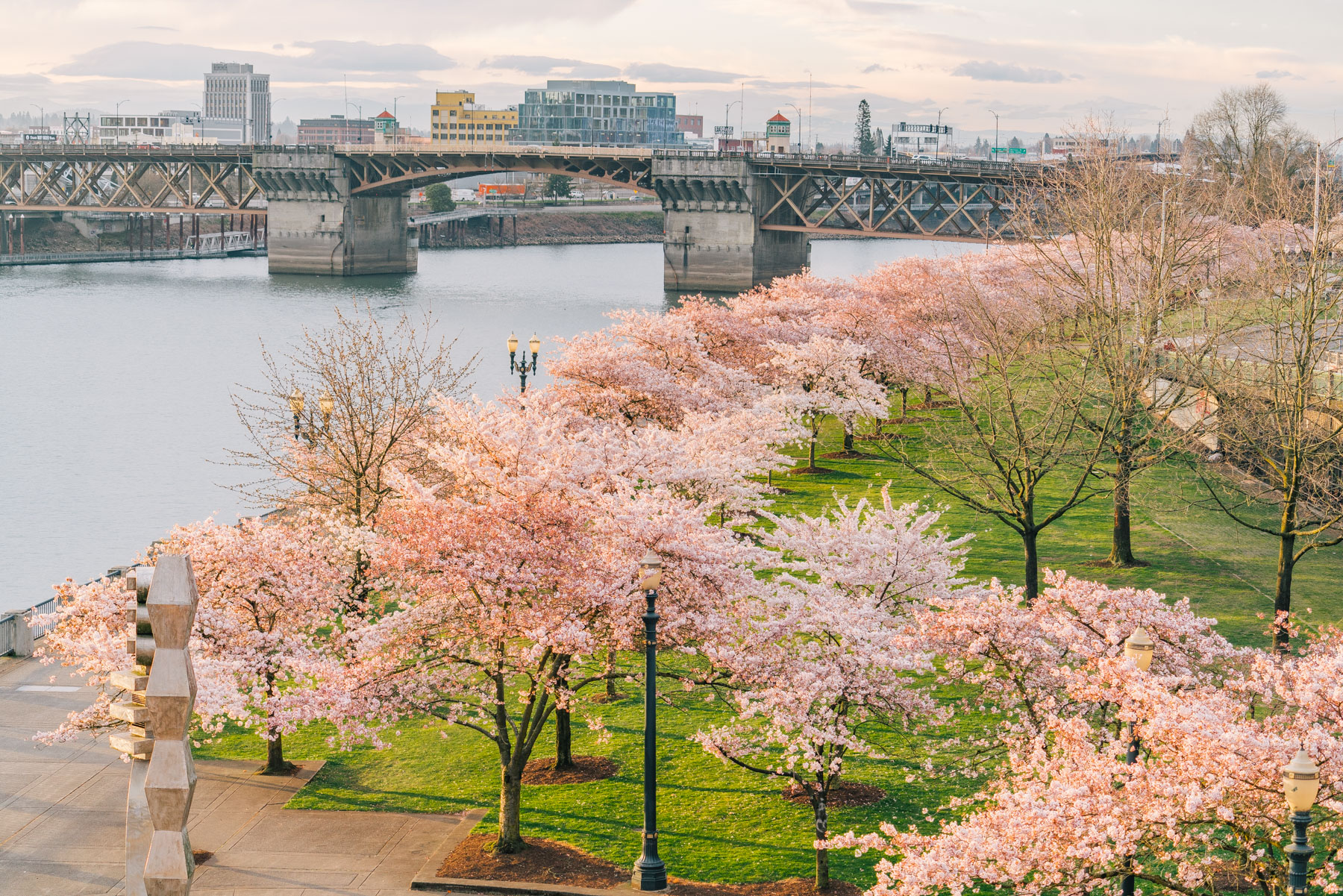
Local’s Tip: Tom McCall Waterfront Park is the BEST spot for cherry blossoms in Portland, Oregon. Here’s all the proof you need.
Morrison Bridge
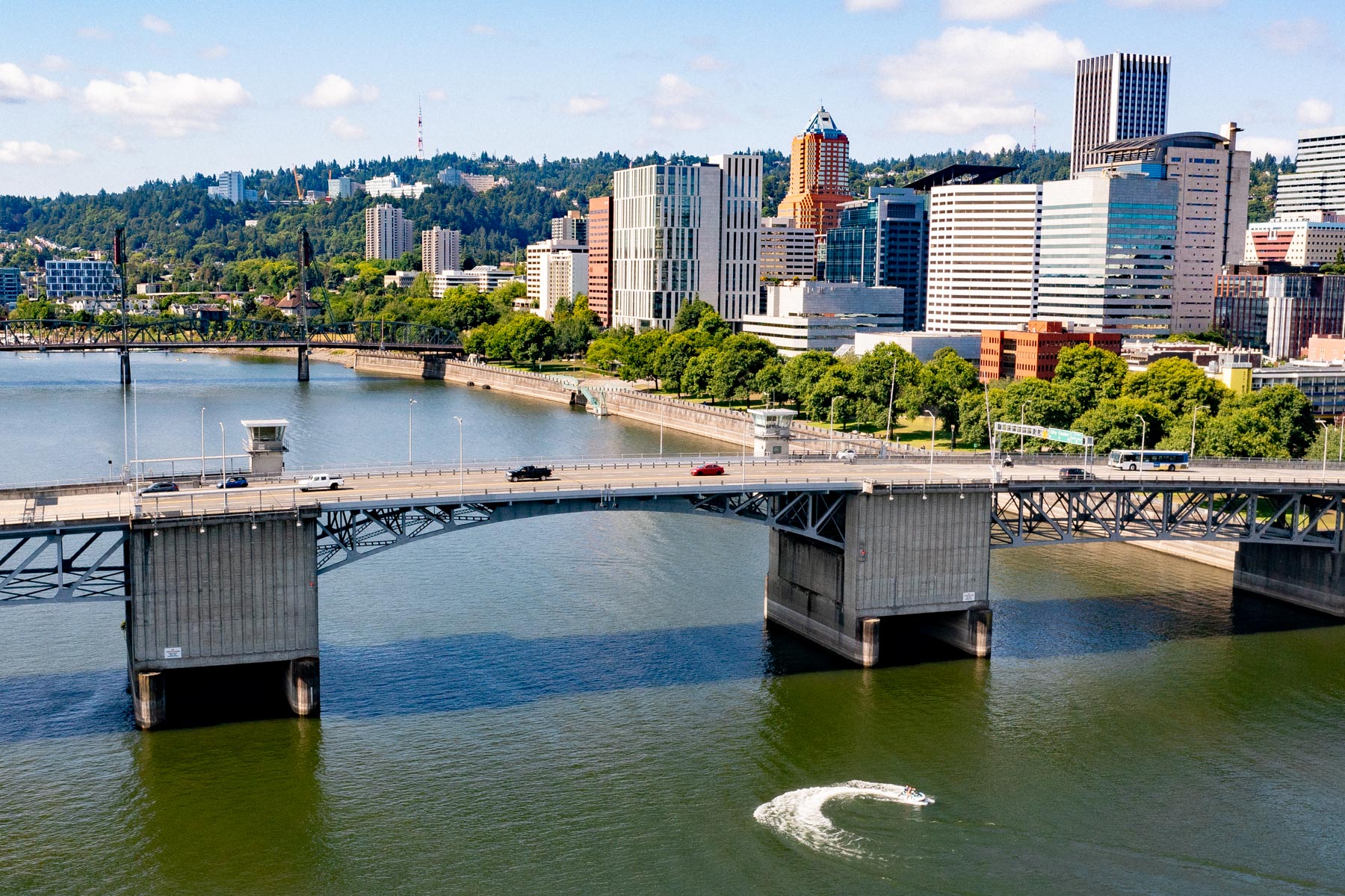
Originally built in 1888, the Morrison Bridge you see today was constructed in 1958. Averaging 50,000 cars daily, it’s one of the most heavily-used bridges in Portland. Considered the largest mechanical device in Oregon, the bridge is an engineering feat.
The original Morrison Bridge was a humble wooden swing-span bridge billed as the longest bridge west of the Mississippi River. The second Morrison Bridge was built in 1905 (also a swing bridge, if it ain’t broke, right?).
It didn’t take long for folks to realize the bridge would need to be replaced yet again because the second version of the Morrison Bridge was not designed for cars.
The 1958 rebuild is equipped with 36-foot gears that control 940 ton counterweights on either side of the pier. When not raised, the bridge features a clearance of 69 feet, which is sufficient for most river traffic so the bridge is seldom raised.
Portland Bridges Fun Fact: The Morrison Bridge doesn’t connect to Morrison Street on the west end. The reason? While the 1958 iteration of the Morrison Bridge was being built, the previous bridge (built in 1905) was left in operation, which necessitated the replacement bridge be built on a different alignment.
- Year Built: Originally 1888, rebuilt in 1905 & 1958
- Pedestrian/cycling path? Yes

Steel Bridge
Built in 1910, the Steel Bridge is a double-deck vertical lift bridge that carries vehicle traffic on the upper deck and rail, bikes and pedestrians on the lower deck. It’s the second oldest vertical lift bridge in the country (after the Hawthorne Bridge).
- Built: 1910
- Pedestrian/cycle path? Yes
- Fun Fact: The Steel Bridge is the only double-deck bridge with independent lifts in the world.
Hawthorne Bridge
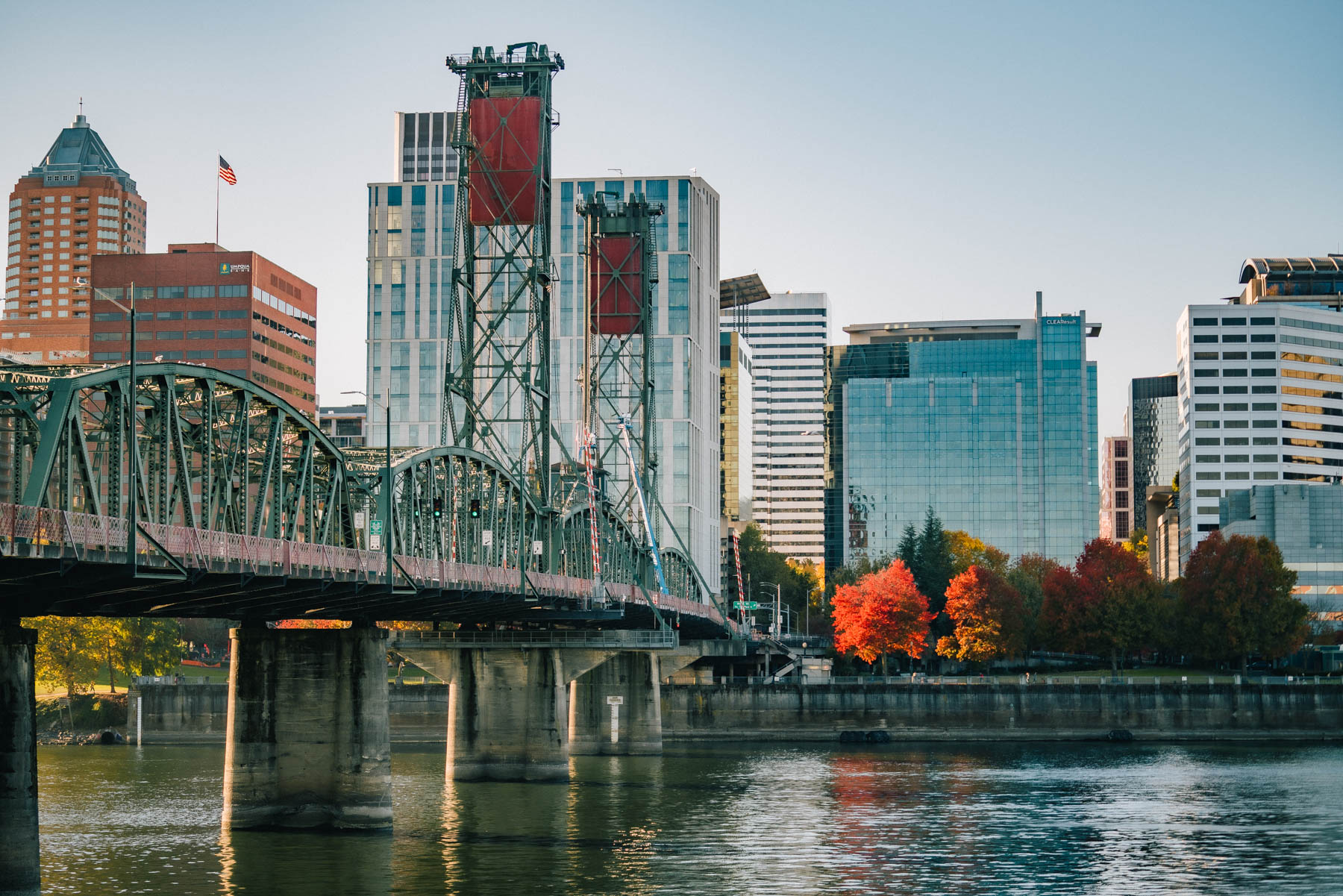
Spanning nearly 1,400 feet, the Hawthorne Bridge is a hit with cyclists (averaging 1,500 cyclists a day). In 2012, the city installed a bike barometer to count the number of cyclists crossing daily. You can see today’s count by clicking here.
Keen on improving biking infrastructure citywide, the city invested a cool $22 million for upgrades to this bridge in 1998. In 2001, the bridge was connected to the Eastbank Esplanade and the Springwater Corridor, making it even more enjoyable for walkers, runners and cyclists.
The Hawthorne Bridge was built to replace the Madison Bridge, which was destroyed by a fire in 1902. Today, this Portland bridge has an interesting claim to fame: it’s the oldest operational vertical-lift bridge in the country.
- Year Built: 1910
- Pedestrian/bike crossing? Yes
Marquam Bridge
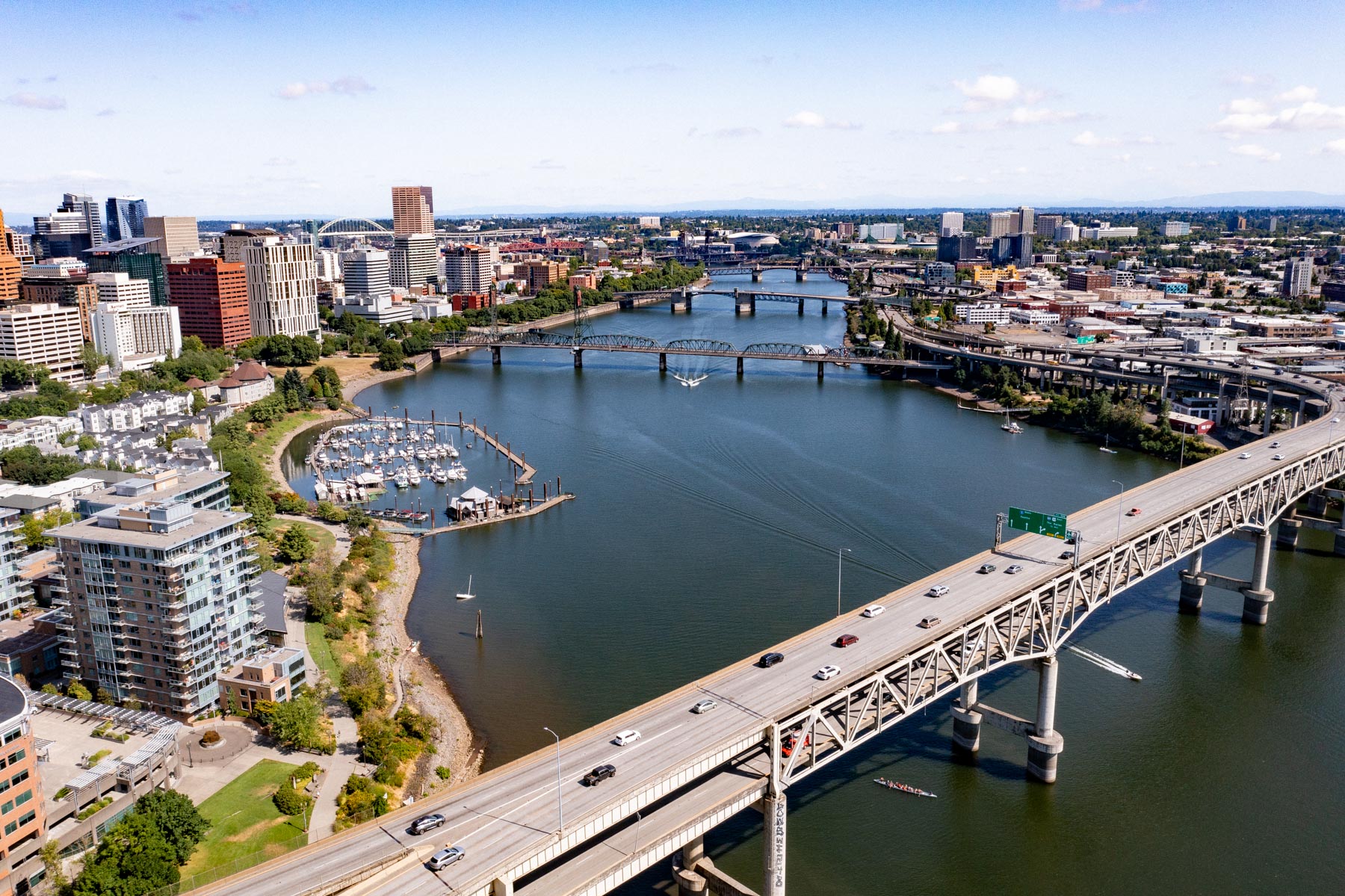
The Marquam Bridge is as practical as they come. Think of this bridge as the aunt that organizes all family functions and keeps the weird uncle in check, but also sucks the fun out of the room if she doesn’t feel adequately praised.
Yep, that’s the Marquam Bridge for you. Beautiful she is not, but damn, she knows what needs to be done. All girth and concrete, this is one of the busiest bridges in Portland (and Oregon state), averaging 140,000 vehicles per day.
The bridge isn’t open to pedestrians and bikers, with the exception of one day in mid-August when the bridge closes down to vehicle traffic for the Providence Bridge Pedal.
- Year Built: 1963
- Pedestrian/Cycle path? No
You may enjoy reading: Visiting Portland During Christmas

Ross Island Bridge
The Ross Island Bridge isn’t very memorable, but it gets the job done. Used exclusively by motor vehicles, the bridge carries up to 65,000 cars per day.
There was an influx of new bridges in Portland during the 1920s, seems like Portland went through a little bridge boom and everyone wanted in on the action. Again, quite uninspiring but it exists, so it must be included on our list of the bridges in Portland, Oregon. Moving on.
Sellwood Bridge
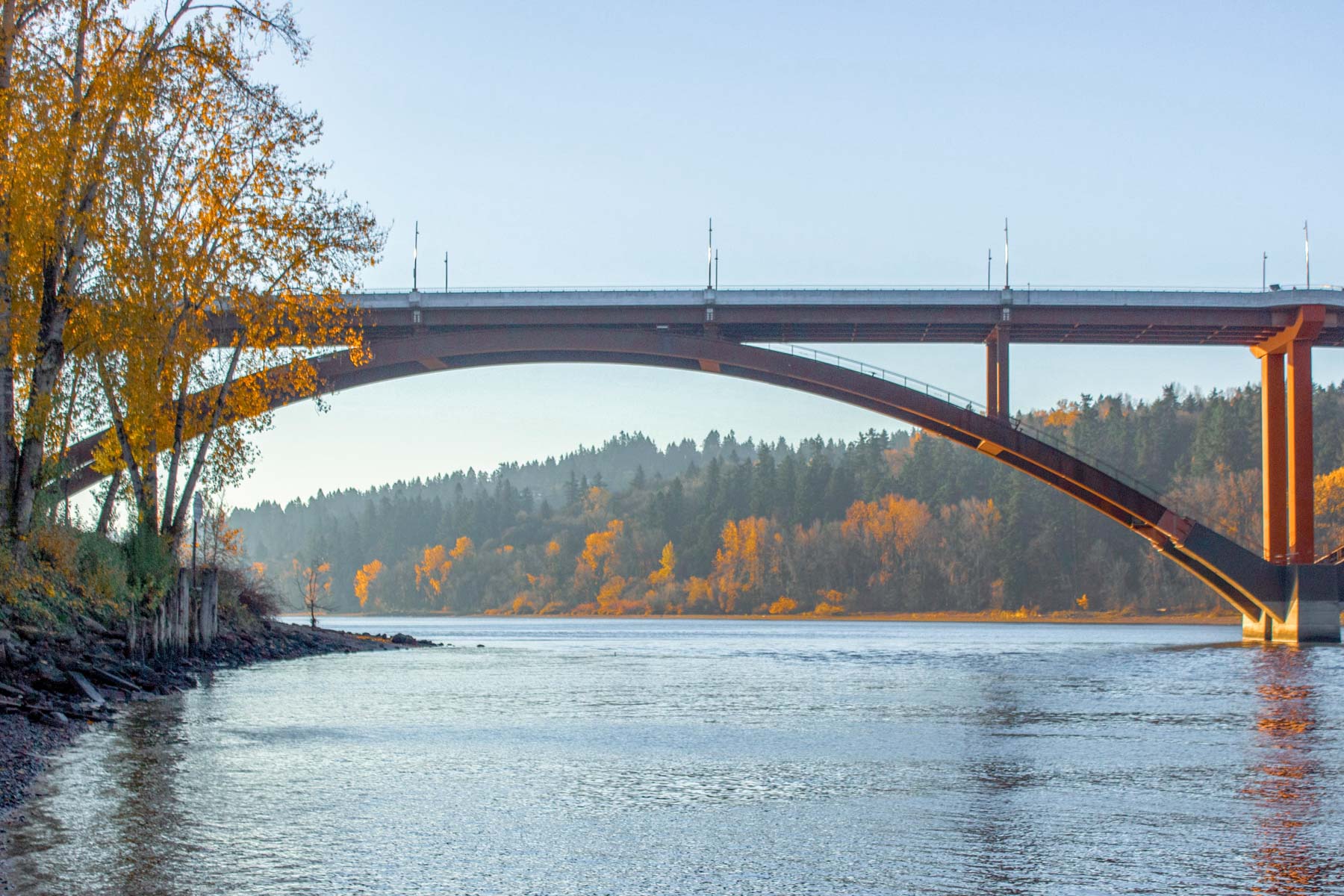
Open to cars, cyclists and pedestrians, the deck-arch Sellwood Bridge is the southernmost bridge in Portland, connecting the Sellwood and Westmoreland neighborhoods.
Renovated in 2016, the heavily-used bridge dates back to 1925 but has been deteriorating since the 1960s. It was obvious the bridge needed some upgrades to better accommodate the various modes of traffic crossing the river.
The original Sellwood Bridge served as the only river crossing for several miles in each direction, quickly becoming the busiest two-lane bridge in the state before all the other bridges entered the scene.
- Year Built: 1925, remodeled in 2016
- Pedestrian/bike crossing? Yes
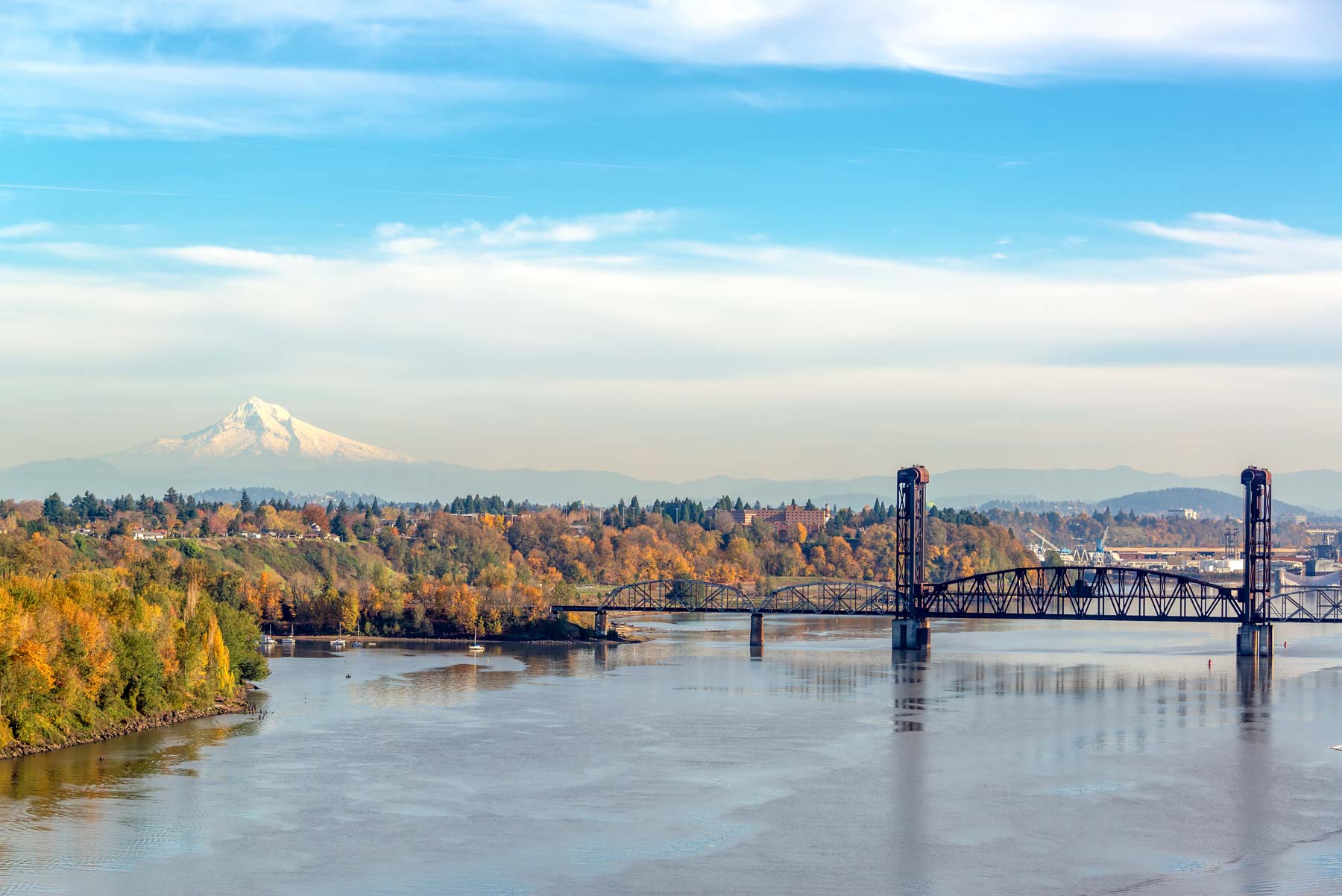
Burlington Northern Railroad Bridge
The Burlington Northern Railroad Bridge dates back to 1908, making it the oldest bridge in Portland. It’s a bit unorthodox because it’s open exclusively for trains, however, it’s *technically a bridge, so it warrants inclusion on this list.
- Year Built: 1908
- Pedestrian/Cycle path? No
Portland Bridges FAQ + Facts
There are 12 bridges in Portland, Oregon. This list sums up all the bridges in Portland (with facts!).
Bisected by 12 bridges crossing the Willamette River, the city’s number of bridges have earned it the moniker of Bridge City. Funny enough, Portland doesn’t rank near the top of US cities with the most bridges. Heck, Pittsburgh has 446 bridges!
The most famous bridge in Portland is St. John’s Bridge in north Portland. The iconic structure serves as a symbol for the city in various artwork (like posters and other merchandise).
Dating back to 1908, the Burlington Northern Railroad Bridge is the oldest bridge in Portland and is used exclusively for locomotives. If we’re talking about Portland bridges not built for trains, then the title of oldest bridge in Portland goes to the Hawthorne Bridge, which opened in 1910.
The following bridges in Portland allow folks to cross on foot or bike: Broadway Bridge, Steel Bridge, Tilikum Crossing, Hawthorne Bridge, Fremont Bridge and Sellwood Bridge.
Opened in 2022, the Blumenauer Bridge is one of the newest bridges in Portland. Named after the state’s beloved U.S. Representative, Earl Blumenauer, this pedestrian & bike bridge serves as a vital connection between the Lloyd District and Central Eastside.
Famous Portland, Oregon Bridges (Post Overview)
In sum, here’s a quick roundup of the most famous bridges in Portland, Oregon.
- St. Johns Bridge
- Fremont Bridge
- Tilikum Crossing Bridge
- Hawthorne Bridge
- Burnside Bridge
- Broadway Bridge
- Steel Bridge
- Morrison Bridge
- Sellwood Bridge
- Marquam Bridge
- Burlington Northern Railroad Bridge
- Ross Island Bridge