
I have lived in Oregon my whole life, and I still get the timing wrong some years. Not by a little either. One October my husband and I drove two hours out to the Cascades for the vine maple, got there on a Saturday, and found half the color already on the ground. A week early would have been perfect. We were a week late. Foolish.
So if you are trying to figure out when leaves change in Oregon for your 2026 trip, let me save you that drive. The short version is this. Oregon does not have one fall. It has about six weeks of fall that roll downhill, starting high in the Cascades in late September and ending on the valley floor and in Portland’s front yards in the last days of October. Peak color where you are standing depends entirely on your elevation.
Here is the week-by-week, region-by-region calendar I actually use. Save it.
The one rule that explains all of Oregon’s fall timing
Color moves from high to low. That is it. That is the whole trick.
Trees at high elevation get cold nights first, so they turn first. The gold in the Cascades and the eastern larch country lights up while Portland is still stubbornly green in a t-shirt. Then the color drops down the foothills to Silver Falls and the Gorge, and finally settles onto the valley floor and into the city, where the big-leaf maples and Japanese maples go last. If you chase color from the mountains down to the river over about a month, you can catch peak three or four separate times. I have done it. It is the best-kept secret of an Oregon autumn.
One honest warning before the calendar. Our peak is fragile. Fall here is not the reliable, weeks-long New England show. A single hard Pacific rainstorm can strip a laceleaf maple bare in a night, and some years the best color barely shows up before it is gone. Build in a buffer of a few days, watch the forecast, and do not plan your whole trip around one afternoon. Fair warning though, when the timing does line up, there is nothing prettier in the country.
The other thing worth knowing is which trees you are even looking at, because they turn on different clocks. Vine maple goes red and orange and turns earliest, up high. Big-leaf maple, the giant with the dinner-plate leaves, goes butter-yellow and gold and is the workhorse of the foothills and the city. Ornamental Japanese maples, the ones in Portland yards and the Japanese Garden, go the deepest crimson and turn latest of all. Larch, the gold conifer, is its own thing entirely and lives out east. Once you can tell them apart, the whole calendar makes sense.

Late September to early October. The high Cascades go first.
This is where fall actually starts in Oregon, and most visitors miss it entirely because they are still thinking of October as leaf season. Up in the mid and high Cascades, roughly 3,000 to 5,000 feet, the vine maple starts turning bright green to fire-engine red against the dark Douglas firs by the last week of September. It is a completely different look from a city street. Small, bushy maples glowing red under old-growth conifers.
The other star up here is the western larch, a deciduous conifer that most people do not realize exists until they see a whole mountainside of it turn gold. Larch grows on the drier eastern slopes of the Cascades, and its needles go brilliant yellow-gold from early to mid-October, sometimes as early as late September. Locals call chasing it “larching.” The Willamette Pass area off Highway 58 is a reliable spot on the east slope for it.
If you are visiting in the very last week of September or the first week of October, point yourself uphill. A Mt. Hood day trip from Portland around then catches the huckleberry brush going scarlet and the first vine maple, and the mountain itself is usually still clear of heavy snow. This is also prime time for a lot of the best hikes near Portland that climb into the Cascade foothills, before the trails get slick and dark.

Mid-October. The foothills and the Gorge hit peak.
The second and third weeks of October are the sweet spot for the most regions at once. This is when I tell out-of-town friends to come if they can only pick one window.
Silver Falls State Park, out in the Cascade foothills east of Salem, peaks right around mid-October. The park is mostly conifer, but the pockets of big-leaf and vine maple along the Trail of Ten Falls turn red, orange, and yellow, and standing behind a waterfall with maples glowing overhead is genuinely one of my favorite things to do in this state. It is brief though. A week, maybe two. A Silver Falls day trip from Portland in mid-October is close to a sure thing.
The Columbia River Gorge runs a touch later, hitting stride mid-to-late October. The big-leaf maples along the historic highway and the waterfall corridor go gold, and the vine maple turns the understory red. It is a long, layered show because the Gorge covers a range of elevations and microclimates. If you want the full rundown of where to stop, my local’s guide to the Columbia River Gorge maps out the pullouts, and it is my single favorite day trip in Oregon in any season.

Central Oregon and the Bend area also color up in this middle stretch, with aspen groves along the rivers going gold. If you are already out east, the drive is worth it.
Late October. Portland and the valley floor finally turn.
Now it is the city’s turn, and honestly, this is the fall most people picture when they think Oregon. The last two weeks of October are when Portland glows. The big-leaf maples that line the streets go butter-yellow, the ornamental Japanese maples in every other front yard go crimson, and the ginkgo trees drop their fans all at once in a gold carpet.
The single most reliable calendar marker in the whole city is the Portland Japanese Garden in Washington Park. It peaks in the last two weeks of October, and the laceleaf maples there have maybe a one-week window when they truly erupt. The garden even posts a fall color tracker so you can time it. Get there on a weekday morning if you can, because at peak the crowds are real.

Beyond the garden, Laurelhurst Park is my personal pick for neighborhood color. The pond ringed with old maples reflecting orange and red is the postcard, and it stays free and uncrowded compared to the paid attractions. Tom McCall Waterfront Park, the North Park Blocks, and the whole Alberta and Irvington stretch of the east side are dense with mature trees that go off in the same window. I have a full roundup in my Portland in fall guide and a spot-by-spot list in the best spots for fall color in Portland if you want addresses.

The Willamette Valley floor runs on the same late-October clock as the city. The wine country around the Dundee Hills and Newberg is a lovely time to visit because the vineyard rows turn gold and rust right as the tasting rooms quiet down after the summer rush. If a leisurely, low-mileage day sounds good, a Willamette Valley day trip from Portland in late October pairs color with a glass of pinot, which is a very Oregon way to do fall.
Early November. The last red leaves, and the coast.
Do not write off the first week or two of November. In a mild year, the Japanese maples and some of the late big-leaf maples cling to their reddest leaves into early November before the rain finally takes them. The city looks a little wilder then. Wet streets, low gold light, leaves plastered to everything.
The Oregon Coast is the true latecomer, since the maritime air keeps things green longest, but the coast range and the shore towns get their modest fall show latest of all. It is never Oregon’s showstopper for color, but paired with the first storm-watching swells it makes for a moody, gorgeous, and completely uncrowded trip.
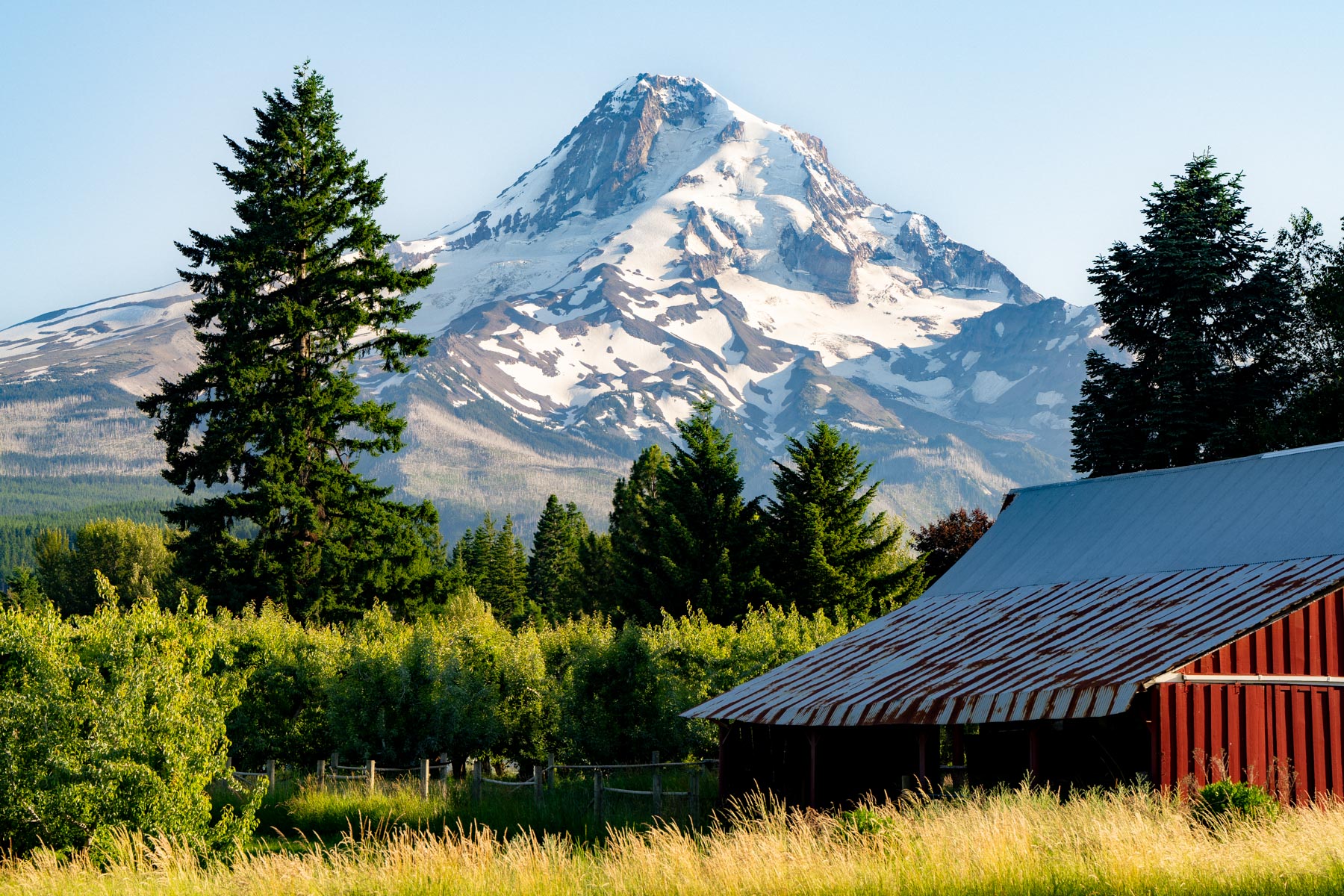
A quick note on the Hood River side of the Gorge, since it deserves its own mention. Between the fruit orchards along the Hood River Fruit Loop turning color, the vineyards on the hills, and Mt. Hood standing over all of it, late October in Hood River is one of the most complete fall scenes in the state. Orchard gold, vineyard rust, snow on the peak. If you want to build a whole weekend around it, my Hood River weekend guide lays out where to eat and stay.
Which region should you plan around?
If I had to send you to exactly one place at exactly one time, I would say the third week of October, and I would send you to the Gorge for the layered maple color, then into Portland for the Japanese Garden the same week. That is the window where the mountains, the foothills, and the city briefly overlap, and you can hit high and low in a single weekend.
If you can only come in late September or early October, go up into the Cascades and go larching. If you can only come in early November, stay in the city and the valley and chase the last red maples, then drive to the coast for a storm.
One honest thing to skip. Do not build a trip around a specific single day you read about online, mine included. Our peak moves a week in either direction every year with the weather, and it can vanish overnight in a storm. Give yourself a window of several days, check the Portland Japanese Garden tracker and the forecast the week you arrive, and stay flexible. For a broader look at how the whole year shakes out, my guide to the best time to visit Oregon puts fall in context against every other season.
Time it right, though, and I promise you will understand why those of us who grew up here quietly think October is the best month in Oregon. Even after all these years, when the maples on my own street go red, I still stop on the sidewalk and just look.
Until next time,
Antonina