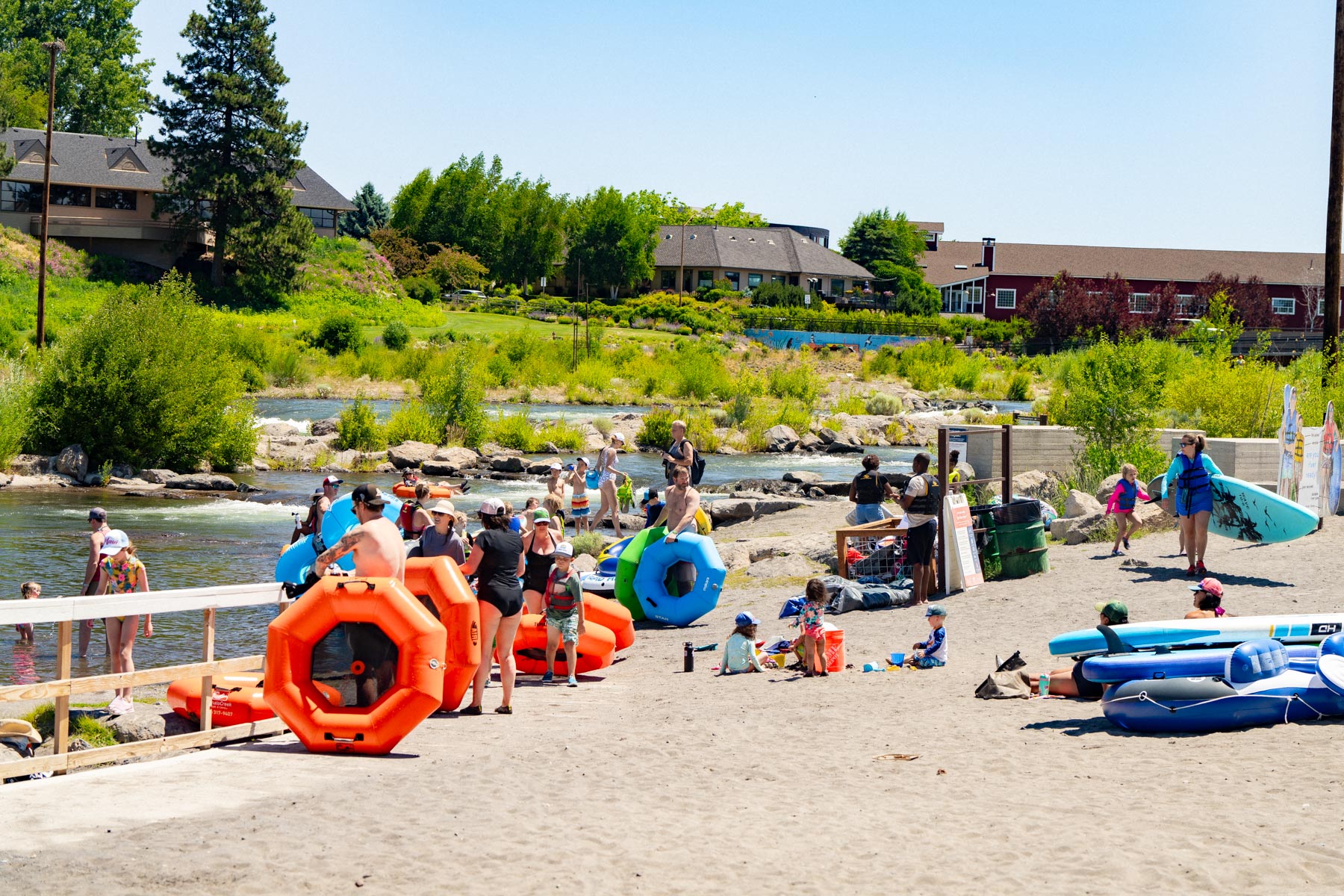
Portland is undeniably one of the nation’s most vibrant cities. But you should know, a lifelong local, I’m definitely biased! However, I’m not the only one that thinks so. The city’s growing acclaim, bolstered by Netflix’s recent Street Food USA series highlighting Rose City’s food scene, is a safe haven for foodies, nature nuts and city dwellers.
If you’re organizing a trip to Portland, a pivotal question arises: where should you stay? Beyond the essential “where will we eat?” query, selecting the right neighborhood can significantly shape your experience.
Well, you’re in the right place! I can help you find the ideal area that aligns with your travel style and budget.
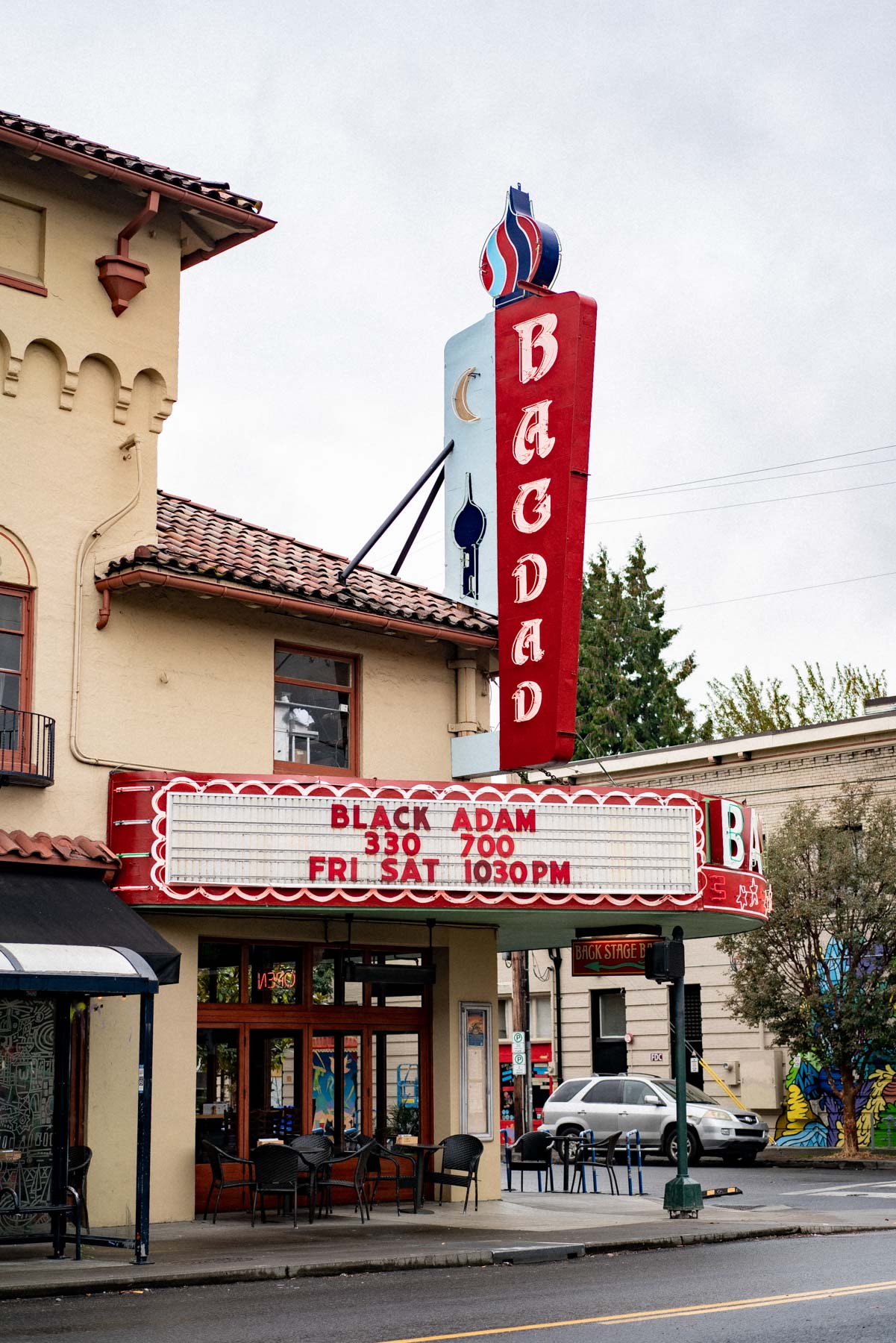
Portland’s compact nature is a huge perk, that and the neighborhoods couldn’t be more charming (and unique). From the contemporary high-rises of the Pearl District to the leafy, tree-lined streets of Northwest Portland, there’s a place for everyone.
I’ll leverage my personal experiences to provide you with some comprehensive insights, helping you determine where to stay in Portland based on your preferences, budget, and vibe. Each neighborhood offers a distinct blend of advantages or disadvantages. I’ll dig into into these aspects as well in the hopes of helping you make an informed decision.
My goal is that, by the end of this guide, you’ll have everything you need to find the perfect accommodations for your trip.
Let’s get to it!
Portland Geography Primer: Understanding the Layout
Before we dive into neighborhoods, it helps to understand how Portland is actually laid out. If you ask me, the city makes a lot more sense once you get the basics down.
Portland is divided into five main quadrants (yes, five, not four, because Portland has to be different). The Willamette River splits the city into east and west, while Burnside Street draws the line between north and south. That gives you Northwest, Southwest, Northeast, and Southeast. The fifth section, North Portland, sits on the peninsula between the Willamette and Columbia rivers.
One of my favorite things about the city is the bridge system. Portland has twelve bridges crossing the Willamette, and honestly, they’re gorgeous. The Hawthorne Bridge, Burnside Bridge, and Steel Bridge are the ones you’ll probably cross the most as a visitor. My husband and I love walking across the Tilikum Crossing (it is car-free, which feels very Portland).
The west side tends to be hillier and more polished. Think downtown, the Pearl District, and Northwest Portland. The east side is flatter, more residential, and packed with restaurants and bars. Most of the neighborhoods I recommend below fall on one side or the other, so knowing this will help you pick the right base for your trip.
Where to Stay in Portland: The Best Neighborhoods
Here’s a quick overview to help you plan. Scroll down for the full details on each one.
| Neighborhood | Best For | Avg Price/Night | Walkability | Safety |
|---|---|---|---|---|
| Southeast Portland | Foodies, nightlife | $120-180 | High | Good |
| Northwest Portland | Shopping, walkability | $150-250 | Very High | Very Good |
| Central Eastside | Breweries, creative vibe | $130-200 | High | Good |
| Pearl District | Luxury, galleries | $200-350 | Very High | Very Good |
| Downtown Portland | First-time visitors | $150-250 | Very High | Moderate |
| Alberta/Mississippi | Art, local culture | $100-160 | Moderate | Good |
Choosing where to stay in Portland is like picking the perfect outfit, you start with the right neighborhood as your foundation, then accessorize with the ideal hotel, hostel, or cozy apartment. Sure, there are other areas that might tickle your fancy, but I’ll stick to the five best neighborhoods because they’ll fit the need for almost all travelers.
For each neighborhood, I’ve crafted a little guide to help you decide if it will suit your needs using the following metrics:
- Neighborhood Vibes: I’ll share my personal escapades and what gives each area its unique vibe.
- Pros and Cons: Th good, the bad, and the ugly (no sense in sugar coating it).
- Local Gems: My favorite coffee haunts, restaurants, parks, and local gems.
Portland’s Most European Neighborhood: Northwest District
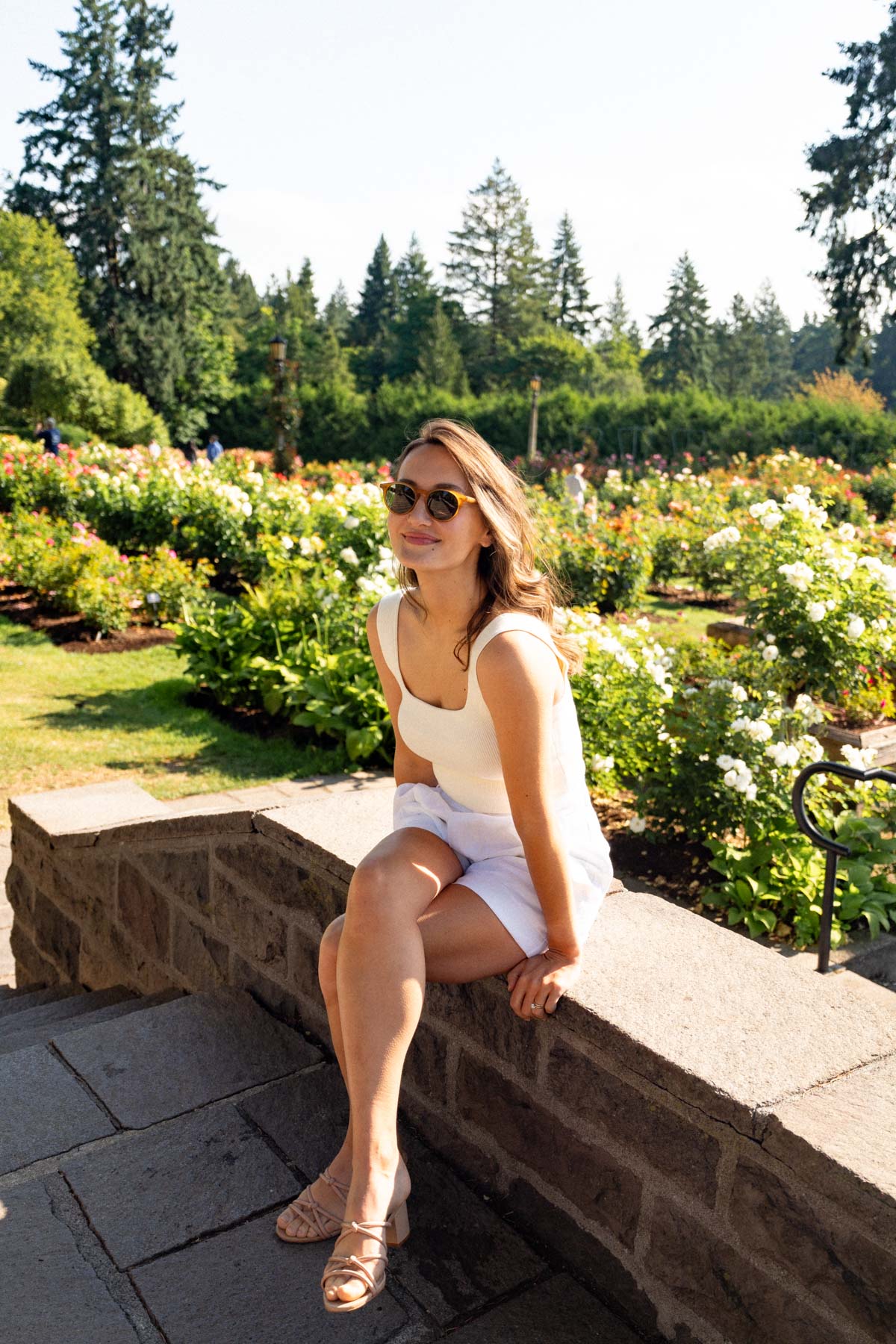
Laid back and charming, Northwest Portland is the closest thing we’ve to European living. You’ll be within walking distance to downtown and Washington Park (home to the International Rose Test Garden) and surrounded by some of the city’s best restaurants. I used to live in the neighborhood and typically recommended this hotel to visiting friends.
My Top Pick for First Time Visitors: Central Eastside
This is probably my favorite part of Portland. It’s close to the river, making it a breezy walk to downtown and must-sees like Powell’s Books. Yet, it maintains a residential charm that’s quieter, an impressive feat considering its proximity to the city’s biggest restaurant corridor on 28th. Here’s my hotel of choice. Favorite hotel is a toss up between Option A and Option B.
For Foodies: Southeast Portland
If a residential neighborhood brimming with fantastic food and drink spots is more your speed, make a beeline for Southeast Portland. I love this area! The downside? Lodging options are scarce. However, there’s two guesthouses (here’s my preference) and some lovely vacation rentals on offer.
A Quick Note on Airbnb and Vacation Rentals in Portland:
Renting out an entire house or apartment that isn’t owner-occupied is illegal in Portland. It’s not worth the risk. However, it’s perfectly fine to rent spaces like backyard bungalows, basement suites, or studios above garages where the owner lives onsite.
Now, let’s dig a bit deeper into each neighborhood.
Southeast Portland
- Great for: Artsy vibes, walkability, high concentration of restaurants and cafes.
- Option A | Option B
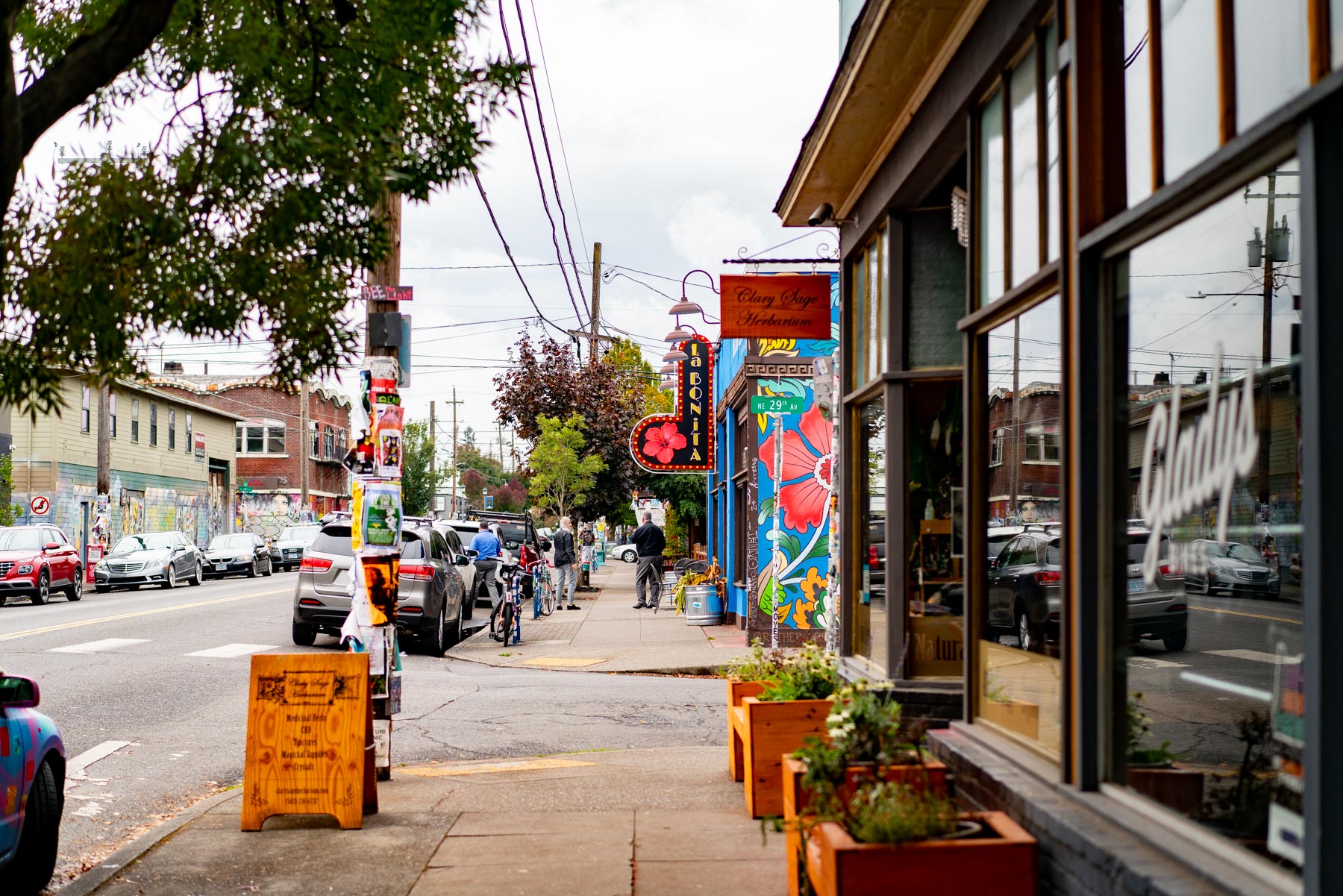
Think of Southeast Portland as that effortlessly cool friend who doesn’t try too hard to impress, but ends up being the talk of the town regardless. Leafy streets, historic homes, and relaxed vibes, this area is the poster child for charming Portland neighborhoods.
Pros of Staying in Southeast Portland:
- Local Vibe: This neighborhood is as local as it gets. Picture yourself strolling down tree-lined streets, admiring beautiful historic houses, particularly those charming craftsmen, as you soak in the community’s daily rhythm.
- Culinary Delights: If your love language is food, you’ve come to the right place. Southeast Portland is a gastronomic playground, offering plenty of dining options that cater to every palate.
- Easy Parking: Unlike other parts of the city where parking is akin to finding a needle in a haystack, Southeast Portland offers ample free street parking, even near popular spots on Division and Hawthorne.
Cons of Staying in Southeast Portland:
- Limited Accommodations: The residential nature of this area means there are fewer traditional lodging options. While vacation rentals are an option, renting out entire houses that are not primary residences is technically illegal in Portland. However, there are plenty of accessory dwelling units (ADUs), like backyard bungalows or basement guest suites, where the owner lives on-site, offering a more authentic experience.
- Distance from Other Attractions: While the neighborhood itself is highly walkable, you’ll need to rely on public transit or rideshare services to reach downtown or other parts of the city, as it’s not within walking distance of these areas.
- Airport Connections: Getting to and from the airport may require a taxi or rideshare, as public transportation options are limited.

Where to Stay in Southeast Portland:
Finding a place to stay in this charming neighborhood can be a bit like hunting for a needle in a haystack, but here are some gems:
- Bluebird Guesthouse: ($90-150/night) located right on Division Street, this bed & breakfast offers six unique rooms and cozy shared spaces, placing you in the heart of some of the best dining and drinking spots in the area.
- Evermore Guesthouse: ($90-150/night) Located a few blocks south of Division, this guesthouse offers similar amenities and is owned by the same folks as Bluebird.
Southeast Portland is a treasure trove of local culture, culinary delights, and residential charm, making it a fantastic choice for travelers seeking an authentic Portland experience.
Northwest Portland
- Great for: Charm and walkability, proximity to downtown, cafes and bars.
- Here’s my favorite hotel in NW Portland (where my in-laws typically stay)
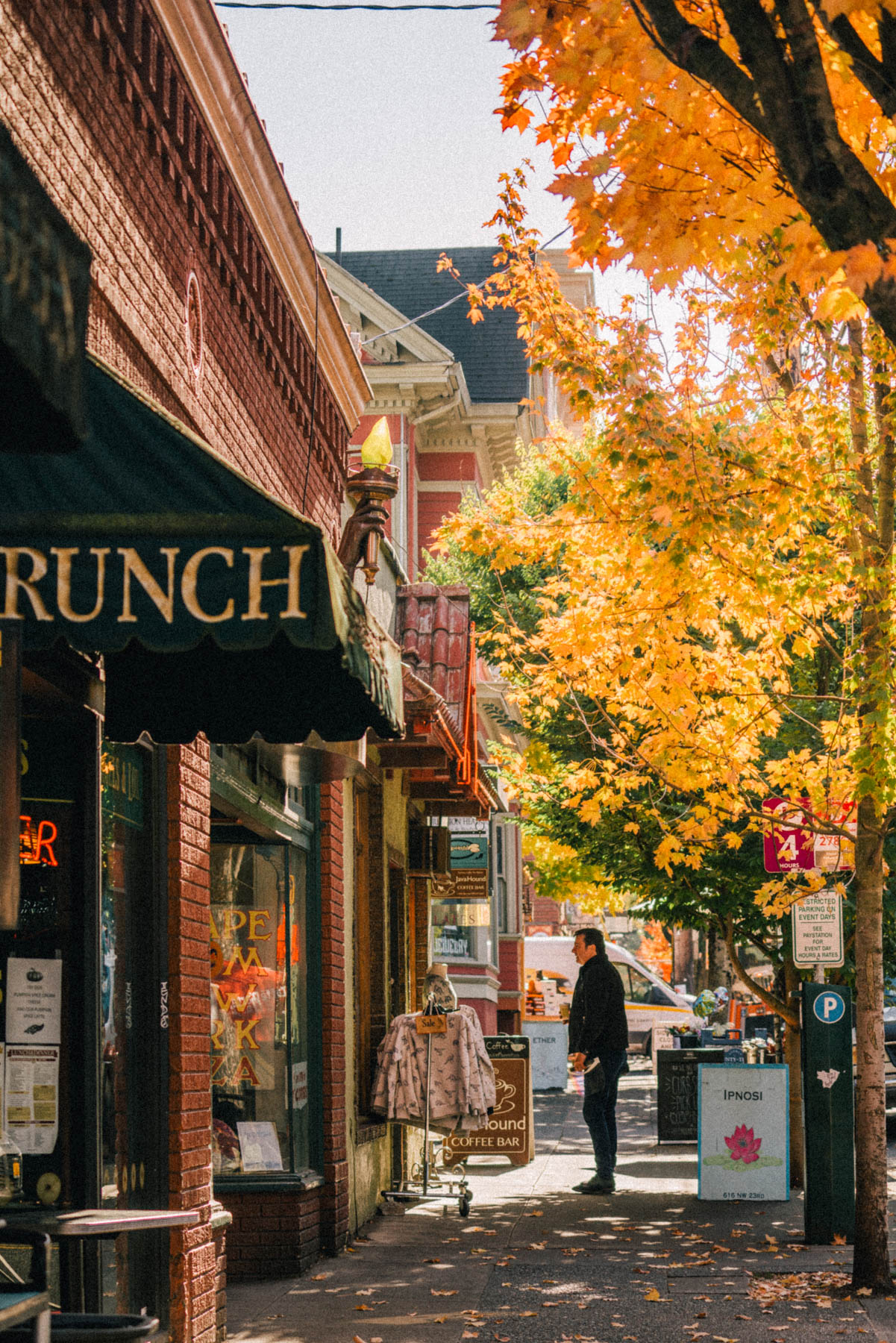
Locals toss around names like Nob Hill, the Alphabet District, or Slabtown when referring to Northwest Portland and they’re not wrong. This area is made up of smaller subsections, if you want to stay in the heart of the action, opt for Nob Hill or Slabtown.
The neighborhood is easily walkable. I lived in Northwest Portland for 6+ years and found it easy to get around by foot or bike. I ended up using my car for weekend escapes almost exclusively (here’s a roundup of my favorite day trips from Portlandif you’re interested). Whatever you do, don’t sleep on Ken’s Bakery!!
Pros of Staying in Northwest:
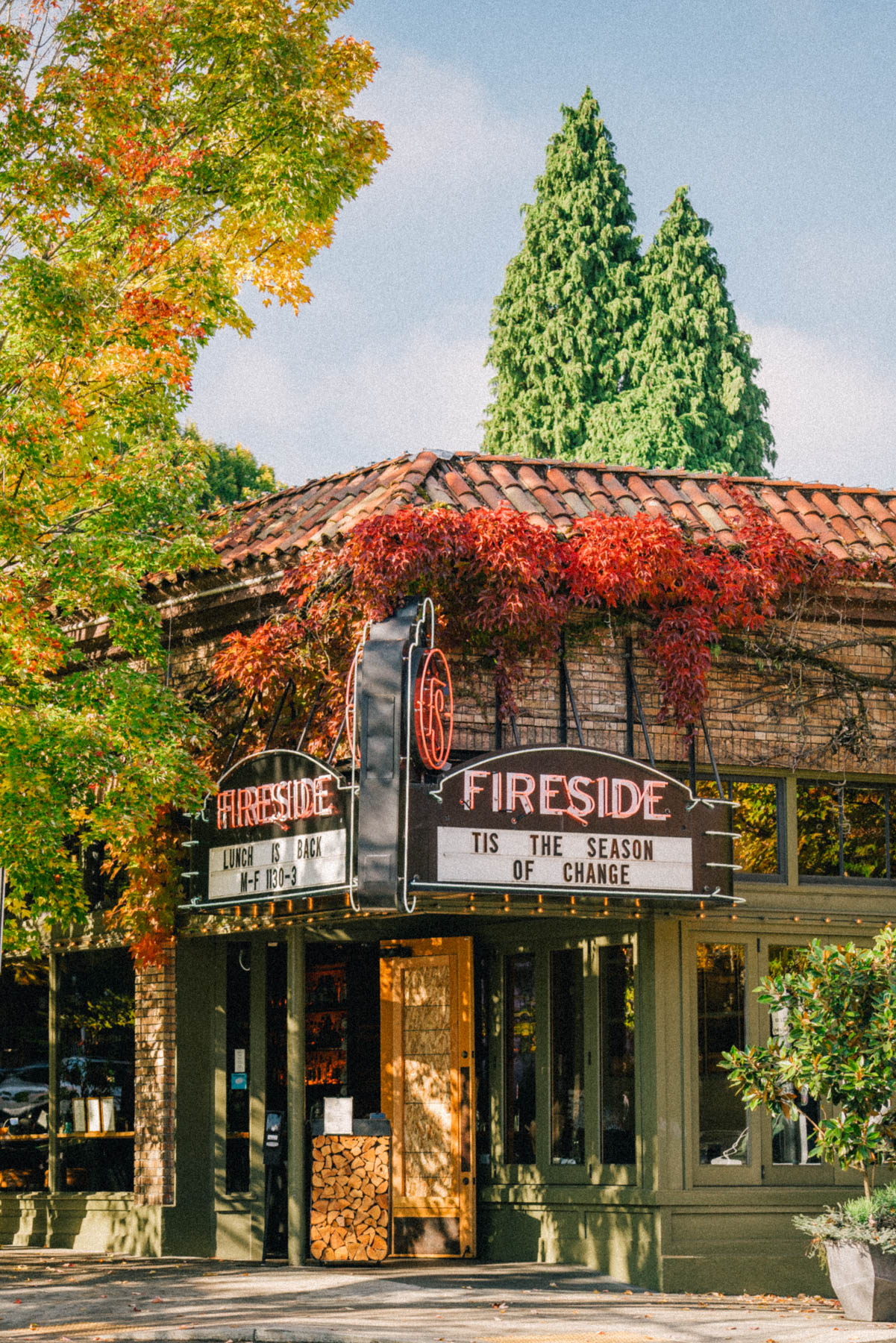
- Charming Ambiance: Picture tree-lined streets dotted with local boutiques and eateries. It’s the kind of place where you might accidentally become a regular at a café after just one visit.
- Green Spaces Galore: With Washington Park (home to the International Rose Test Garden) and Forest Park just a short stroll away, nature enthusiasts can easily get their fix.
- Culinary and Shopping Delights: Foodies and shopaholics, rejoice! Some of Portland’s best dining and shopping spots are located here, especially along NW 23rd and NW 21st Streets.
Cons of Staying in Northwest:
- Parking Sucks: Especially on weekends, finding a parking spot can feel like a competitive sport. Time limits and paid parking are the norms.
- Limited Lodging Options: While the area features unique accommodations, they are fewer in number and can fill up quickly.
Where to Stay in Northwest Portland:
- Inn at Northrup Station: ($160-250/night) If retro vibes and spacious rooms with kitchenettes sound appealing, this locally-owned gem might be your spot. Plus, they offer perks like continental breakfast and Portland Streetcar tickets.
- Portland International Guesthouse: ($80-130/night) Traveling on a budget? This guesthouse offers affordable rooms with shared bathrooms, reminiscent of European accommodations. It’s centrally located, making urban exploration a breeze.
- Northwest Portland Hostel: ($40-90/night) For those seeking a social atmosphere, this hostel provides both dormitory and private rooms, along with communal spaces like a full kitchen and an outdoor courtyard. Its proximity to both NW 23rd and downtown is a major plus.
In essence, the Northwest District offers a delightful blend of urban energy and neighborhood charm, making it a top contender for your Portland stay.
Central Eastside
located along the east bank of the Willamette River, the aptly named Central Eastside is a vibrant blend of Portland’s industrial past and exciting present. Once dominated by warehouses and factories, this district has transformed into an area filled with eateries, boutiques, and entertainment venues.
Pros of Staying in the Central Eastside
- Central Location: True to its name, the Central Eastside offers a prime position for exploring Portland. It’s just across the river from downtown, with easy access to neighborhoods like Southeast Portland and Northeast Portland.
- Public Transportation: The area is well-connected, boasting direct light-rail connections to PDX and downtown, making it convenient for visitors without a car. travelportland.com
Cons of Staying in the Central Eastside
- Parking Challenges: While public transportation is a plus, those with cars might find parking to be a bit of a puzzle, especially in the busier parts of the district.
- Distance from Major Parks: If lush green spaces like Washington Park are on your must-visit list, be prepared for a bit of a trek, as these parks are located on the west side of the river.
Top Accommodations in the Central Eastside
- Jupiter NEXT Hotel: ($200-350/night) A locally owned boutique hotel that captures Portland’s unique spirit. Comfortable beds, stylish decor, and the on-site cocktail bar, Hey Love make this place an easy choice for first time visitors to Portland. Plus, it’s just a 20-minute walk to downtown.
- KEX Hotel: ($80-160/night) This Icelandic import offers a blend of hotel and hostel vibes. With both bunk beds and private rooms, it’s perfect for travelers seeking affordability without sacrificing style. The rustic charm and communal spaces, including a rooftop bar, make it a standout choice.
- Tiny Digs: ($120-200/night) For a truly unique experience, consider staying in this collection of themed tiny homes. Each unit features a full kitchen, air conditioning, and a cozy deck, offering a quirky and intimate stay that’s quintessentially Portland.

Pearl District
- Great for: Proximity to downtown, great restaurants, cafes and bars.
- This is my favorite hotel in the Pearl District
Easy to overlook to the untrained eye, the Pearl District is a prime spot, located next to downtown and the Northwest District (though a stone’s throw from Old Town, which, trust me, isn’t topping my must-see list).
The southern end of the neighborhood flaunts revamped warehouses and brick buildings buzzing with shops, breweries, and great restaurants. Chat with a Portlander who’s been around for a few decades, and they’ll likely tell you the Pearl’s transformation is the city’s most dramatic. Head north to admire the sleek high-rises dominating the skyline.
Would I set up permanent camp in the Pearl? Probably not, parking is a headache, and its proximity to downtown means a steady stream of tourists. But for a Portland pitstop? Easy yes.
Pros of Staying in the Pearl District:
- Prime Location: You’re rubbing elbows with downtown and the Northwest, making foodie adventures and shopping sprees a breeze. Plus, Northeast Portland (hello, Mississippi Avenue!) is just a short jaunt away.
Cons of Staying in the Pearl:
- Hotel Scene: The accommodations here are nothing to write home about. Think big-name chains like Marriott and Hilton.
- Neighboring Old Town: Just east lies Old Town, an area facing challenges with a visible unhoused population and safety concerns. The divide is around North Park Blocks, but there’s some overlap into the Pearl.
Where to Stay in the Pearl District:
- Canopy by Hilton: ($220-380/night) Hilton’s hip cousin, Canopy, offers stylish rooms a stone’s throw from downtown. Rooms are sleek, starting at 300+ square feet. While breakfast isn’t on the house (and with Portland’s brunch scene, who cares?), there’s a rooftop gym and chic communal spaces. Valet parking is available at $47 daily, and yes, your furry friend (under 75 pounds) can join for a $50 fee.
- Hampton Inn and Suites: ($180-300/night) I had my doubts, but this spot impressed me. Freshly minted, rooms start at a spacious 350 square feet. Amenities include an indoor pool, fitness center, rooftop deck, and free breakfast. Valet parking is $46 daily, and pets can stay for a $125 fee.
In a nutshell, the Pearl District blends urban allure with modern comforts, making it a solid choice for your Portland stay.
Downtown Portland
- Great for: First-time visitors who want to be close to everything, business travelers, museum lovers.
- Best hotels: The Nines | Hotel deLuxe | Woodlark Hotel
I will be honest with you. Downtown Portland is a little rough around the edges these days. But it’s still the beating heart of the city, and if convenience is your top priority, you really can’t beat the location. Everything radiates outward from here.
Pioneer Courthouse Square is the de facto center of town (locals call it “Portland’s living room,” which is accurate). From there, you’re steps from the Portland Art Museum, tons of restaurants, and the MAX light rail that connects you to basically everywhere. My husband and I always end up downtown at some point during any Portland outing, so you might as well make it your home base.
Pros of Staying Downtown:
- Walkability: You can reach the Pearl District, waterfront, and even Northwest Portland on foot without breaking a sweat.
- Transit Hub: The MAX, streetcar, and bus lines all converge here. Getting to the airport is a straight shot on the Red Line.
- Culture: The Portland Art Museum, Arlene Schnitzer Concert Hall, and Powell’s Books are all within walking distance.
Cons of Staying Downtown:
- Grit Factor: Parts of downtown (especially near Old Town) can feel uncomfortable, particularly in the evenings. It is improving, but I want to set honest expectations.
- Less “Portland” Feel: If you are looking for quirky, local neighborhood vibes, downtown skews more corporate. The real Portland character lives in the surrounding neighborhoods.
Where to Stay Downtown:
- The Nines: Portland’s fanciest hotel, perched above Pioneer Courthouse Square. The rooms are gorgeous, the rooftop restaurant is excellent, and it feels like a splurge worth making ($300-450/night).
- Hotel deLuxe: Old Hollywood glamour with a Portland twist. The rooms are stylish without being fussy, and the Driftwood Room bar downstairs is a gem ($180-280/night).
- Woodlark Hotel: A beautifully restored boutique hotel that strikes the perfect balance between trendy and comfortable. Great lobby cafe, too ($200-320/night).
Alberta Arts District & Mississippi Avenue
- Great for: Art lovers, budget-conscious travelers, people who want a local neighborhood feel.
- Best hotel: Kennedy School by McMenamins
If the Pearl District is Portland in a blazer, Alberta and Mississippi are Portland in paint-splattered overalls (and honestly, I mean that as the highest compliment). These two streets in Northeast Portland run parallel to each other and are packed with independent galleries, coffee shops, and some of the best casual dining in the city.
Alberta Street is famous for the Last Thursday Art Walk, which happens on the last Thursday of every month from spring through fall. The whole street turns into an open-air gallery with live music, food vendors, and artists selling their work. My husband and I try to make it out whenever we can. Mississippi Avenue has a similar vibe but slightly more polished, with spots like Great Notion Brewing (if you ask me, some of the best beer in Portland) and Proud Mary Coffee for a proper flat white.
The biggest perk here’s the price. You’ll generally find more affordable options than the Pearl District or downtown, and the neighborhood feels genuinely lived-in. It’s a bit farther from the city center, but the bus connections are solid and a rideshare to downtown takes about ten minutes.
Where to Stay in Alberta/Mississippi:
- Kennedy School by McMenamins: This is a converted elementary school (yes, really) with a soaking pool, multiple bars, a movie theater, and rooms that used to be classrooms. It is the most “Portland” hotel experience you can have, and it is walking distance to Alberta Street ($150-220/night).
Areas to Avoid
Old Town/Chinatown: Situated just north of downtown and east of the Pearl District, this area has a significant homeless population. Walking through can be challenging, especially if you’re uncomfortable encountering individuals facing mental health or addiction crises. Staying here would mean frequent exposure to these situations.
Lloyd District/Convention Center: Unless you’re attending an event at the Oregon Convention Center or catching a game at the Moda Center, this neighborhood isn’t particularly pedestrian-friendly and lacks notable attractions. For general tourism, other areas offer more vibrant experiences.
North Portland: While this area, encompassing neighborhoods like St. Johns and University Park, has its charm, it’s relatively removed from central attractions. Without a car, accessing main tourist spots can be time-consuming.
Best Portland Neighborhood For You: Quick Pick Guide
Short on time? Here is the cheat sheet version. Pick your travel style, and I will point you to the right neighborhood.
- First-timers: Pearl District. Central, walkable, and close to everything you want to see on a first visit.
- Foodies: Southeast Portland (especially Division Street). The restaurant density is unreal.
- Nightlife: Central Eastside. Breweries, cocktail bars, and live music all within stumbling distance.
- Families: Northwest Portland. Tree-lined streets, parks nearby, and a safe, walkable feel.
- Budget travelers: Alberta/Mississippi. More affordable lodging and dining without sacrificing character.
- Boutique luxury: Pearl District or Downtown. The Nines and Canopy by Hilton are your best bets for upscale stays.
Frequently Asked Questions About Staying in Portland
Is it better to stay on the east or west side of Portland?
It depends on what you’re after. The west side (downtown, Pearl District, Northwest) puts you closer to major attractions like the Portland Art Museum, Powell’s Books, and Washington Park. The east side (Central Eastside, Southeast, Alberta) is where the restaurant and bar scene really shines. Honestly, Portland is compact enough that you can easily cross between the two. My husband and I tend to prefer the east side for its more relaxed, neighborhood feel, but first-time visitors often appreciate the convenience of the west side.
What part of Portland should I avoid?
Old Town/Chinatown is the main area I steer visitors away from for lodging. It has a significant unhoused population and can feel uncomfortable, especially after dark. The Lloyd District near the Convention Center is fine but boring. There is just not much to do there unless you’re attending an event. Stick to the neighborhoods I’ve recommended above and you’ll be in great shape.
Is Portland walkable?
Very much so, especially on the west side. Downtown, the Pearl District, and Northwest Portland are all connected and easy to cover on foot. The east side neighborhoods are walkable within themselves (you could spend a whole day wandering Division Street or Alberta without needing a car), but getting between east and west side neighborhoods usually means a bus, streetcar, or quick rideshare. The MAX light rail also connects the airport to downtown, which is a huge bonus.
How many days do you need in Portland?
I am biased (obviously), but I think three to four days is the sweet spot for a first visit. That gives you enough time to explore two or three neighborhoods, hit the major attractions, take a day trip to the Columbia River Gorge or the coast, and eat your way through at least a dozen restaurants. If you only have a weekend, focus on one side of the river and save the rest for next time. You’ll want to come back.
Cheers!
Antonina
Newest on Best of Portland
- Portland With a Baby: The Stroller-Friendly Guide Aug 2026
- How to Get Around Portland Without a Car (A Local’s Guide) Apr 2026
- 15 Instagram Spots in Portland Nov 2025
- 5 Best Spots for Roses in Portland (Local’s Guide & Advice) Nov 2025
- The Best Hotels in Portland for Every Budget Nov 2025
- 20 Best Murals in Portland, Oregon (Art Guide) Nov 2025