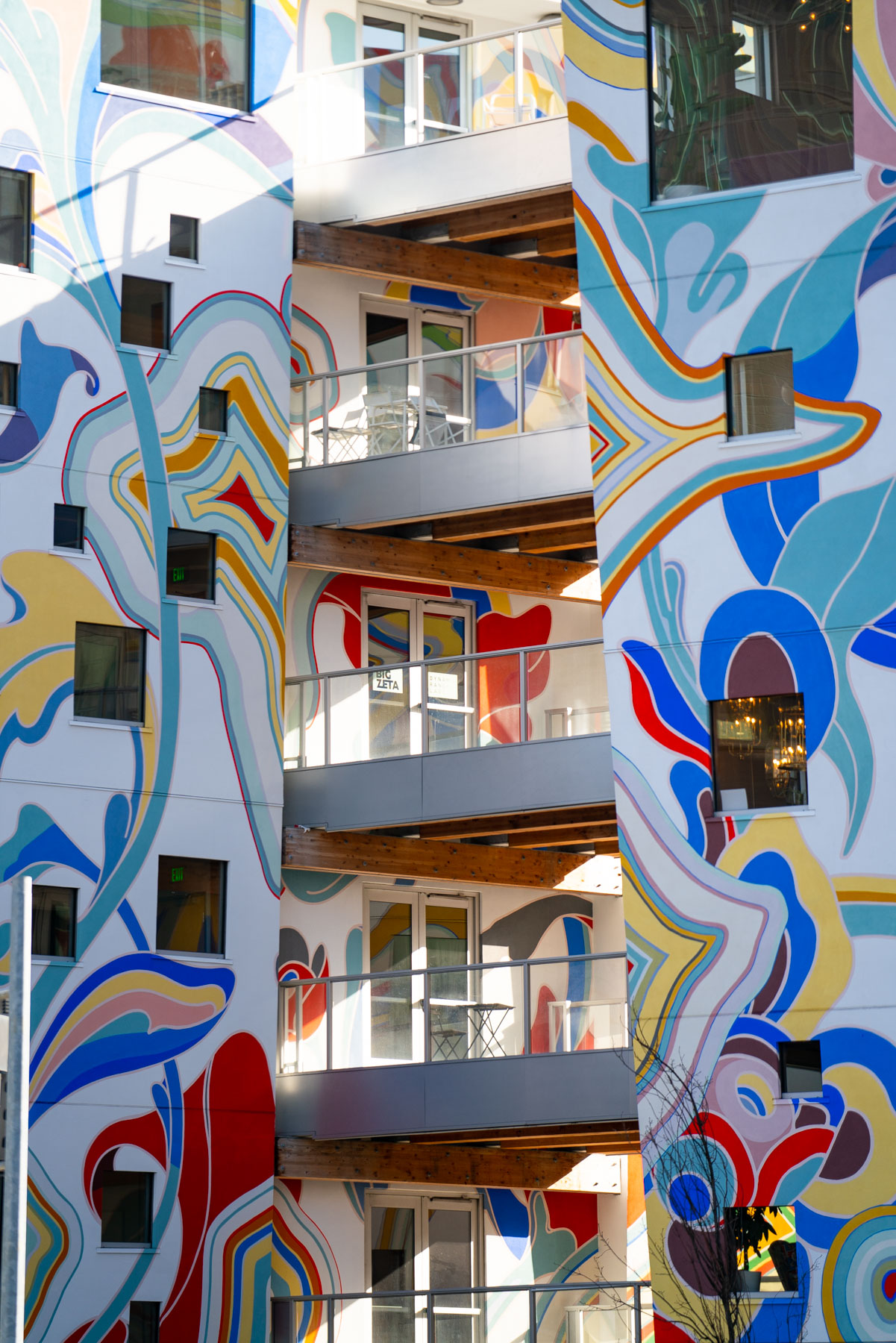
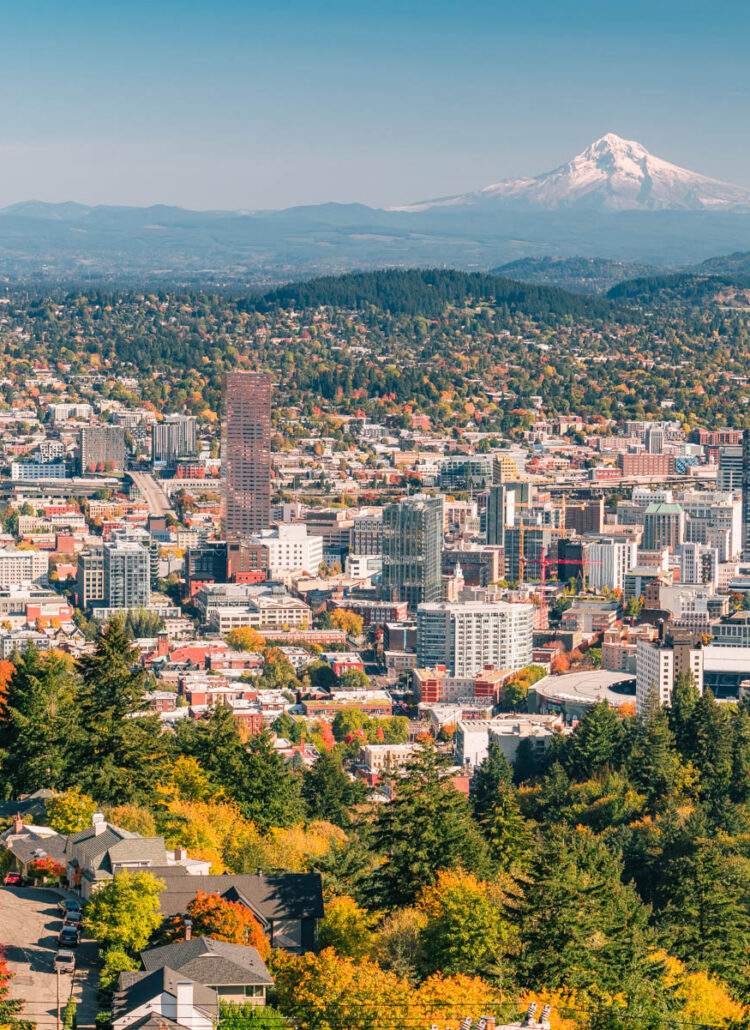
Portland is one of those rare cities where walking isn’t just a way to get around, it’s genuinely the best way to experience the place. I’ve lived here for years, and I still discover new things on foot that I’d blow right past in a car. A tiny plant shop tucked behind a coffee roaster. A mural I’ve never noticed because I always drive that stretch of Burnside instead of walking it. A side street that opens up to a view of Mt. Hood that stops you in your tracks.
Portland’s blocks are famously short (200 feet, compared to the 300-plus you’ll find in most American cities), which means everything feels closer than it looks on a map. That’s not an accident. The city was laid out in the 1800s with pedestrians in mind, and that DNA still shows. My husband and I will sometimes spend an entire Saturday walking a single neighborhood, ducking into shops and stopping for coffee and lunch without ever feeling like we need a ride. It’s one of my favorite things about living here.
Here are the Portland neighborhoods that are best experienced on foot, with the actual routes I’d walk if I were showing a friend around for the first time.
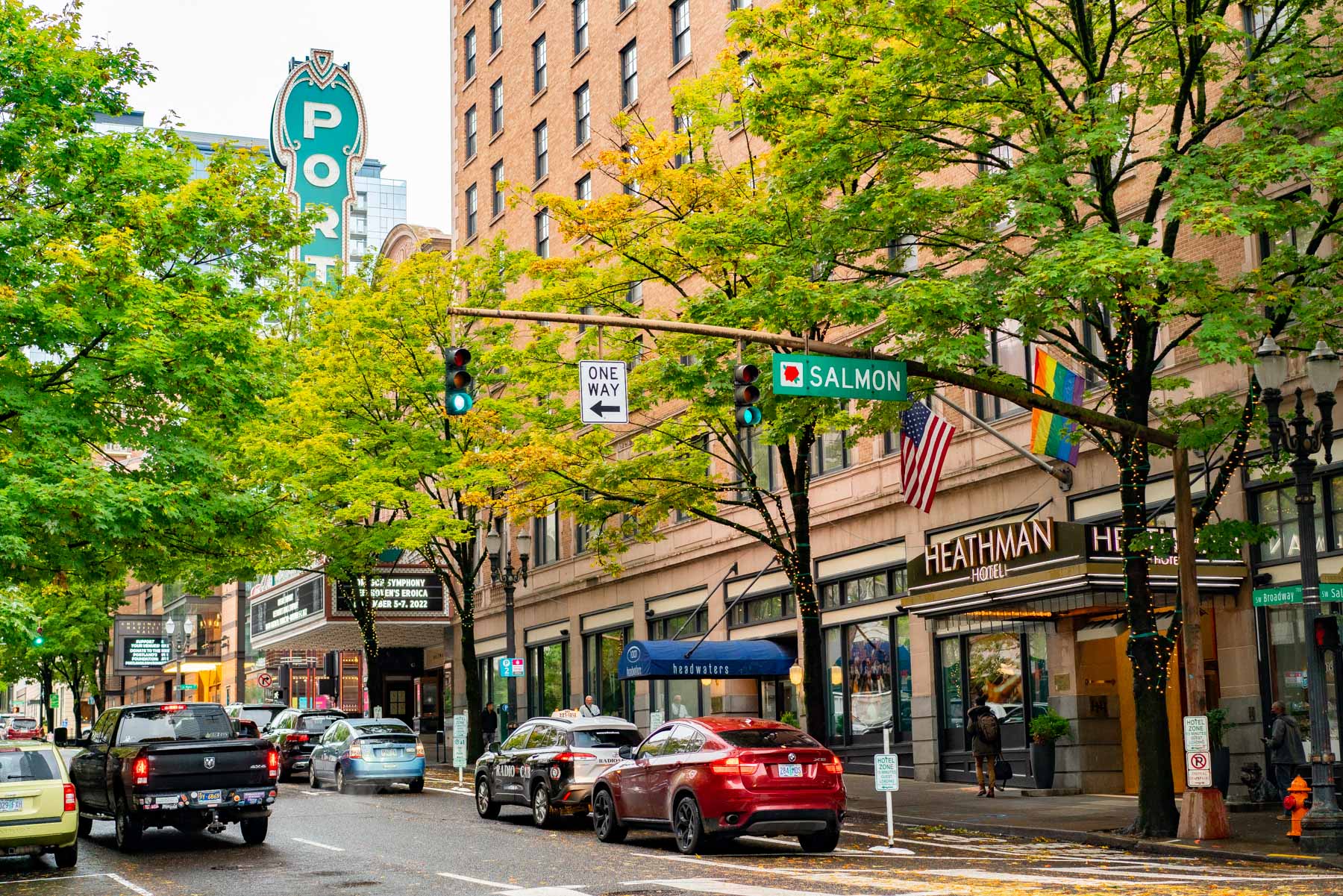
Alberta Arts District
Best for: Murals, local art, quirky shops, and one of Portland’s most colorful streets
Walking distance: About 1.5 miles end to end along Alberta Street
Time: 2 to 3 hours with stops
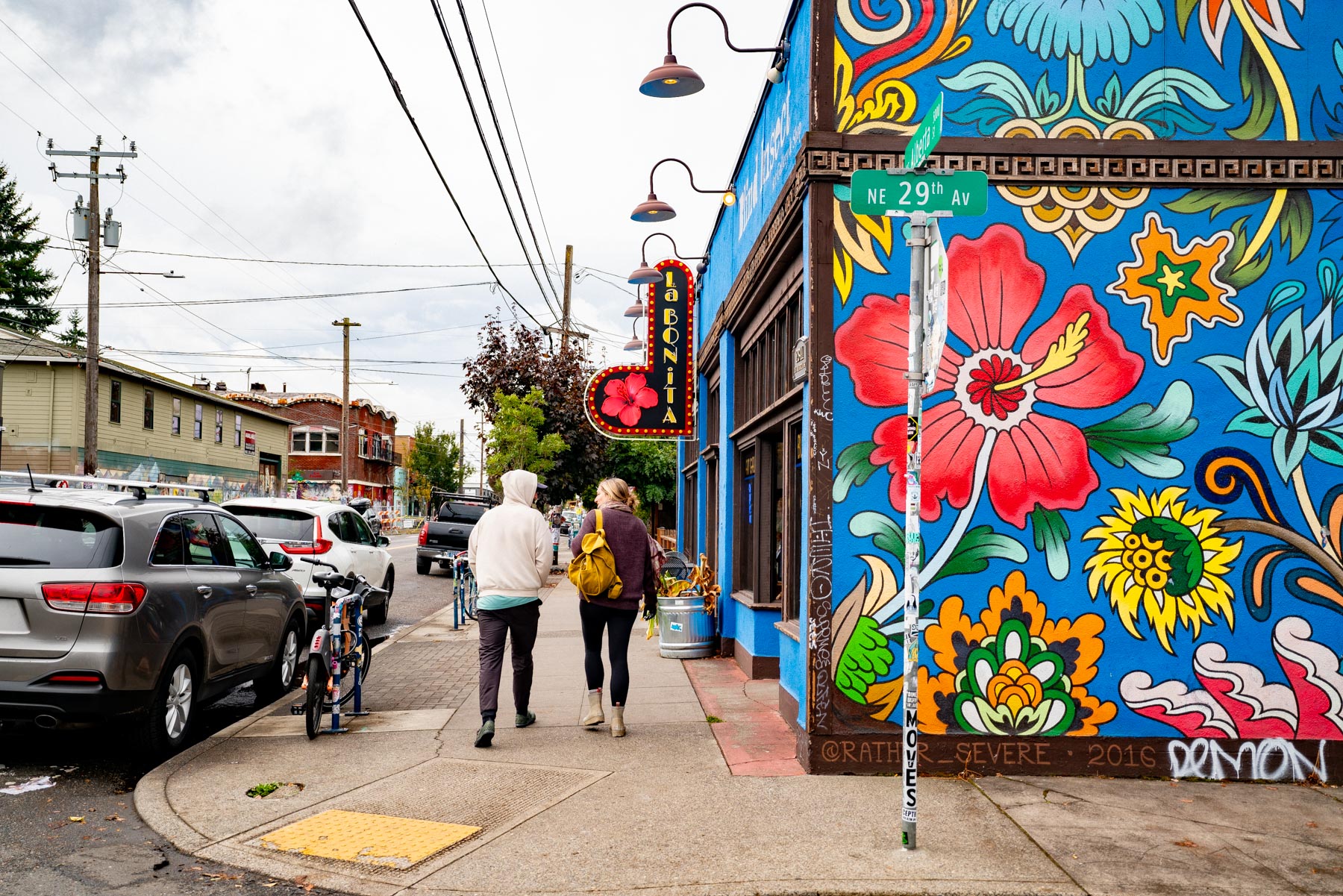
Alberta is the neighborhood I bring people to when they ask me what makes Portland different from other cities. The stretch of NE Alberta Street between roughly 15th and 33rd Avenues is pure Portland. Murals cover almost every available wall. Independent shops sell everything from handmade jewelry to vintage vinyl. And the food scene here has quietly become one of the best in the city.
The walk I’d do: Start at the west end near 15th Avenue and work your way east. You’ll pass Ampersand Gallery, which has incredible modern art books and prints. A few blocks up, Pine State Biscuits does some of the best biscuit sandwiches in Portland (the Reggie Deluxe with fried chicken, gravy, cheese, and a fried egg is absurd in the best way). Keep walking east and you’ll hit the densest stretch of murals between 20th and 28th. Salt & Straw is here for ice cream, and Bye and Bye is a vegan bar with a patio that fills up on sunny days.
If you’re here on the last Thursday of the month (May through September), Last Thursday turns Alberta into a massive street fair with live music, art vendors, and food carts. It’s chaotic and wonderful and honestly one of my favorite Portland traditions. Just know that parking disappears completely, which is fine because you should be walking anyway. For more on this neighborhood, check out my full Alberta Arts District guide.
Northwest Portland (NW 23rd and Nob Hill)
Best for: Boutique shopping, brunch, and a charming residential feel
Walking distance: About 1 mile along NW 23rd Avenue, plus side streets
Time: 2 to 3 hours with stops

Northwest Portland, specifically the stretch along NW 23rd Avenue (locals call it “Nob Hill” or just “Northwest”), is where Portland feels most like a polished, walkable urban neighborhood. Think tree-lined streets, beautiful Victorian homes on the side streets, and a main avenue packed with independent boutiques, restaurants, and coffee shops.
The walk I’d do: Start at NW 23rd and Burnside and walk north. You’ll immediately hit some of Portland’s best shopping. Madewell, Communion (a stunning local boutique), and a bunch of home goods stores are all within the first few blocks. For food, St. Honore Boulangerie does French pastries that are legitimately Parisian, and Besaws is one of Portland’s oldest restaurants with a brunch that’s worth the wait. Keep walking north to NW Thurman Street and you’re at the entrance to Forest Park, one of the largest urban forests in the country with over 80 miles of trails.
The secret move is to also walk the parallel side streets. NW 24th and 25th have some of the most gorgeous old homes in Portland, with gardens that’ll make you want to move here immediately (I say this as someone who already lives here and still gets jealous). My husband and I have a running list of our favorite front yards on these blocks. For a deeper dive, here’s my full Northwest Portland neighborhood guide.
Hawthorne
Best for: Vintage shopping, bohemian vibes, and people-watching
Walking distance: About 1.2 miles along Hawthorne Boulevard
Time: 2 to 3 hours with stops

Hawthorne is the neighborhood that most feels like “old Portland” to me. It’s been the city’s bohemian, countercultural hub for decades, and while it’s evolved, it still has that independent, slightly scrappy energy. The walking strip runs along SE Hawthorne Boulevard between roughly 30th and 50th Avenues. It’s flat, it’s easy, and there’s something interesting on every single block.
The walk I’d do: Start around 30th and Hawthorne. You’re immediately in the thick of it. Powell’s Books on Hawthorne (a smaller outpost of the famous bookstore) is right here. Walk east and you’ll pass vintage shops like House of Vintage, which has two enormous floors of clothing, furniture, and random treasures. Jam on Hawthorne is one of my go-to brunch spots (the salmon hash is incredible). The block around 34th has great coffee shops and a handful of record stores.
For the best people-watching, grab a bench or a patio seat anywhere between 34th and 39th and just sit for a while. Hawthorne attracts a mix of college students, aging hippies, young families, and tourists, and the result is one of the most interesting sidewalk scenes in Portland. If you have kids, the playground at Sewallcrest Park (a few blocks south of Hawthorne) is a nice detour.
Mississippi Avenue
Best for: Food carts, craft cocktails, and a compact, easy-to-walk strip
Walking distance: About half a mile along Mississippi Avenue
Time: 1.5 to 2.5 hours with stops

Mississippi is the shortest walk on this list, but it might be the most rewarding per block. N Mississippi Avenue between Fremont and Skidmore is only about half a mile, but the density of good food, good drinks, and interesting shops in that stretch is honestly hard to beat anywhere in Portland.
The walk I’d do: Start at the south end near Fremont. Prost Marketplace is here, which is a German beer hall surrounded by food carts. Grab a stein and something to eat, then walk north. Mississippi Records is one of the best vinyl shops in Portland if you’re into that. Lovely’s Fifty Fifty does some of the best pizza in Portland (wood-fired, seasonal toppings, and a wait that’s always worth it). Paydirt is a great bar with cocktails and a patio. The Mississippi Marketplace food cart pod is at the north end.
What I love about Mississippi is that you can hit three or four genuinely excellent spots in the time it takes to walk a few blocks. There’s no filler. My Mississippi Avenue guide has the full rundown.
Pearl District
Best for: Galleries, upscale dining, and Powell’s City of Books
Walking distance: About 1 mile of main streets, plus side streets
Time: 2 to 4 hours with stops

The Pearl District has a Walk Score of 97, making it the most walkable neighborhood in Portland by the numbers. And honestly, it feels that way. This is the neighborhood where former warehouses have been converted into galleries, loft apartments, restaurants, and shops. It’s more polished and upscale than most Portland neighborhoods, but it doesn’t feel pretentious. It just feels urban and well-designed.
The walk I’d do: Start at Powell’s City of Books on NW 10th and Burnside. This is the largest independent bookstore in the world, and it takes up an entire city block. Plan to spend at least an hour here (I’ve lost entire afternoons). From Powell’s, walk north through the Pearl along NW 10th and 11th Avenues. You’ll pass galleries, the Lan Su Chinese Garden (worth the $12 admission if you have time), and a concentration of excellent restaurants. For lunch, Deschutes Brewery Portland Public House is a solid pick for beer and pub food, and Mediterranean Exploration Company is one of the best restaurants in the Pearl.
Jamison Square, a small park with a fountain that kids love, is a good place to rest your feet. On First Thursday (the first Thursday of every month), the galleries in the Pearl open their doors for free, and the neighborhood turns into an open-air art walk. It’s not as wild as Last Thursday on Alberta, but it’s a great way to spend an evening.
Division Street
Best for: Portland’s newest restaurant row and modern food scene
Walking distance: About 1 mile along Division Street
Time: 1.5 to 2.5 hours with stops
SE Division Street between roughly 20th and 39th Avenues is where Portland’s food scene has exploded over the last decade. What used to be a quiet residential street is now packed with some of the most talked-about restaurants in the city. The sidewalks are wide, the street is flat, and you can eat your way through an entire evening without covering more than a mile.
The walk I’d do: Start at 20th and Division and head east. Ava Gene’s is a stunning Italian restaurant that my husband and I save for special occasions. Salt & Straw has another location here for ice cream. Canard, the casual wine bar next door to Canard’s parent restaurant Le Pigeon, is one of the best places in Portland for a glass of wine and creative small plates. And Lauretta Jean’s does pies that are worth walking across the city for (the marionberry pie specifically).
Division is less about shops and more about eating. If you’re looking to eat your way through Portland, this is the street to do it on. The new construction along Division has brought a bunch of mixed-use buildings with ground-floor restaurants, which makes the whole stretch feel alive at dinner time.

Sellwood-Moreland
Best for: Antique shopping, a quieter neighborhood feel, and river views
Walking distance: About 1 mile along SE 13th Avenue
Time: 2 to 3 hours with stops
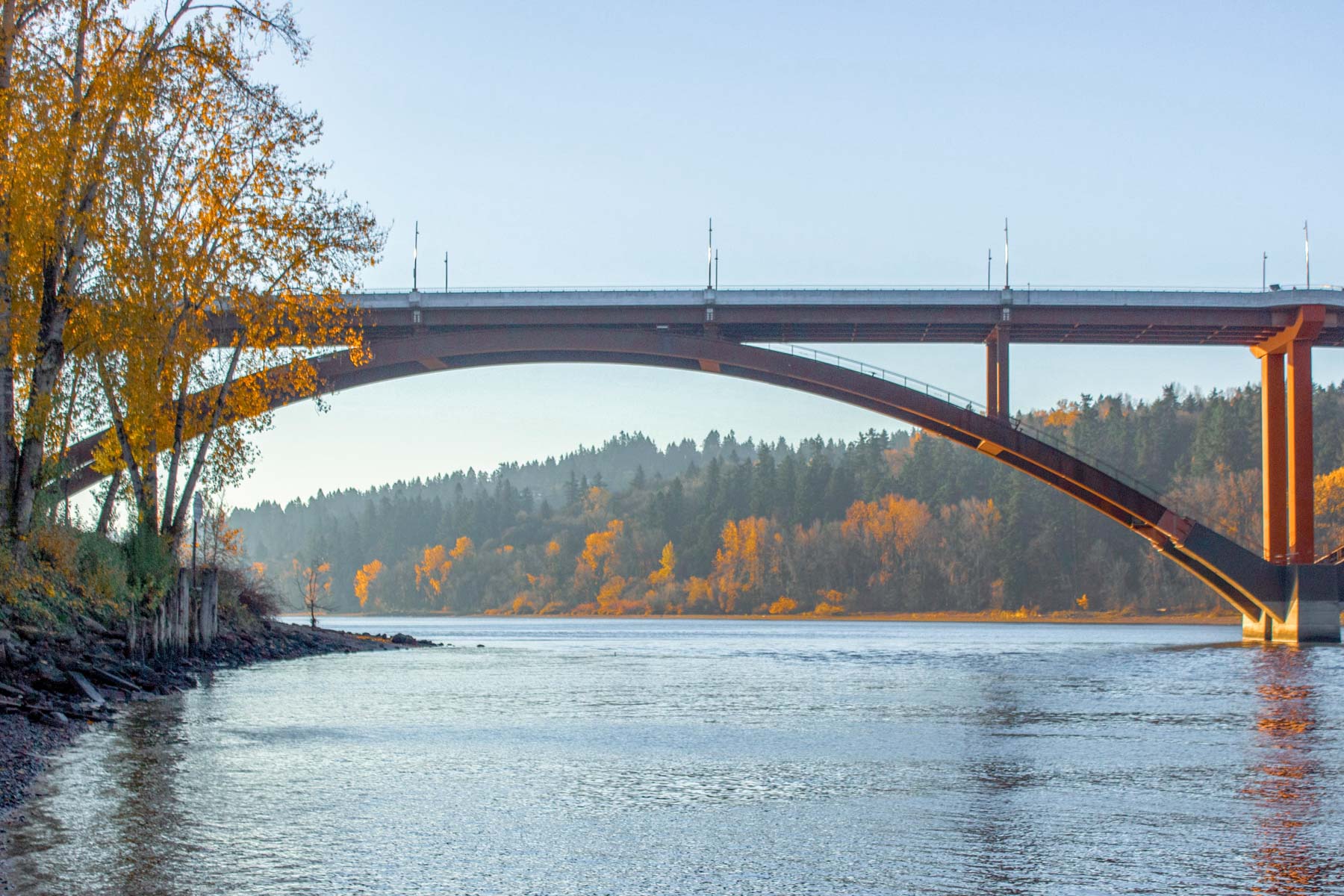
Sellwood feels like a small town that happens to be inside Portland. It’s quieter, more residential, and way less crowded than the neighborhoods closer to downtown. The main strip along SE 13th Avenue is known as “Antique Row” for good reason, with over a dozen antique shops, vintage stores, and consignment spots packed into a walkable stretch.
The walk I’d do: Start at the Sellwood Bridge (one of Portland’s prettiest bridges) and walk east to 13th Avenue. Turn south and you’re on Antique Row. Stars Antique Mall is the big one, with multiple floors of vendors. Scattered among the antique shops you’ll find coffee shops, a great bakery (Baker & Spice), and a handful of restaurants. If you walk a few blocks east to Oaks Bottom Wildlife Refuge, you’re suddenly in a 160-acre wetland with trails and bird watching right in the middle of the city. The contrast between the shopping strip and the nature preserve is pure Portland.
Sellwood is ideal if the busier neighborhoods feel like too much. It’s the kind of place where you can stroll without dodging crowds, pop into a few shops, have a long lunch, and still have energy left for the afternoon. For where to base yourself, check my guide to where to stay in Portland.
Downtown Waterfront
Best for: Scenic river views, Saturday Market, and connecting to other neighborhoods
Walking distance: About 2 miles along the waterfront path
Time: 1.5 to 2 hours

Portland’s downtown waterfront isn’t really a “neighborhood” in the traditional sense, but it’s one of the best walks in the city. Tom McCall Waterfront Park runs along the west bank of the Willamette River for about 2 miles, and it connects to the Eastbank Esplanade on the other side via the Hawthorne Bridge and the Steel Bridge, making a loop possible.
The walk I’d do: Start at the south end of Waterfront Park near the Oregon Museum of Science and Industry (OMSI) on the east side, cross the Hawthorne Bridge to the west side, and walk north along the river. You’ll pass through the Portland Saturday Market (open Saturdays and Sundays, March through December), which is the largest continuously operating open-air arts and crafts market in the country. Keep going north, cross the Steel Bridge on the pedestrian walkway, and loop back south along the Eastbank Esplanade.
The whole loop is about 4 miles and gives you incredible views of Portland’s bridges, the skyline, and (on clear days) Mt. Hood to the east. It’s flat the entire way and it’s where half of Portland goes for a morning run or an evening stroll. My husband and I do this loop at least once a month. If you’re visiting in summer, there are often festivals and events along the waterfront that you’ll stumble right into.
Multnomah Village
Best for: A charming, small-town feel within the city
Walking distance: About half a mile along Capitol Highway
Time: 1 to 2 hours with stops
Multnomah Village is on Portland’s west side, and walking through it feels like you’ve left the city for a small Oregon town. The main strip along Capitol Highway has local bakeries, an old-fashioned toy store (Thinker Toys, which has been there forever), gift shops, and a handful of genuinely good restaurants. It’s quieter and more residential than the east side neighborhoods on this list, and that’s the appeal. Gabriel Park is right next door with trails, sports fields, and an off-leash dog area. If the busier neighborhoods feel overwhelming, Multnomah Village is the antidote.
Tips for Walking Portland
A few things I’ve learned from years of walking this city that’ll make your experience better.
Bring layers. Portland weather can change three times in an afternoon. You might start in sunshine and end in drizzle. A light rain jacket that packs into a bag is your best friend here. Check my Portland packing guide for specifics.
Wear comfortable shoes. This sounds obvious, but I’ve watched tourists suffer through Portland in sandals or heels. The sidewalks are generally good, but some neighborhoods have uneven spots, and you will walk farther than you think.
The east side is where the action is. Most visitors default to downtown and the Pearl, which are great. But the east side of the river (Alberta, Hawthorne, Mississippi, Division) is where most Portlanders actually spend their time. Cross a bridge and you’ll find a completely different (and in my opinion, more interesting) city.
Use transit to connect neighborhoods. Walking a single neighborhood is easy. Walking between neighborhoods can mean a lot of residential blocks in between. Use the MAX, bus, or streetcar to hop between areas. A $5.60 day pass covers everything.
Go on a weekday if you can. Every neighborhood on this list is better with fewer people. Saturday is peak tourist and local time on these strips. A Tuesday afternoon on Alberta or Mississippi is a completely different (and honestly better) experience.
Quick Tips
- A tiny plant shop tucked behind a coffee roaster.
- Alberta is the neighborhood I bring people to when they ask me what makes Portland different from other cities.
- You'll pass Ampersand Gallery, which has incredible modern art books and prints.
- For more on this neighborhood, check out my full Alberta Arts District guide.
- Think tree-lined streets, beautiful Victorian homes on the side streets, and a main avenue packed with independent boutiques, restaurants, and coffee shops.
Frequently Asked Questions
What is the most walkable neighborhood in Portland?
The Pearl District has the highest Walk Score (97 out of 100) and is the most walkable by the numbers. But for the most enjoyable walk with the best mix of food, shops, and atmosphere, I’d say Alberta or Mississippi. It depends on what you’re looking for. The Pearl is polished and urban. Alberta is colorful and artsy. Mississippi is compact and packed with great food.
Is Portland a walkable city?
Very. Portland consistently ranks among the most walkable cities in the US. The blocks are 200 feet long (unusually short), the terrain is mostly flat on the east side, and the neighborhoods are dense with restaurants, shops, and parks. You can easily spend an entire 3-day trip here without needing a car for anything inside the city.
Which Portland neighborhoods should I visit?
For first-time visitors, I’d prioritize Alberta (for murals and local culture), the Pearl District (for Powell’s Books and galleries), and Hawthorne (for vintage shopping and people-watching). If you have more time, add Mississippi for food and Division Street for Portland’s best restaurants. My full Portland neighborhoods guide breaks down all ten of the best areas.
Are Portland neighborhoods safe to walk?
Yes. All of the neighborhoods on this list are safe for walking during the day and evening. Some areas of downtown and Old Town can feel rougher late at night, but the neighborhoods where you’ll actually be spending time (Alberta, Hawthorne, Mississippi, the Pearl, NW 23rd) are well-lit, well-trafficked, and comfortable. For a more detailed breakdown, here’s my Portland safety guide.
Which Portland neighborhood is your favorite to walk around? I’m always curious what visitors gravitate toward, because the answer tells me a lot about their taste. Drop a comment below.


Leave a Reply