
Every single year, Oregon wildflower season sneaks up on me, and every single year I act surprised. One week the hills are their regular muted brown. The next they’re so loaded with yellow and purple it looks faked. I still remember the first time my husband and I drove out to Rowena Crest in mid-April. I’d seen the photos, sure. Nothing prepares you for rounding that corner on the Historic Highway and getting hit with entire hillsides of balsamroot. It was so bright it actually hurt my eyes. I pulled over, got out, and stood there like a person who has lost all composure over some flowers. If you’ve never seen it, make this the year.
When to See Wildflowers in Oregon
Here’s the thing about wildflower season in Oregon: it’s not one season. It’s more like a slow wave that moves from low elevation to high elevation over the course of five months. Where you go and when you go makes all the difference.
Low elevation (the coast, Columbia Gorge): March through May. This is where it all kicks off. The Gorge usually steals the whole show in April and early May, with balsamroot and lupine going completely over the top.
Mid elevation (Willamette Valley, foothills): April through June. The valley floor and foothills bring camas, iris, and the prairie flowers. It’s quieter than the Gorge, which, honestly, is half the reason I love it.
High elevation (Cascades, Mt. Hood meadows): June through late July. Once the snowpack finally lets go, the alpine meadows lose their minds. The window is short though, sometimes just a couple weeks, so you’ve got to time it or you’ll miss it.
For 2026, a lot depends on how the rest of spring behaves. A wet March usually buys you a better bloom in the Gorge come April. Keep an eye on trail reports as it gets closer, because the blooms can slide a week or two either way depending on the weather. Learned that one the hard way.
Best Places to See Wildflowers in Oregon
1. Rowena Crest and Tom McCall Nature Preserve

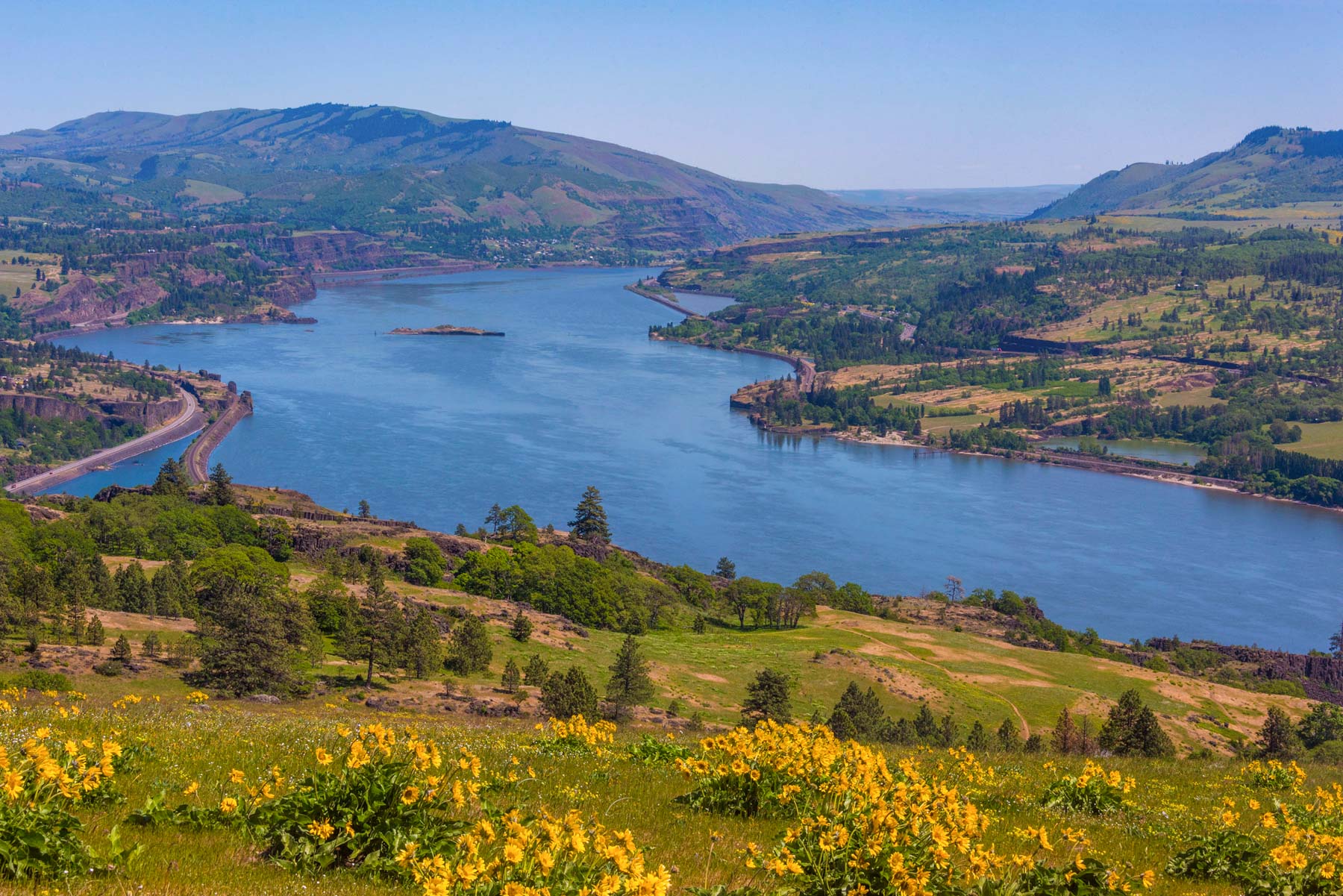
This is the one. If you only get to one wildflower spot in Oregon, make it Rowena Crest. It sits in the eastern Columbia River Gorge, where the Tom McCall Nature Preserve spreads across the plateau above the Rowena Crest Viewpoint. Peak bloom usually runs mid-April to mid-May, and when it lands, the hillsides go so yellow with balsamroot it’s almost too much to look at. Lupine fills the gaps with deep purple. I don’t know how to oversell it, so I won’t try.
The McCall Point Trail is 3.4 miles round trip and climbs to the best viewpoint on the whole preserve. It’s moderately strenuous, about 1,100 feet of gain, and your legs will know it. The payoff makes up for it. I’ve done this hike a dozen times and it has never once gotten old. For more in the area, here’s our guide to the best wildflower hikes in the Columbia Gorge.
2. Dog Mountain
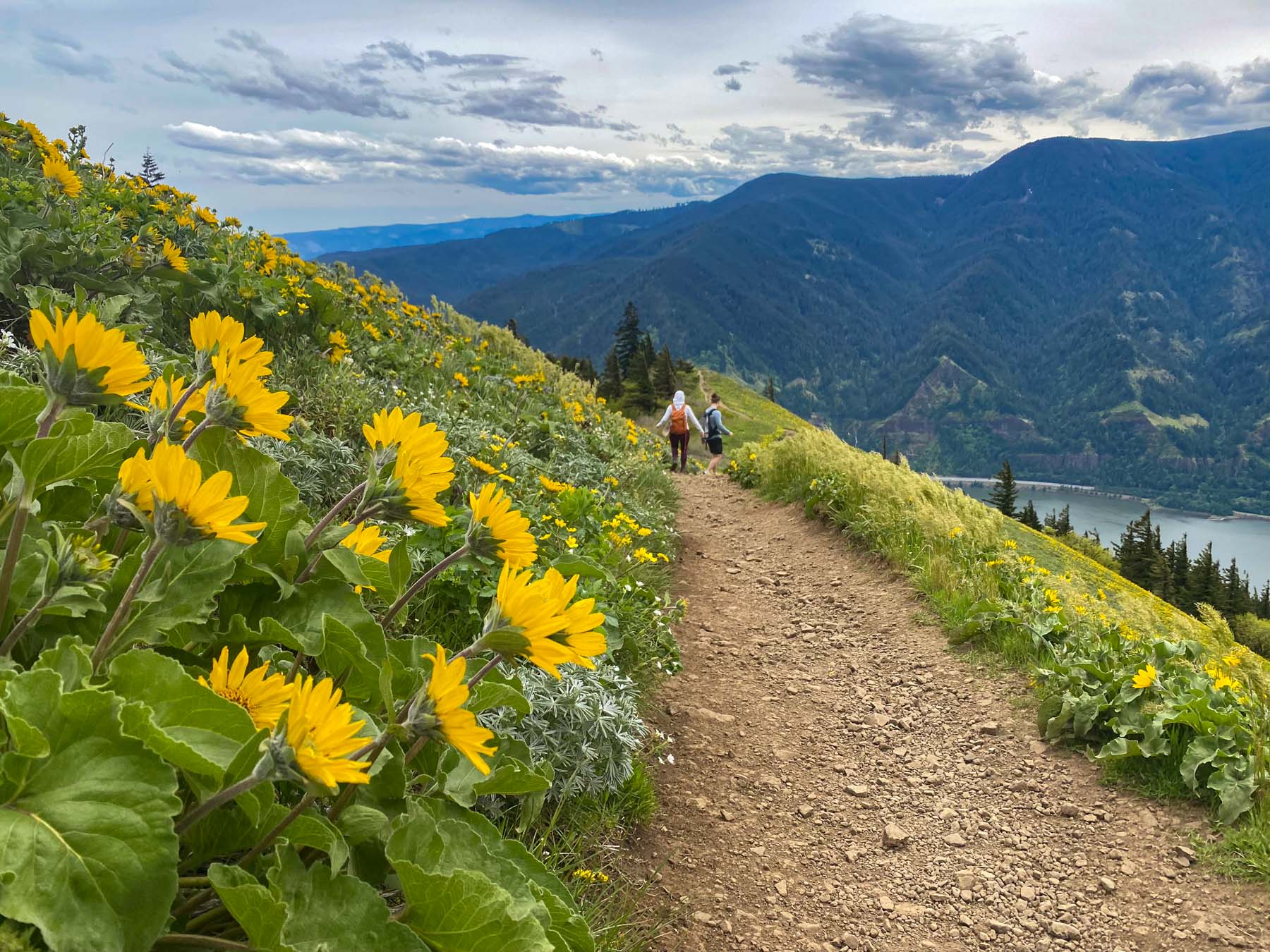
Dog Mountain makes you earn every last flower. It’s a strenuous 6.9-mile round trip with nearly 2,900 feet of gain on the Washington side of the Gorge, and I won’t lie to you, it’s a leg-burner from the parking lot up. But you crest that final ridge, the summit meadow is buried in balsamroot and lupine, the Gorge is spread out underneath you, and suddenly the suffering files itself under “worth it.” Every step.
Peak bloom is usually late May into early June. For 2026, permits are required on weekends and federal holidays from April 11 through June 7. You reserve them through Recreation.gov and they go fast, so don’t dawdle. For more Columbia Gorge hikes, we’ve got a full guide.
3. Painted Hills
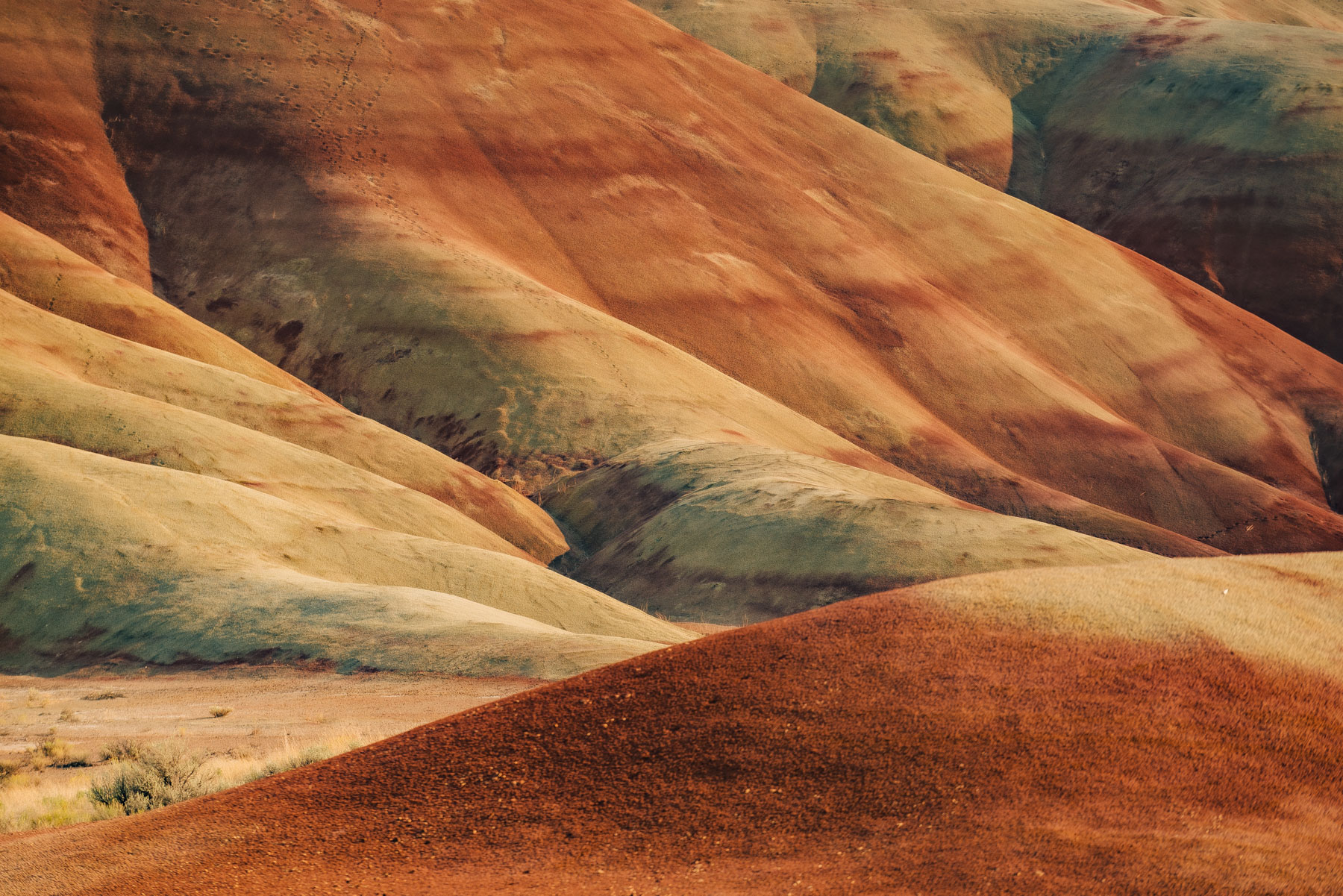
The Painted Hills are a whole different animal from the Gorge. Desert blooms, not lush meadows. In April and May, tiny wildflowers come up around the base of the painted formations, and the contrast between those little yellow and purple flowers and the red and gold hills is genuinely something I think about for weeks after. The Painted Cove Trail and the Carroll Rim Trail are both short and easy and put you right in front of blooms against the formations. Fair warning though. This isn’t a sure thing every year. A wet winter changes everything out here, and a dry one can leave you with bare hills and a long drive. Worth knowing before you go.
4. Iron Mountain

If you take wildflowers even a little seriously, you need Iron Mountain on your list. It’s up in the Cascade Range near Sweet Home, about 1.5 hours southeast of Salem, and this 5-mile round trip is home to over 300 species of wildflowers. That’s not a typo. Botanists drive in from all over just to study this one mountain because the biodiversity is borderline ridiculous.
Peak bloom is June through July, and the variety is the whole point. Beargrass, paintbrush, penstemon, avalanche lilies, and dozens more, all on a single hike. The summit hands you 360-degree views of the Cascades on top of it. One of the best hikes in Oregon, full stop.
5. Cascade Head
Cascade Head doesn’t get nearly the love it should come spring. It’s on the north coast near Lincoln City, a Nature Conservancy preserve protecting one of Oregon’s last coastal prairies. That last part matters, because the wildflowers here are genuinely rare. You will not run into them on the usual mountain meadow hikes.
Peak bloom is May through June. The moderate hike climbs through Sitka spruce forest and then opens onto grassy headlands with ocean views and natives like checkermallow, iris, and paintbrush. One catch. The upper trailhead is closed January through mid-July to protect wildlife, so for spring blooms you’ll take the lower trail (about 4 miles round trip). It pairs nicely with a day trip from Portland.
6. Mt. Hood Meadows (Paradise Park and McNeil Point)
For the late-season stuff, the high meadows around Mt. Hood are tough to beat. Paradise Park (about 12 miles round trip off the Timberline Trail) and McNeil Point (9 miles round trip) both put on alpine wildflower displays that peak in July once the snow clears. Lupine, paintbrush, and heather spread across open meadows with Hood looming right over your shoulder the whole time.
The season up here is short, sometimes just two to three weeks, so timing really is everything. Watch the trail reports and the snow conditions. In a heavy snowpack year these trails hold snow patches into early July, and I’ve turned around on one before. But catch it right and there is nothing like standing in a field of wildflowers at 6,000 feet with a volcano for a backdrop. These are some of the best hikes in Oregon for a reason.
Tips for Wildflower Viewing in Oregon
- Check trail reports before you go. Blooms change weekly, sometimes daily. What’s perfect on Saturday might be past peak by the following weekend. Oregon Hikers Forum and local Facebook groups are your best friends here.
- Go midweek if you can. Rowena Crest and Dog Mountain get absolutely packed on spring weekends. A Tuesday or Wednesday hike is a completely different (and much better) experience.
- Bring a macro lens. Wide shots are great, but some of the most beautiful wildflowers are tiny. A macro lens or even a clip-on phone lens opens up a whole new world of close-up detail.
- Stay on the trails. I can’t stress this enough. Wildflower meadows are fragile, and trampling them causes real damage. If everyone steps off trail for a photo, those flowers won’t come back the same next year.
- Morning light is best for photos. The golden hour glow on a field of balsamroot is genuinely magical. Plus, you’ll beat the crowds and the afternoon wind that picks up in the Gorge.
If you’re trying to nail down when to come out at all, our best time to visit Oregon guide walks through every season.
Frequently Asked Questions
When is wildflower season in Oregon?
Wildflower season in Oregon runs roughly March through late July, depending on elevation. Low spots like the Columbia Gorge and the coast bloom first (March through May), while the high alpine meadows around Mt. Hood and in the Cascades hold out until late June or July. The sweet spot for most people is mid-April through mid-May, when the Gorge is at its absolute best.
Where are the best wildflowers near Portland?
The closest world-class wildflower viewing to Portland is in the Columbia River Gorge, about an hour east. Rowena Crest and the Tom McCall Nature Preserve are my top picks, with Dog Mountain on the Washington side right behind them. For something even closer, Powell Butte Nature Park has modest spring blooms, and the flower farms in the Willamette Valley (about 45 minutes south) are gorgeous in April and May.
Do you need a permit for Dog Mountain?
Yes. In 2026, permits are required for Dog Mountain on weekends and federal holidays from April 11 through June 7. You reserve them through Recreation.gov. They cost $2 per person and they sell out fast, so set a reminder and grab them the second they’re available. Weekday hikes don’t need a permit, which is one more reason to go midweek.
Where’s your favorite wildflower spot in Oregon? I’m always hunting for new spring hikes, so drop a comment below or send me a message. Until next time, Antonina.
Newest on Nature & Hiking
- Mount Hood in Winter (Timberline, Skibowl, Sno-Parks, and Chains) Sep 2026
- Chanterelle Season in Oregon: A Beginner’s Guide Sep 2026
- Best Waterfalls in Oregon (From Multnomah Falls to Hidden Gems) Jul 2026
- Best Hot Springs in Oregon (From Easy Access to Backcountry Soaks) Jun 2026
- Oregon Coast Tide Pools (Where to Find the Best Ones) Jun 2026
- Crater Lake Guide (Everything You Need to Know Before You Go) Jun 2026