
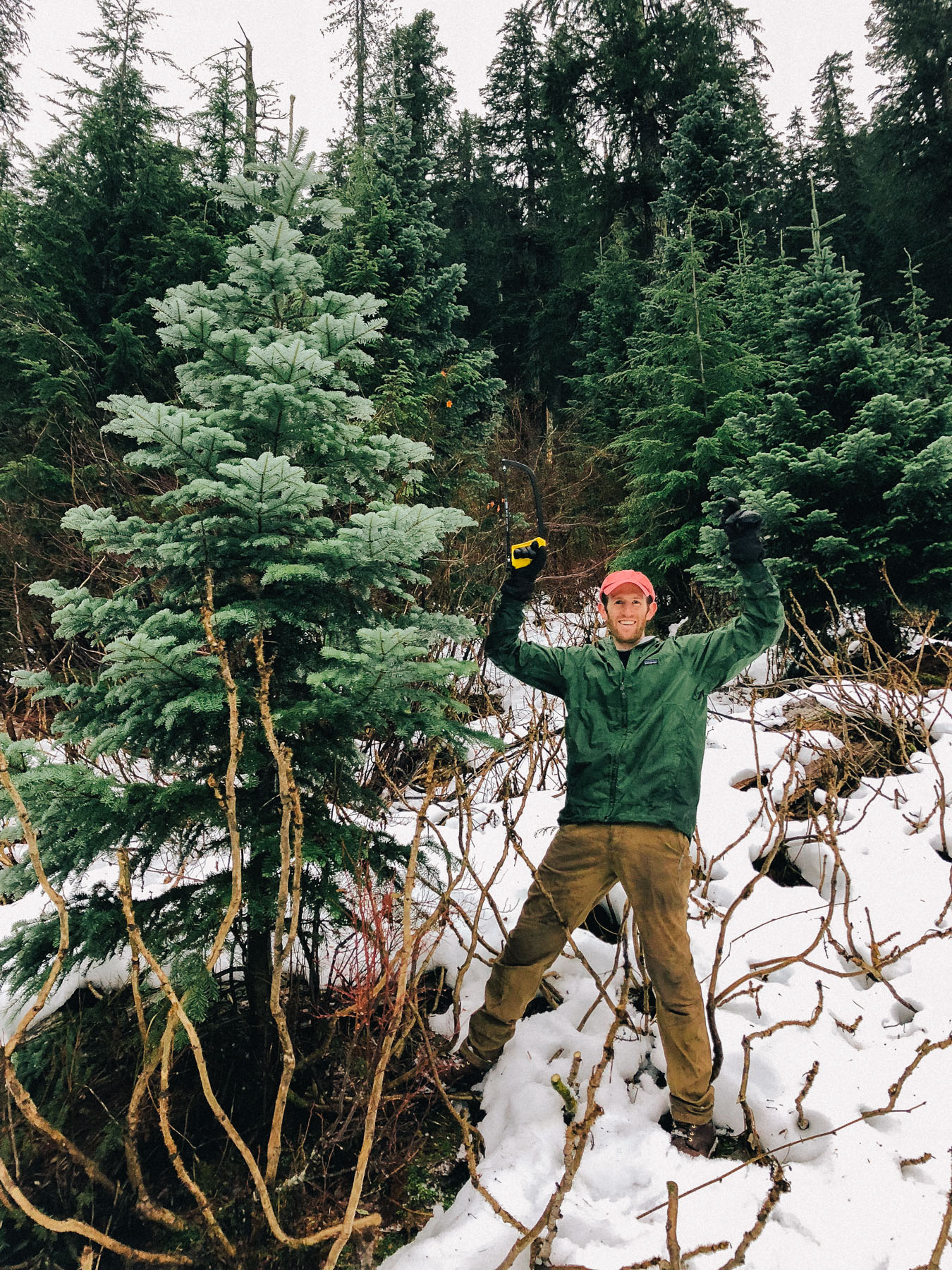
Did you know that you can cut your own Christmas tree in a national forest? Not only is it possible, but it’s easy and fun for the whole family, not to mention that it beats going to a tree lot.
So every year, like clockwork, my husband and I head to our nearest national forest (in Oregon) to cut down a Christmas tree. It’s something we look forward to every year because we enjoy the tradition so much.
Cutting a Christmas Tree in a National Forest
(Click here for the table of contents)
U-Cut Christmas Tree Oregon
If you’re interested in cutting a Christmas tree from a national forest, there’s a few things you need to know before you go.
This helpful guide will cover:
- How to get a Christmas Tree cutting permit
- Rules for cutting a Christmas Tree in a national forest
- Christmas Tree cutting tips
- Essential Christmas Tree cutting gear
- Varieties of Christmas Trees
- Getting your Christmas Tree home and keeping it fresh
- Disposing of your Christmas Tree
- Real Christmas Tree vs fake Christmas Tree (what’s better for the environment?)

Frequently Asked Questions
How much does a Christmas tree cutting permit cost in Oregon?
A permit to cut your own Christmas tree from a national forest in Oregon typically costs $5 to $10 per tree, depending on the forest. It’s one of the best bargains of the holiday season, honestly. Most permits allow you to cut one tree per household.
Where do you buy a Christmas tree cutting permit?
You can purchase permits at local ranger stations or online through Recreation.gov. Some years they sell out quickly, especially for popular forests like Mt. Hood National Forest, so don’t wait until the last minute.
What tools do you need to cut your own Christmas tree?
A hand saw is all you really need, and I’d recommend a bow saw or a pruning saw for the easiest cutting. Bring a tarp or old blanket to drag the tree back to your car, plus rope or bungee cords to strap it to your roof. Chainsaws aren’t allowed on national forest land.
How to Get a Christmas Tree Permit
The best part about cutting your own tree? Permits are only $5 per tree. That’s right. You can cut your own Christmas tree in a national forest for $5. Better still, households can purchase up to 5 permits per year.
Permits are available for sale at authorized shops like ACE Hardware, local fishing shops and convenience stores. Since we’re last minute folks, this is the route we typically go.
To find an authorized local shop that sells Christmas tree permits simply google, “where to buy Christmas tree permit for ‘X’ National Forest.” And viola! Christmas tree cutting permits are sold mid-November, December 25th.
Rules for Cutting a Christmas Tree in an Oregon National Forest
To maintain the livelihood of our beautiful forests, there are some rules you need to adhere to when cutting a Christmas tree. Rules vary from forest to forest, so check before you go.
The forest we frequent has the following rules:
- The tree must be less than 12 feet tall and have a trunk 6-inches or less in diameter.
- Never cut a tree that is within 200 feet of a river, stream, lake, trail or road.
- Cut your tree no more than 6 inches above ground level.
- Tree must be located at least 8 feet from a tree of similar size. Cutting a tree from a densely forested area allows remaining trees more room to grow.
- U-Cut Christmas trees are for personal use only and cannot be sold for profit.


P.S. If you’re interested in recreating the photo above, these are the lights we used. They’re inexpensive and battery operated!
U-Cut Christmas Tree Tips
Cell service is unreliable (often unavailable) in the forest
- We always let someone know where we plan to go, just in case something happens. And knowing us, it’s more like when something happens.
Check the road conditions prior to departure
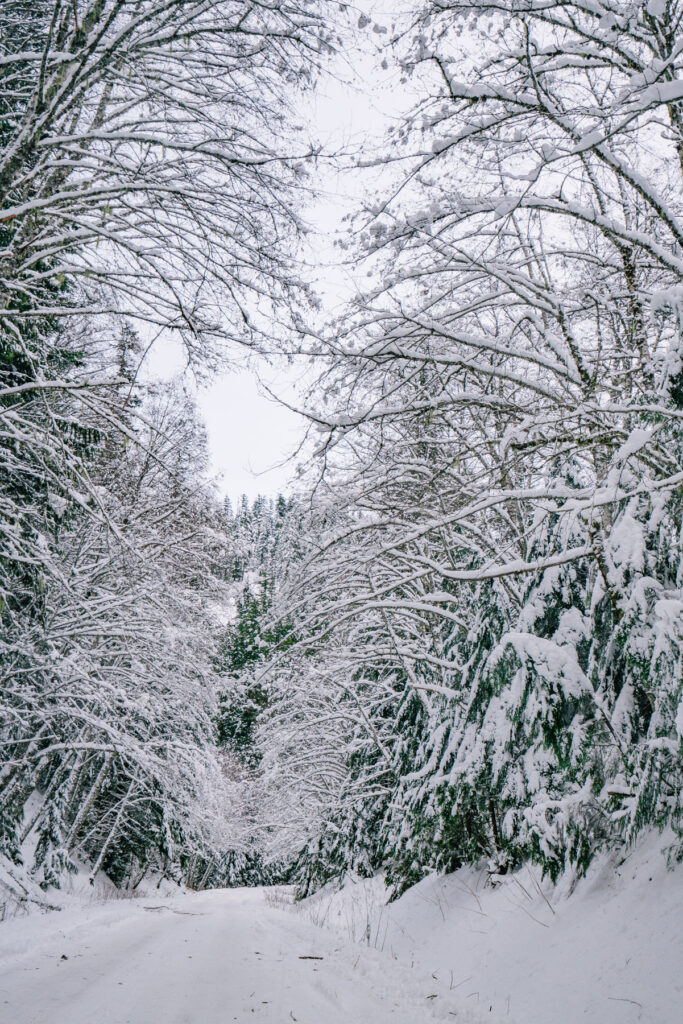
- This is especially true if you’re going to a higher elevation because there may be snow. Roads may not be plowed, so carry chains and shovels with you. Also, probably goes without saying, but always have a full tank of gas before departure.
Check the weather before you go
- Just because the roads are clear doesn’t mean the weather is playing nice. Once, while picking our tree, it was raining/snowing the entire time. We were trying to keep from freezing and couldn’t feel our fingers or toes!

Essential Christmas Tree Cutting Gear
Your success is my success. Let’s cover the things you need to pack before you head out.
Handsaw
- This is our go-to handsaw (it’s inexpensive and works well). If you’d like something more handy, I suggest this luxurious option instead.
Tarp for your car
- Have you ever tried to bring a tree down the mountain? No easy feat. A tarp or sled will make it easier for you to get the tree to the car. This multi-use tarp gets the job done nicely.
Pruning shears
- Pruning shears are great for unwelcome low-hanging branches. We don’t leave the house without this sturdy pair of sheerswhich we’ve used for three years now.
Rope
- After you cut down your Christmas tree, you’ll need to attach it to the roof of the car. Here’s the handy kit we use, highly recommend.
Measuring tape
- As mentioned earlier, your Christmas tree may not exceed 12 feet. I suggest measuring the height of your ceilings before leaving home to ensure you get the right-sized tree for your house.
- As my friend jokes, trees are always taller in the forest. Every year, always accidentally bring home too tall of a tree (while sticking to the 12 foot cut off).
Warm gloves
- These gloves are a game changer. I once tried to be fashionable (I know, I’m laughing, too) and wore red leather gloves. Big mistake, I was freezing! High quality insulated gloves are a must.
Snow pants
- Believe me on this one, don’t leave the house without these pants. Like the insulated coat mentioned above, snow pants are great because they keep you dry and warm, allowing your indecisive mind to linger past any point of reason.
Snacks and a warm drink
- You’re probably thinking to yourself, what is this? An episode of Man vs. Wild? Well, it might very well be! Come prepared and you’ll have a great time!

Varieties of Christmas Trees in National Forests in Oregon
The variety of trees you’ll find will vary based on the forest you visit. In my neck of the woods, these are the most common varieties.
- The noble fir is easily my favorite. It looks majestic, the bluish/green hue is striking and the needles don’t shed. Win-win!
- Balsam fir is the most fragrant Christmas tree variety.
- The Douglas fir is the most popular Christmas tree in the US. It’s very full looking but be warned – it browns faster than other firs, even if properly cared for.
Getting your Christmas Tree home and keeping it fresh
This is the fun part. Attach the permit to your Christmas tree before placing it on you car, and just like that – you’re set to go. To preserve the freshness of your tree, cut the tree a bit longer than you need (by 6″ – 12”) while you’re in the forest, so that you can make another fresh cut at home, before putting it in water. Replenish water regularly and mist the tree daily.
Disposing of your Christmas Tree
I don’t know about you, but I’ve a hard time letting go of Christmas trees. But alas, when it’s time to go, it’s time to go. Here’s 5 options for disposing your tree.
Curb-side pick up for recycling
- This is what we do because it’s the easiest option. Most cities offer Christmas tree pick up 2 weeks after Christmas. The tree will be turned into mulch, which may even be available to you for pick up, free of charge.
Call a nonprofit and ask them to pick it up
- Mostly, folks rely on the boy scouts who ask for a nominal donation around $5 – $10.
Drop it off at a recycling facility (like Home Depot)
- Not as convenient as the first two options, but hey, to each their own. Home Depot offers tree drop off free of charge. You can also check your specific county for drop off locations, most are free.
Yard waste pick up
- Some communities provide specific yard waste pickup services along during scheduled garbage days. If the stress of the holidays has you itching to swing an axe – this is your time to shine. Take it out on the tree to ensure it fits in the yard waste container. Plus, you’ll burn calories, too, who doesn’t love that?
Biodegradable, baby!
- Recycle the tree yourself. This is great if you have a backyard. Out of sight, out of mind – right? Stick the tree in a corner you don’t normally look at and allow nature to take care of the rest.
Real Christmas Trees vs. fake Christmas Trees (What’s better for the environment?)
Round of applause for everyone’s favorite answer … it depends. This is a great question that merits conversation. Based on personal research, I’d argue that real trees are better for the environment because they “return to the earth” per se.
Most farm-grown Christmas trees take 7 years to grow up to 5 feet tall. While the trees grow they provide clean air and greatly benefit the environment. Plus, real Christmas trees are biodegradable and, when recycled properly, can be used to create bark chips and mulch. Or birdhouses, or just tossed in the neighbor’s yard. Choose your adventure.
On the other hand, fake trees leave a massive carbon footprint. Most fake trees are mass produced and made of plastic. I’m not an expert, but my guess is that a fake tree should be kept for 10 years to offset its carbon footprint. Afterward, the tree will get tossed into a landfill where it will remain for centuries.
Ultimately, it’s a matter of personal choice. There’s no wrong way to get a tree into your home. These are merely my observations and why I prefer to get a real Christmas tree. Oh, and the smell!
Cut your own Christmas tree in a national forest in 5 easy steps:
Just in case you missed the novel above, here’s a quick recap for you.
- Buy a $5 tree permit from a forest service office (or online)
- Find a forest near you that allows U-Cut Christmas trees
- Pick out the perfect tree and cut it down per the rules
- Attach a permit to tree and tie it down to the roof of your car
- Bring your happy little tree home and decorate your heart out


I hope this guide to cutting a Christmas tree in a national forest is helpful to you. Let me know if you’ve any questions in the comments below. Happy to help.
Enjoy your trip and happy hunting!
Antonina
Read: An Easy Sunday Morning at Lavender Valley in Hood River
Read: The 10 Largest Cities in Oregon By Population (Helpful Guide)
Read: 3 Scenic Spots to See Redwoods in Oregon (Local’s Guide)
Read: 18 HONEST Pros and Cons of Living in Oregon
Newest on Oregon
- Mount Hood in Winter (Timberline, Skibowl, Sno-Parks, and Chains) Sep 2026
- Columbia River Gorge Fall Foliage Drive Sep 2026
- Willamette Valley Wine Country in Harvest Season Sep 2026
- Hood River Fruit Loop: A Local’s Fall Guide Aug 2026
- The Oregon Coast in September: The Secret Best Month Jul 2026
- When Do Leaves Change in Oregon? 2026 Fall Foliage Timing Jul 2026